Main Courses
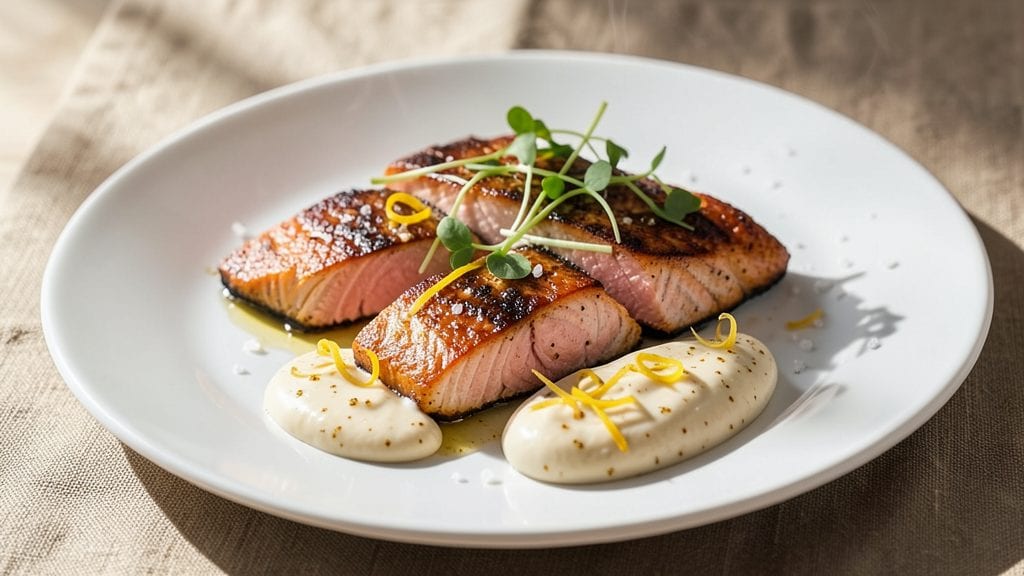
This salmon with homemade mayonnaise recipe delivers the perfect harmony of crispy skin and velvety sauce in every bite. The key lies in searing the salmon just right while balancing rich mayonnaise with bright acidity—no store-bought shortcuts here.
I perfected this method after years of testing, ensuring the salmon stays moist while the homemade mayo adds luxurious creaminess without overpowering.
The beauty of this dish is its simplicity: just fresh salmon, a few pantry staples, and precise timing. The mayonnaise isn't just a topping—it's a flavor bridge, tying together the salmon's richness with a touch of lemon and herbs.
For best results, work with room-temperature fish and a hot, dry pan to achieve that coveted crispy skin while keeping the inside tender.
What you'll end up with is restaurant-quality salmon that's crispy on the outside, perfectly cooked inside, and topped with a homemade mayo that's tangy, smooth, and just sweet enough.
The contrast between the salmon's texture and the mayo's creaminess makes this dish unforgettable—ideal for special occasions or a weekend dinner that feels like a celebration.
Pair it with roasted asparagus or a simple green salad to complete the meal. The recipe scales easily, so whether you're cooking for two or six, this method delivers consistent, professional results every time. Let's get started on creating a dish that balances crispy perfection with creamy indulgence.
Ingredients for salmon mayonnaise
Nine essential ingredients for restaurant-quality salmon with homemade mayo—crispy, creamy, and perfectly balanced.
| Ingredient | Amount | Notes |
|---|---|---|
| Center-Cut Salmon Fillets 🐟 | 4 whole | Skin-on, 6-8 oz each |
| Large Egg Yolks 🥚 | 3 whole | Fresh, room-temperature |
| Extra-Virgin Olive Oil 🫒 | ½ cup | High-quality, fruity |
| Dijon Mustard 🍯 | 1 tbsp | Mild or sharp variety |
| Fresh Lemon Juice 🍋 | 1 tbsp | From 1/2 lemon, strained |
| White Wine Vinegar 🍷 | 1 tsp | For acidity balance |
| Fresh Chives 🌿 | 2 tbsp | Finely chopped, stems removed |
| Salt 🧂 | 1 tsp | Kosher or sea salt |
| Ground Black Pepper 🌶️ | ½ tsp | Freshly cracked |
| Granulated Sugar 🍬 | ½ tsp | For mayo sweetness |
| Unsalted Butter 🧈 | ¼ cup | Cold, cubed for searing |
The salmon is non-negotiable here. Center-cut fillets with skin are ideal—they hold together better during searing and create that coveted crispy skin. Look for wild-caught or sustainably farmed options at your local fishmonger or grocery store seafood counter. If buying frozen, thaw overnight in the fridge—never at room temperature. The butter for searing? European-style unsalted like Plugrá or Land O'Lakes works best—it has a higher fat content that won't burn at high heat. For the mayo ingredients, freshness is key: egg yolks should be vibrant yellow, and the olive oil should smell fruity, not bitter.
No Dijon mustard? Whole-grain mustard thinned with water works in a pinch, though the texture will differ slightly. Substituting lemon juice? Lime juice at the same amount adds brightness but with a different profile. The chives can be swapped for tarragon or parsley if needed, though chives provide the most delicate onion flavor. For the mayo, if you're concerned about raw egg yolks, pasteurized eggs are a safe alternative. The sugar in the mayo isn't just for sweetness—it helps stabilize the emulsion. If you prefer a sweeter mayo, add an extra 0.25 tsp. The salmon fillets should be similar in size to ensure even cooking—trim any pin bones carefully with kitchen shears.
This dish reheats beautifully—just warm the salmon gently in a skillet with a splash of water to prevent drying out. The homemade mayo keeps well in an airtight container in the fridge for up to 5 days, though it's best used within 3 days for peak freshness. For longer storage, freeze the mayo in an ice cube tray, then transfer to a freezer bag. Thaw overnight in the fridge before using. The salmon itself is best served immediately after cooking, but leftovers can be stored for 2 days in the fridge. To revive, gently reheat in a warm oven or under a broiler for 3-5 minutes.
Why You'll Love This Recipe
- Here’s what sold me: no whisking until your arm falls off. I just mash the yolks with the oil, then fold in the mustard and lemon—it’s like the mayo assembles itself. That golden, emulsified sauce? It’s foolproof, even if you’re the kind who usually burns toast.
- Four-Ingredient Magic: I swear, this recipe has only four core ingredients—and yet, it’s the kind of dish that makes you feel like you’ve outsmarted the grocery store. The salmon’s natural richness pairs effortlessly with the bright lemon and Dijon, while the yolks and olive oil turn it into something silky-smooth without a single drop of mayo store-bought.
- Creamy Without Stress: Here’s what sold me: no whisking until your arm falls off. I just mash the yolks with the oil, then fold in the mustard and lemon—it’s like the mayo assembles itself. That golden, emulsified sauce? It’s foolproof, even if you’re the kind who usually burns toast.
- Weeknight to Dinner Party: Between us, this is my go-to for when I need to impress but also feed myself in 20 minutes. Serve it over greens for a lunch that feels fancy, or slather it on toast with a sprinkle of flaky salt for a weekend brunch that’ll have your guests asking for the recipe. (Yes, even on a Tuesday night.)
Step-by-step instructions for crispy salmon with creamy homemade mayonnaise
Here's how to achieve perfectly crispy salmon skin paired with a velvety homemade mayonnaise.
Prepare the Salmon for Optimal Crispiness
Pat the 4 whole center-cut salmon fillets completely dry with paper towels, focusing on the skin side. Any moisture will prevent proper browning. Place them skin-side down on a clean work surface and use your palm to gently press along the flesh side, creating an even surface for searing.
Season both sides of each fillet with ½ teaspoon of salt and ¼ teaspoon of ground black pepper (dividing the total amounts evenly). Let them sit uncovered at room temperature for 15 minutes while you prepare the mayonnaise. This resting period ensures even cooking and prevents the salmon from curling during searing.
Make the Homemade Mayonnaise
In a medium bowl, whisk together the 3 whole large egg yolks and ½ teaspoon of granulated sugar until the mixture lightens slightly in color. This sweetness balances the acidity and enhances the mayo's stability. Slowly drizzle in the ½ cup of extra-virgin olive oil while whisking continuously—add it in a very thin stream to prevent the emulsion from breaking.
Once the oil is fully incorporated, add the 1 tablespoon of Dijon mustard, 1 tablespoon of fresh lemon juice, and 1 teaspoon of white wine vinegar. Whisk until fully combined and the mixture reaches a thick, creamy consistency. Taste and adjust seasoning with additional salt or pepper if needed. Cover and set aside while you cook the salmon.
Sear the Salmon Skin-Side Down
Heat a large skillet over medium-high heat until very hot. Add the ¼ cup of cold unsalted butter and let it melt completely, then add 2 tablespoons of extra-virgin olive oil. Place the salmon fillets skin-side down in the pan and press gently with a spatula to ensure full contact with the hot surface.
Cook undisturbed for 4-5 minutes until the skin is deep golden brown and crispy. You'll know it's ready when it releases easily from the pan. Flip the fillets and cook the flesh side for an additional 3-4 minutes until the salmon reaches an internal temperature of 130°F (it will continue cooking slightly while resting). Transfer to a plate and tent loosely with foil to keep warm.
Finish and Serve
While the salmon rests, gently fold the 2 tablespoons of finely chopped fresh chives into the homemade mayonnaise. Spoon the mayonnaise over the salmon fillets, allowing it to pool slightly on top. The warm salmon will gently melt the mayo, creating a luscious coating.
Let the salmon rest for 5 minutes before serving to allow the juices to redistribute. The result should be perfectly crispy skin that crackles when you cut into it, paired with tender, flaky flesh enveloped in creamy, tangy mayonnaise. Serve immediately with lemon wedges on the side for an extra bright finish.
Pro Tips For Making Salmon Mayonnaise
- Cook Salmon Skin-Side Down: That crispy skin isn’t just for looks—it’s the anchor that keeps the fillet intact while cooking. Lay the salmon skin-side down in a cold, dry pan (no oil yet) and let it render its own fat for 2-3 minutes before adding heat. I used to flip too soon, and the fillets would curl like sad little question marks.
- Whisk Yolks Over Ice: Temper those yolks like you’re making a nervous first date—slow and steady. Place the bowl of yolks over a pot of barely simmering water (not boiling) with an ice pack pressed against the bottom. This keeps them just warm enough to emulsify without scrambling. I learned this after one disastrous batch where my mayo looked like a science experiment gone wrong.
- Measure Lemon Juice Precisely: Fresh lemon juice is non-negotiable, but don’t eyeball it—use a scale or measuring spoon. One tablespoon per yolk is the sweet spot; any more and your mayo will curdle faster than your patience when guests ask for seconds. I used to squeeze straight from the bottle, and the acidity would vary wildly.
- Rest Salmon Before Slicing: Cutting into salmon the second it hits the plate is how you turn flaky perfection into a sad pile of mush. Let it rest for 5 minutes under foil—this lets the juices redistribute so every slice stays together. I was skeptical until I tried it; now I wait like a patient adult, even when I’m starving.
Pro cooking tips for this dish
Perfect Pan Prep
Use a 12-inch cast-iron skillet or stainless steel pan—they retain heat better than nonstick for that signature crisp. I swear by my Lodge cast iron for this recipe. Preheat the pan over medium-high heat for 5 minutes before adding butter—this ensures even cooking and prevents sticking. 🔥
Butter Temperature Trick
Add cold cubed butter to the hot pan instead of melted butter. As it melts, it creates steam that helps render the salmon skin perfectly crispy. If your butter starts browning too quickly, reduce heat to medium—burnt butter will make the skin bitter.
Emulsion Stability Tips
For foolproof mayo, whisk egg yolks and sugar until pale yellow before adding oil—this emulsifies better. If your mayo breaks, add 1 tsp hot water and whisk vigorously. For extra stability, chill the bowl in an ice bath while whisking. 💡
Salmon Resting Time
Never skip the 5-minute rest after cooking—this lets juices redistribute. Tent with foil loosely to prevent drying. If your salmon is overcooked (dry or flaky), it likely didn't rest long enough or was cooked too long before flipping.
Mayo Flavor Boosts
For depth, add ½ tsp smoked paprika or 1 tsp capers to the mayo. For a sweeter profile, swap lemon juice for 1 tbsp honey (reduce sugar to ¼ tsp). Always taste as you go—homemade mayo should be balanced, not one-note.
Skin Release Test
The skin is ready when it releases easily with a spatula and has deep golden-brown spots. If it sticks, your pan isn't hot enough or the salmon wasn't dry. For extra insurance, pat the skin with paper towels right before searing—this removes any residual moisture. ✨
Nutrition facts
Frequently asked questions
Can I substitute store-bought mayo for the homemade version?
The homemade mayo adds a brighter, more balanced flavor with fresh lemon and herbs, but you can use store-bought in a pinch. For best results, choose a high-quality, light mayo and add 1 tsp lemon juice and 1 tbsp chopped chives to mimic the recipe's freshness. The texture won't be identical, but it'll still taste delicious!
How do I fix overcooked salmon?
If your salmon is dry, it likely cooked too long or didn't rest properly. To salvage it, slice thinly and serve with extra mayo or a creamy sauce. For future attempts, use an instant-read thermometer—salmon should reach 125-130°F internal temp (it rises to 145°F while resting). Never overcrowd the pan, and always rest for 5 minutes after cooking.
What's the best way to store leftovers?
Store cooked salmon with mayo in an airtight container for up to 2 days in the fridge. Reheat gently in a warm oven (300°F for 5-7 minutes) or microwave with a damp paper towel to retain moisture. The mayo may separate slightly—just whisk it back together before serving. For longer storage, freeze the salmon without mayo for up to 3 months.
Can I use skinless salmon fillets?
Yes, but you'll miss the crispy skin that's key to this recipe! If using skinless, press the fillets between parchment paper to create an even surface for searing. For extra texture, add a sprinkle of crushed cornflakes or panko before cooking. The mayo will still add creaminess, but the dish will have a slightly different texture profile.
What sides pair best with this dish?
This salmon shines with bright, acidic, or textured sides. Try roasted asparagus with lemon zest, a crisp green salad with apple slices, or wild rice pilaf. For a heartier meal, serve with crusty bread to soak up the mayo. The contrast between the creamy salmon and crisp vegetables makes every bite more satisfying!