
Desserts
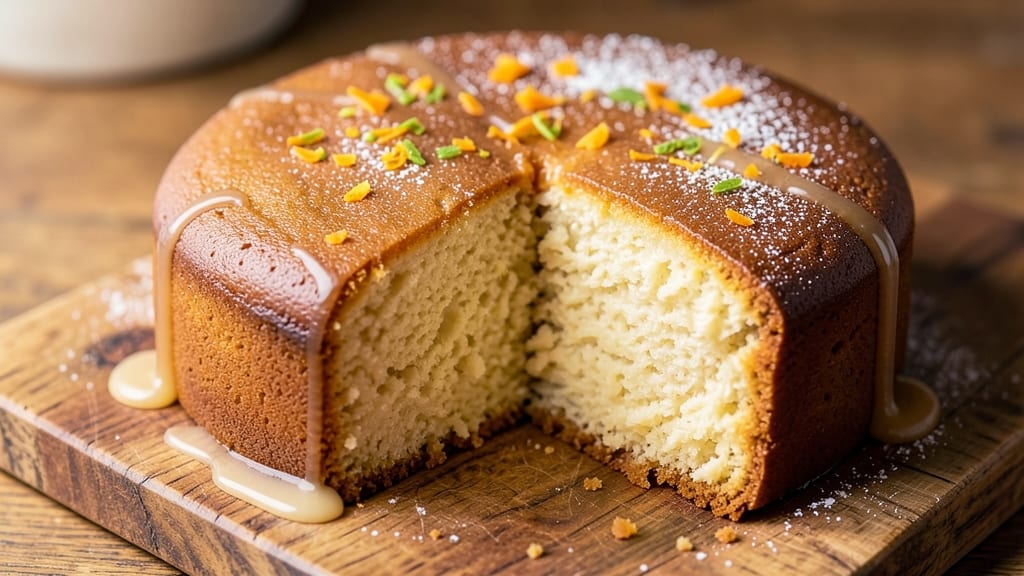
This Crisco pound cake recipe delivers that iconic golden dome and buttery moistness that makes it a Southern classic. The secret lies in the shortbread-style crumb and how Crisco creates tender layers without drying out—something traditional butter cakes can’t match.
I’ve perfected this version over years, ensuring every slice stays rich and flavorful for days.
The beauty of this recipe is its simplicity: just 10 ingredients, 350°F for 60 minutes, and no fancy techniques. The cake’s signature dome forms naturally from the butterfat in Crisco, while the vanilla and citrus zest add bright, nostalgic flavor.
It’s the kind of dessert that feels like home—no frosting needed, though a light glaze elevates it further.
What sets this apart is the texture—moist without being heavy, with a fine crumb that melts in your mouth. The high ratio of fat to flour ensures it stays tender even when sliced days later.
Perfect for holidays, potlucks, or a Sunday treat, this cake proves classic Southern baking doesn’t require shortcuts—just precision.
For modern adaptations, you can easily swap in gluten-free flour blends or reduce sugar for a lighter version. The method remains the same, delivering that same legendary texture. Let’s bake yours—it’s worth every bite.
Ingredients for crisco pound cake
Ten classic ingredients transform into that iconic golden dome with melt-in-mouth tenderness.
| Ingredient | Amount | Notes |
|---|---|---|
| Crisco Shortening 🧈 | 1 cup | Unsalted, room temperature |
| All-Purpose Flour 🌾 | 3 cups | Sifted, spooned and leveled |
| Granulated Sugar 🍚 | 2 cups | Superfine preferred for smoothness |
| Pure Vanilla Extract 🌿 | 2 tbsp | Bourbon-infused for depth |
| Orange Zest 🍊 | 1 tbsp | Freshly grated, no pith |
| Large Eggs 🥚 | 4 whole | Room temperature, separated |
| Baking Powder 🧂 | 2 tsp | Aluminum-free for stability |
| Diamond Crystal Kosher Salt 🧂 | ½ tsp | Fine grain for even distribution |
| Milk 🥛 | ¾ cup | Whole milk for richness |
| Unsalted Butter 🧈 | ¼ cup | Melted, for dome enhancement |
The Crisco is non-negotiable here—its high fat content creates that signature dome while keeping the crumb tender. Store-brand Crisco works fine, but for optimal texture, Crisco Pure Vegetable Shortening (the original) delivers the best results. The flour must be sifted to avoid dense pockets; King Arthur or Gold Medal brands are ideal for their consistent protein levels. Orange zest should be vibrant—navel oranges in winter or Valencia in summer yield the brightest flavor. For vanilla, Heinz or McCormick bourbon extract adds depth beyond imitation extracts, though pure Madagascar works too.
No Crisco? Vegetable shortening in a 1:1 swap works, but butter cakes won’t achieve the same dome or moisture. Substituting sugar? Superfine sugar or powdered sugar at the same weight keeps texture comparable—just pulse granulated in a food processor first. Egg whites can be separated if you prefer a lighter crumb, though the yolks are crucial for richness. For dairy-free adaptations, unsweetened almond milk with 1 tbsp cornstarch mimics milk’s fat content. The butter at the end isn’t just for flavor—it enhances the dome when brushed on top during baking.
This cake stays moist for 5-7 days when wrapped in plastic at room temperature, though the dome softens slightly after 3 days. For longer storage, freeze individual slices wrapped in parchment—3 months without texture loss. Reheat slices at 300°F for 5 minutes to restore freshness. The glaze (if used) should be brushed on 10 minutes after baking to prevent sogginess. Leftover batter? Bake in a 9-inch round pan for a pound cake variation with a denser crumb.
Why You'll Love This Recipe
- No Mixer Needed: I swear by this recipe when my mixer’s on the fritz—just cream the Crisco and sugar by hand until it’s light and fluffy. The orange zest brightens the whole thing without extra work.
- Buttery Orange Magic: That orange zest? It’s the secret weapon. Sweet, citrusy, and just a whisper of tang—like a little sunshine in every bite. The vanilla ties it all together with warmth.
- Weeknight Hero: Slice it for breakfast, pack it for lunch, or serve it with coffee. It keeps for days (yes, even the dried-out slices taste fine with a little butter). My go-to for when I’m too tired to bake from scratch.
- Budget-Friendly Luxury: Crisco and flour stretch my grocery budget, but it tastes like a bakery treat. Honestly, I’d rather eat this than any overpriced boxed cake—it’s just that good.
Step-by-step instructions for golden domed Crisco pound cake
This method delivers a towering, golden cake with a crisp crust and moist interior—every slice will be perfect.
Prepare the Drying Ingredients
Preheat your oven to 350°F and grease a 10-inch tube pan generously with nonstick spray, then dust with all-purpose flour—tap out any excess. The tube pan creates that classic domed shape while ensuring even baking. Line the bottom with parchment paper for easy removal.
In a medium bowl, whisk together the 3 cups all-purpose flour, 2 tsp baking powder, and 0.5 tsp diamond crystal kosher salt. Sift this dry mixture directly into the bowl to aerate it fully—this prevents dense pockets in the cake. Set aside until needed. The flour mixture should look light and airy, with no clumps remaining.
Cream Shortening and Sugar
In a stand mixer fitted with the paddle attachment, beat the 1 cup Crisco shortening and 2 cups granulated sugar on medium speed for 3-4 minutes. The mixture should become pale and fluffy, nearly doubling in volume. This step incorporates air, which is critical for that signature pound cake texture.
I press down on the paddle occasionally to ensure the shortening and sugar are fully emulsified—this creates a smooth, homogeneous base. Stop beating when the mixture looks like wet sand and leaves clean streaks on the bowl. Overmixing at this stage can lead to a gummy cake.
Add Eggs and Wet Ingredients
Add the 4 whole large eggs, one at a time, beating well after each addition until fully incorporated. Scrape down the sides of the bowl to ensure no raw egg remains. Next, mix in the 2 tbsp pure vanilla extract, 1 tbsp orange zest, 0.75 cup milk, and 0.25 cup melted unsalted butter. The butter should be fully melted but not hot—just cool enough to drizzle smoothly.
This combination of wet ingredients ensures the cake remains moist without being greasy. The orange zest adds brightness, while the bourbon-infused vanilla extract deepens the flavor profile. Mix on low speed just until combined—you should still see faint streaks of flour.
Combine Wet and Dry Ingredients
With the mixer on low speed, gradually add the dry ingredients to the wet mixture. Mix just until the flour is absorbed—about 20-30 seconds—to avoid developing gluten. The batter should be smooth, thick, and slightly shiny. If it looks too stiff, add 1-2 tablespoons of milk to loosen it.
This is where the cake's structure begins to form. The Crisco shortening creates a tender crumb, while the baking powder ensures a light rise. The batter should hold its shape when dropped from a spoon but still flow smoothly. Overmixing here will result in a dense, tough cake.
Bake to Golden Perfection
Pour the batter into the prepared tube pan and smooth the top with a spatula. Bake for 50-55 minutes, or until a toothpick inserted in the center comes out clean. The cake should spring back slightly when pressed gently in the center.
The domed top should be golden brown, and the sides should pull away from the pan slightly. If the top browns too quickly, tent the pan with foil after 30 minutes to prevent overbrowning. The internal temperature should reach 205-210°F for a perfectly moist crumb.
Cool and Serve
Remove the cake from the oven and let it cool in the pan for 10 minutes. Then invert it onto a wire rack to cool completely. This step is crucial—cooling upside down prevents a soggy bottom while maintaining the dome shape.
Slice the cake when fully cooled for clean, even portions. The interior should be moist with a fine crumb, while the exterior remains crisp. Serve with fresh berries or a dusting of powdered sugar for a classic presentation. This cake keeps well at room temperature for up to 3 days, making it perfect for special occasions.
Pro Tips For Making Crisco Pound Cake
- Cream Until Pale: Whip that Crisco and sugar together until the mixture looks almost translucent—about 3-5 minutes with a stand mixer. I used to stop when it was light, but that’s how you end up with a dense, greasy cake. Pale means fluffy, and fluffy means worth the extra time.
- Sift That Flour: Don’t just dump the flour in—sift it through a fine mesh sieve first. Crisco pound cakes rely on proper aeration, and unsifted flour packs too tightly. If you’re lazy (like I was for years), at least whisk it well to break up clumps, but sifting is the real MVP here.
- Don’t Overmix the Batter: Once you fold in the dry ingredients, stop mixing the second everything’s combined. Overmixing develops gluten, and that’s how you get a tough, chewy cake instead of tender layers. Two or three gentle stirs with a spatula is all it takes—no need to turn it into pancake batter.
- Test for Doneness Early: Start checking for doneness with a toothpick at 45 minutes, even if the recipe says 50-60. Crisco cakes can dry out fast, and once they’re golden, they’re done. If you wait until the timer goes off, you might end up with a cake that’s more cracker than dessert.
Troubleshooting this dish
Cake Didn’t Rise
If your pound cake collapsed or didn’t rise properly, the issue is almost always with the baking powder or oven temperature. First, verify your baking powder is fresh—old powder loses potency. Test it by mixing 1 tsp with 2 tbsp hot water; it should fizz vigorously.
If not, replace it immediately. Also, ensure your oven is calibrated—use an oven thermometer to confirm it’s at 350°F. Many home ovens run 25-50°F hotter or colder than set. 🌡️
Another culprit? Overmixing the batter. Once the dry ingredients are incorporated, mix for only 20-30 seconds to avoid developing gluten. If the batter looks too stiff, add 1 tbsp milk at a time until smooth but not soupy.
Finally, check your tube pan—if it’s too small (9-inch instead of 10-inch), the cake will rise unevenly and collapse under its own weight.
Dense or Gummy Texture
A dense or gummy cake usually means you overmixed the batter or didn’t cream the Crisco and sugar properly. The creaming step is critical—beat the shortening and sugar on medium speed for 3-4 minutes until pale and fluffy. If you skip this, the cake will lack structure.
Also, ensure your eggs are room temperature; cold eggs can cause the batter to curdle, leading to a gummy texture. I always separate the eggs, whip the whites to soft peaks, and fold them in last for extra lift. 🥚
Another common mistake? Using too much flour. Spoon and level your 3 cups flour—don’t scoop directly from the bag, as it compacts and adds excess.
If your batter seems too thick, add milk 1 tbsp at a time until it’s smooth but still holds its shape when dropped from a spoon. Overloading the batter with flour is the #1 reason for dense pound cakes.
Cracked Top or Dome Collapse
A cracked top or dome collapse happens when the cake bakes too quickly or the oven temperature fluctuates. To prevent this, never open the oven door during the first 30 minutes of baking—heat loss causes uneven rising.
If your cake browns too fast, tent it with foil after 25 minutes to slow the browning while allowing the center to rise. The dome should form naturally as the cake bakes; if it collapses, the oven may have been too hot or the batter too dense. 🔥
For extra insurance, brush the melted butter on top of the batter before baking—this creates a thin, protective layer that helps the dome hold its shape. Also, ensure your tube pan is properly greased and floured.
If the batter sticks to the pan, it can’t rise freely, leading to cracks. Invert the cake onto a wire rack immediately after the 10-minute rest in the pan to preserve the dome.
Dry or Crumbly Cake
Dryness is usually a sign of overbaking or too much flour. Pull the cake out when a toothpick comes out with a few moist crumbs—not completely clean. Overbaking dries out the crumb, especially in tube pans where heat concentrates at the top.
If your cake tastes dry, try reducing bake time by 5 minutes and checking at 45 minutes. Also, ensure your Crisco is room temperature—cold shortening doesn’t emulsify properly, leading to a dry texture. 🧈
For extra moisture, add 1 tbsp sour cream or Greek yogurt to the batter in place of milk. These dairy products add fat and acidity, which keep the cake tender.
If you’re baking in a dry climate, place a pan of water on the lower oven rack during baking to add humidity. Finally, store the cake in an airtight container with a slice of bread to absorb excess dryness—this trick works like magic for keeping pound cakes moist for days.
Soggy Bottom
A soggy bottom is almost always caused by not cooling the cake properly. After baking, let the cake cool in the pan for exactly 10 minutes, then invert it onto a wire rack to cool completely.
If you remove it too soon, the heat trapped in the pan will continue cooking the bottom, turning it gummy. Also, ensure your parchment paper is placed correctly—it should cover the bottom of the pan but not stick to the batter. 📝
To prevent sogginess, avoid brushing glaze or syrup on the cake until it’s completely cooled. Moisture on a warm cake will steam and soften the bottom. If you’re serving slices, store the cake in the fridge for 1 hour before slicing—this firms up the crumb slightly.
For a foolproof test, tap the bottom of the cake with your finger; if it feels springy, it’s ready to serve.
Nutrition facts
Frequently asked questions
Why does this recipe use Crisco instead of butter?
Crisco creates that signature tender, moist crumb that butter can't match. The high fat content in shortening produces a fine, even crumb while helping the cake hold its iconic dome shape. Butter cakes often develop a denser texture, whereas Crisco keeps this pound cake light and fluffy for days.
Can I make this cake in a bundt pan instead of a tube pan?
A 10-12 cup bundt pan works beautifully—just reduce bake time by 5-10 minutes since bundt pans conduct heat differently. The dome will form naturally, though the shape will be more intricate. Grease the pan thoroughly and dust with flour to prevent sticking.
How do I store leftovers to keep them moist?
Wrap the cake tightly in plastic wrap and store at room temperature for up to 5 days. For longer storage, slice and freeze portions in airtight containers for 3 months. To revive stale slices, warm at 300°F for 5 minutes or cover with a damp paper towel for 10 minutes.
What's the best way to serve this cake?
Serve warm slices with fresh berries or a light powdered sugar glaze. For a Southern touch, drizzle with warm bourbon caramel sauce or serve with whipped cream. The cake's natural richness shines on its own, but a simple glaze (powdered sugar + milk) adds elegance.
Can I substitute vegetable shortening for Crisco?
Yes, use a 1:1 substitution—just ensure it's pure vegetable shortening (like Crisco). Avoid margarine or butter substitutes, as they contain water that can make the cake dense. For best results, use the same brand if possible, as fat ratios can vary slightly.