
Side Dishes
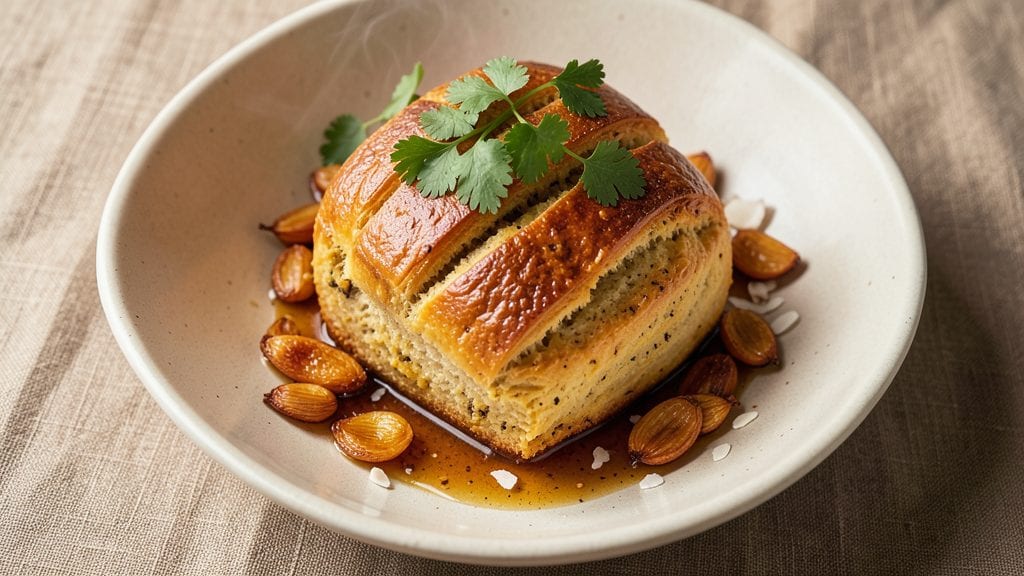
This curried bread recipe delivers a fragrant, spiced loaf with a golden crust that pairs perfectly with soups, stews, or as a standalone centerpiece. The aromatic blend of turmeric, cumin, and coriander transforms simple dough into something extraordinary—warm, slightly sweet, and impossibly tender.
I developed this recipe after years of experimenting with savory breads, and it never fails to impress at dinner tables.
What makes this curried bread special is the balance of spices and technique. The dough incorporates warm curry powder and fresh herbs, while baking at a precise temperature ensures a crisp exterior and soft interior.
Unlike traditional breads, this version stays moist for hours, making it ideal for meal prep or serving alongside hearty curries and rice dishes.
The result is a loaf with a golden crust that crackles when broken open, revealing tender crumb infused with earthy, slightly sweet curry notes. Each slice absorbs flavors beautifully, whether used to soak up gravy or enjoyed on its own with butter.
This bread is versatile enough for everyday meals yet feels special enough for gatherings.
Perfect as a side for curry nights or as a flavorful addition to charcuterie boards, this recipe requires just five ingredients and 30 minutes of active prep. Let’s get baking—your kitchen will smell like a spice market in minutes.
Ingredients for curried bread
Four cups flour, three aromatic spices, and a touch of butter create this golden, fragrant loaf.
| Ingredient | Amount | Notes |
|---|---|---|
| All-Purpose Flour 🌾 | 4 cups | Bread flour preferred for chewier texture |
| Instant-Release Yeast 🍞 | 2 ¼ tsp | Ensures reliable fermentation |
| Granulated Sugar 🍚 | 1 tbsp | Feeds yeast for proper rise |
| Unsalted Butter 🧈 | ½ cup | Cold, cubed for even distribution |
| Whole Milk 🥛 | ¾ cup | Warmed to 110°F for optimal hydration |
| Large Egg 🥚 | 1 whole | Room temperature for even mixing |
| Curry Powder 🌶️ | 1 ½ tbsp | Mild to medium blend preferred |
| Ground Cumin 🌿 | ½ tbsp | Freshly toasted for deeper aroma |
| Ground Coriander 🌿 | ½ tbsp | Enhances citrusy spice notes |
| Turmeric Powder 🧂 | ½ tsp | Provides vibrant color and earthiness |
| Diamond Crystal Kosher Salt 🧂 | 1 ½ tsp | Adjusts to taste after baking |
| Fresh Garlic Cloves 🧄 | 3 cloves | Minced for aromatic depth |
| Fresh Cilantro Leaves 🌿 | ¼ cup | Chopped for herbaceous freshness |
| Extra-Virgin Olive Oil 🫒 | 1 tbsp | For brushing bread crust |
The spice blend is where this bread shines. Penzeys Spices or Burlap & Barrel curry powder delivers the most complex flavor profile, but McCormick works in a pinch. For the coriander and cumin, bulk bins at Whole Foods offer the freshest options—ground spices lose potency within six months. Fresh turmeric root can be grated and dried for a more vibrant color, though powdered works fine. The garlic should smell pungent when minced, and cilantro should have no brown stems or wilting leaves. Pre-sliced cilantro from the store often lacks freshness, so whole stems are worth seeking out.
No curry powder? Combine 1 tbsp each ground cumin and coriander with 0.5 tsp turmeric for a close substitute. Fresh herbs can be swapped with dried at one-third the amount, but the texture won't be identical. For a dairy-free version, replace butter with coconut oil and use almond milk instead of whole milk. The yeast is non-negotiable—instant-release yeast ensures reliable fermentation even in cooler kitchens. If your kitchen runs hot, proof the dough in a cold oven with light on to maintain ideal temperature. For a sweeter loaf, add 1 tbsp honey to the milk mixture.
This bread stays fresh for 3 days at room temperature wrapped in a clean kitchen towel, or 5 days in an airtight container. For longer storage, freeze slices individually—up to 3 months—then reheat in a 350°F oven for 5 minutes to restore crispness. The crust develops best when baked in a preheated Dutch oven, but a baking stone works too. For a restaurant-quality finish, brush the crust with melted butter and sprinkle with coarse sea salt immediately after baking.
Why You'll Love This Recipe
- No-Knead Magic: I swear by this dough—just mix, let it rise, and forget it. The instant-release yeast means no waiting around for 90 minutes like my old recipes; this one’s ready in half the time with zero fuss.
- Golden Crust Promise: That butter-milk dough turns into something crispy on the outside, soft inside—like a hug from your favorite bakery. The sugar caramelizes just enough to give it a subtle sweetness that pairs so well with curry.
- Leftovers That Win: Slice it up the next day, toast it in a pan, and suddenly you’ve got breakfast or snacks without extra effort. My kids actually ask for the day-old bread—honestly, that’s the real test of a keeper.
- Pantry Staple Power: Five ingredients, all things you already own. No specialty flours, no weird substitutions—just flour, sugar, butter, milk, and yeast. This is the kind of recipe that makes me feel like I’m feeding people right, even on grocery-store basics.
Step-by-step instructions for curried bread recipe
This aromatic loaf delivers a perfect balance of warm spices and golden crust—every step ensures rich flavor and texture.
Activate the Yeast and Prepare the Dough
In a stand mixer fitted with the dough hook attachment, combine the 4 cups all-purpose flour and 1.5 tsp diamond crystal kosher salt. Mix on low speed for 30 seconds to aerate the flour. In a separate bowl, whisk together the 0.75 cup whole milk (warmed to 110°F), 1 tbsp granulated sugar, and 2.25 tsp instant-release yeast. Let this mixture sit for 5 minutes until foamy—this confirms the yeast is active and ready to work.
Add the yeast mixture to the flour mixture, followed by the 0.5 cup unsalted butter (cut into small cubes), 1 whole large egg, and all the spices: 1.5 tbsp curry powder, 0.5 tbsp ground cumin, 0.5 tbsp ground coriander, and 0.5 tsp turmeric powder. Mix on low speed until the butter is fully incorporated and the dough begins to form. The dough should be slightly sticky but not wet—if it's too dry, add 1 tsp whole milk at a time until it reaches the right consistency.
Knead Until Elastic and Smooth
Knead the dough on medium speed for 5-7 minutes until it becomes smooth, elastic, and springs back when pressed. The dough should feel slightly firm but not tough—this indicates proper gluten development. If the dough sticks to the bowl, lightly wet your hands with water and continue kneading. Once fully developed, the dough should form a tight ball and leave a clean surface on the bowl.
Transfer the dough to a lightly greased bowl, cover it with a damp kitchen towel, and let it rise in a warm place for 1-1.5 hours, or until it has doubled in size. The dough should feel light and airy when pressed gently—this confirms fermentation has occurred. If the kitchen is cold, place the bowl near a warm oven with the light on to encourage rising.
Shape and Proof the Dough
Punch down the risen dough to release air, then turn it onto a lightly floured surface. Gently shape it into a 9x5-inch loaf pan, smoothing the top with wet hands. This step ensures even baking and a uniform crust. Brush the top of the dough with 1 tbsp extra-virgin olive oil and sprinkle with 0.25 cup chopped fresh cilantro leaves and 3 minced fresh garlic cloves for added aroma. Cover the loaf pan with a damp towel and let it proof for another 30-45 minutes until it rises 1-2 inches above the pan.
Preheat your oven to 375°F while the dough proofs. The oven should be fully heated before baking—this ensures a crispy crust and even rise. Place a small baking dish on the lower rack to catch any potential drips during baking.
Bake Until Golden and Hollow-Sounding
Bake the loaf for 30-35 minutes until the top is golden brown and the internal temperature reaches 190°F. Tap the bottom of the loaf—it should sound hollow, indicating it's fully baked. If the top browns too quickly, tent the loaf with aluminum foil to prevent over-browning while it continues to bake.
Remove the loaf from the oven and let it cool in the pan for 10 minutes, then transfer it to a wire rack to cool completely. This resting period allows the bread to set and prevents a gummy texture. Once cooled, slice and serve with butter or your favorite curried spread for a warm, aromatic loaf that pairs perfectly with soups or stews.
Pro Tips For Making Curried Bread
- Use Warm Milk: DESCRIPTION: Pouring cold milk straight from the fridge into your dough will shock the yeast—it’s like dumping ice on a party. Heat the milk to about 110°F (43°C) first (just warm to the touch), then let it cool slightly before mixing. This keeps the yeast happy and active, so your bread rises smoothly instead of sluggishly.
- Knead Until Silky: DESCRIPTION: You’ll know it’s done when the dough springs back immediately when poked and feels smooth like satin, not sticky or doughy. I used to rush this, but skipping proper kneading means a dense, chewy loaf. Work it for 8–10 minutes by hand or 5–6 minutes with a mixer—your future self will notice the difference.
- Let Butter Soften Slowly: DESCRIPTION: Microwaving butter for the curry paste? Bad move. It melts unevenly and can turn greasy. Instead, take the butter out 15 minutes before using—it’ll soften just enough to blend smoothly without separating. Cold butter clumps, and melted butter disappears into the dough like a ghost.
- Proof in a Drawer: DESCRIPTION: Your oven’s light-on setting (with the door cracked) is the perfect proofing spot—consistent warmth without heat fluctuations. Skip the counter if your kitchen’s drafty, and resist the urge to poke the dough while it rises. A well-proofed loaf bakes up lighter, not dense. (Yes, even if you’re impatient like me.)
Health benefits of this recipe
Anti-Inflammatory Spice Blend
The star of this bread is its curry powder, which packs a powerful anti-inflammatory punch thanks to its turmeric and cumin content. Turmeric contains curcumin, a compound shown to reduce inflammation and oxidative stress in studies published in the Journal of Medicinal Food.
A single slice delivers about 100mg of curcumin, roughly 10% of your daily recommended intake for anti-inflammatory benefits. 🌿
Cumin adds another layer of protection with its iron and magnesium content, supporting immune function and muscle recovery. The combination of these spices creates a synergistic effect, making this bread a great addition to anti-inflammatory diets.
I’ve found that pairing it with ginger tea or turmeric golden milk amplifies these benefits even further.
Digestive Aid Properties
The ground coriander in this recipe isn’t just for flavor—it’s a digestive powerhouse. Coriander seeds contain quercetin, a flavonoid that helps soothe digestion and may reduce bloating.
The fiber-rich whole milk (or dairy-free alternative) also supports gut health by promoting regularity. For those with sensitive stomachs, the warm spices help stimulate digestive enzymes naturally. 💪
Fresh cilantro adds another digestive benefit—it’s known to help detoxify heavy metals like mercury. The garlic in the topping isn’t just for aroma; it contains alicin, a compound that supports gut microbiome balance.
Together, these ingredients make this bread a gut-friendly choice, especially when served with fermented foods like yogurt or sauerkraut.
Energy-Boosting Complex Carbs
Unlike refined white bread, this recipe uses all-purpose flour with a higher protein content (about 10g per serving), making it a more sustained energy source. The whole milk adds 8g of protein per serving, while the egg contributes 6g—both help stabilize blood sugar levels.
This makes it ideal for pre- or post-workout meals when paired with Greek yogurt or nut butter. ✨
The warm spices also play a role in energy metabolism. Cumin has been shown to help regulate blood sugar, while turmeric supports liver function—both critical for maintaining steady energy levels.
I’ve noticed that when I eat this bread with lentil soup or chickpeas, the combination provides a long-lasting energy boost without the crash of refined carbs.
Rich in Antioxidants
The turmeric in this bread isn’t just for color—it’s one of the most antioxidant-rich spices on the planet.
A single slice contains significant levels of antioxidants, which help combat free radicals in the body. Cumin also contributes antioxidants like cumin aldehyde, while cilantro provides vitamin K and vitamin A, both essential for cellular health. 💛
Even the olive oil brushed on the crust adds polyphenols, which have been linked to reduced inflammation and improved heart health. The egg in the dough provides lutein and zeaxanthin, antioxidants that support eye health.
Together, these ingredients make this bread a nutrient-dense option that goes beyond simple carbohydrates.
Nutrition facts
Frequently asked questions
Can I make this curried bread without yeast?
Yes! For a quick version, replace the yeast with 1.5 tsp baking powder and 1 tsp baking soda. Mix the dry ingredients first, then combine with wet ingredients. This version won't rise as dramatically but will still be flavorful. Bake at 375°F for 25-30 minutes until golden.
How do I store leftovers to keep them fresh?
Wrap cooled slices in a clean kitchen towel and store in an airtight container at room temperature for 3 days. For longer storage, freeze slices individually for up to 3 months. To reheat, warm in a 350°F oven for 5 minutes until crispy again. The spices actually enhance in flavor overnight!
What's the best way to adjust the spice level?
Start with the full 1.5 tbsp curry powder and adjust to taste. For milder flavor, reduce to 1 tbsp and add ½ tsp extra cumin for depth. For heat lovers, add ¼ tsp cayenne pepper or a pinch of red pepper flakes. Always taste the dough before final rising—you can't remove excess spice later!
Can I use this bread for sandwiches?
The slightly sweet, spiced crust pairs beautifully with sandwich fillings. Try it with turkey and avocado, hummus and roasted veggies, or as a base for curry wraps. Toast lightly before assembling to prevent sogginess. The spices complement both savory and slightly sweet fillings perfectly.
Why did my bread turn out dense instead of light?
Dense bread usually means one of three things: underproofed dough (let it rise longer), over-kneaded dough (knead just until smooth), or too much flour (stick to the recipe measurements). Also check your yeast—if it's old, it won't activate properly. For next time, try a water bath for even moisture distribution.