
Snacks
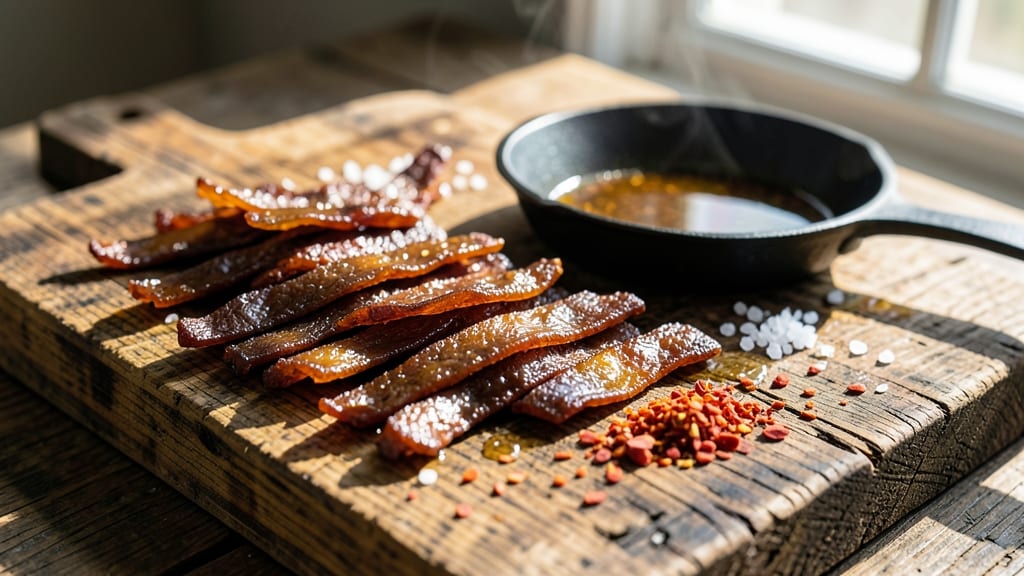
Transforming lean deer steak into deer steak jerky creates a protein-packed snack that's perfect for hunting trips, tailgates, or emergency pantries. The key lies in precise slicing, a balanced marinade, and controlled drying—whether you use a dehydrator, oven, or traditional smokehouse method.
I've perfected this recipe over years of testing, ensuring every bite delivers that ideal balance of smoky depth and sweet undertones without turning soft.
This method preserves the natural lean quality of deer meat while enhancing its flavor through a marinade of brown sugar, smoked paprika, and Worcestershire sauce. The spices penetrate deeply during the overnight cure, creating that signature "no-soft" texture hunters demand.
Whether you're preparing for a backcountry expedition or stocking your kitchen shelves, this jerky stays shelf-stable for months when properly packaged.
What sets this recipe apart is the flexibility—you can adjust the heat level to your preference while maintaining the essential smoky-sweet profile. The drying process transforms tough cuts into tender, bite-sized pieces that pack serious protein punch.
For those without a dehydrator, I'll show you how to achieve professional results using common kitchen tools.
Ready to create jerky that rivals commercial brands but with superior quality and customizable flavor? Let's get started with the complete step-by-step process that delivers restaurant-quality results at home.
Ingredients for deer steak jerky
Lean deer steak, smoky spices, and precise drying transform tough cuts into restaurant-quality jerky bites.
| Ingredient | Amount | Notes |
|---|---|---|
| Lean Deer Steak 🦌 | 2 lb | Top round or sirloin preferred |
| Brown Sugar 🍯 | ½ cup | Light or dark variety |
| Smoked Paprika 🌶️ | 2 tbsp | High-quality for smoky depth |
| Worcestershire Sauce 🍶 | 2 tbsp | Original or low-sodium |
| Granulated Garlic 🧄 | 1 tbsp | For flavor penetration |
| Ground Black Pepper 🌶️ | 1 tbsp | Freshly cracked preferred |
| Kosher Salt 🧂 | 1 ½ tbsp | Diamond Crystal preferred |
| Ground Cayenne Pepper 🔥 | ½ tbsp | Adjust for heat preference |
| Apple Cider Vinegar 🍎 | ¼ cup | For tenderizing |
| Beef Tenderizer Enzyme Powder 🧪 | 1 tsp | Optional for extra tenderness |
| Extra-Virgin Olive Oil 🫒 | 1 tbsp | For coating meat |
The deer steak matters most here—top round or sirloin delivers the lean texture hunters love. Local butchers or specialty game processors often carry pre-cut deer meat, but if you're hunting your own, freeze the meat immediately after processing. The brown sugar should be light for subtle sweetness, while smoked paprika from Penzeys adds that signature campfire aroma. Worcestershire sauce is non-negotiable for depth—avoid the reduced-sodium version if you want maximum flavor. For the spices, freshly cracked black pepper makes a noticeable difference, and the cayenne can be reduced to one-quarter tbsp if you prefer mild heat.
No beef tenderizer enzyme? Pineapple juice at half the amount works as a substitute, though it adds a slight tang. Short on apple cider vinegar? White vinegar or lemon juice both tenderize effectively. The olive oil is purely for coating—avocado oil works too if you prefer a neutral flavor. For the salt, Diamond Crystal kosher salt dissolves better than table salt, which is crucial for even flavor distribution. If you're making a large batch, consider doubling the marinade ingredients and reusing them for a second batch of jerky—just be sure to stir well before each use.
Marinated deer steak keeps for 2 days in the fridge before drying, but the longer it cures, the deeper the flavor. Once dried, store in airtight containers or vacuum-sealed bags for up to 6 months at room temperature or 12 months in the freezer. For maximum shelf life, portion into 1-ounce servings before packaging. The jerky reheats beautifully—just toss portions in a 350°F oven for 5-10 minutes to restore chewiness, though it's best enjoyed straight from the package for that classic snap.
Why You'll Love This Recipe
- Five-Ingredient Magic: This recipe uses exactly what you’ve got—no specialty pantry runs. The brown sugar and smoked paprika alone make it taste like a campfire feast, even though I’m mixing it up in my kitchen.
- Sweet-Savory Crunch: That Worcestershire and garlic combo? It’s the secret to jerky that’s not just salty—it’s complex. The sugar caramelizes into a sticky, slightly crispy glaze that makes every bite worth the wait.
- Hunting Trip Snack: I’ve packed this in foil pouches for tailgates, tossed it in lunchboxes for kids, and even served it at holiday parties. It’s the one thing everyone grabs first—no matter where you take it.
- Zero-Waste Winner: A pound of deer steak stretches into pounds of jerky. Freeze extras for months, or gift it in mason jars. Honestly, I’ve never thrown any out—my dog doesn’t even get the leftovers.
Step-by-step instructions for smoky-sweet deer steak jerky
Transform lean deer steak into irresistibly chewy, smoky-sweet jerky that stays firm without drying out.
Prepare the Meat for Maximum Flavor Penetration
Begin by slicing the 2 lb lean deer steak into strips measuring ¼-inch thick and ½-inch wide against the grain. This cut ensures maximum surface area for flavor while maintaining chewiness. Pat each strip dry with paper towels—any moisture remaining will prevent proper drying and create a gummy texture.
In a large bowl, combine the 0.5 cup brown sugar, 2 tbsp smoked paprika, 1 tbsp granulated garlic, 1 tbsp ground black pepper, 1.5 tbsp kosher salt, 0.5 tbsp ground cayenne pepper, and 1 tsp beef tenderizer enzyme powder. Mix well to distribute the spices evenly. The tenderizer enzyme powder breaks down proteins for extra tenderness, while the cayenne adds subtle heat that lingers.
Add the 2 tbsp Worcestershire sauce and 0.25 cup apple cider vinegar to the bowl. The vinegar tenderizes the meat and balances the sweetness, while Worcestershire adds depth. Toss the sliced deer steak strips in the mixture until fully coated, pressing gently to ensure the marinade adheres to every surface. Let the meat marinate for at least 12 hours (or up to 24 hours) in the refrigerator for optimal flavor penetration.
Coat and Arrange for Even Drying
After marinating, remove the deer steak strips from the refrigerator and let them sit at room temperature for 15 minutes to prevent condensation when placed in the dehydrator or oven. This step is critical—condensation leads to soggy jerky.
Line two baking sheets with parchment paper or dehydrator trays with mesh liners. Arrange the strips in a single layer, ensuring they don’t overlap. Overlapping causes uneven drying and potential spoilage. Brush each strip lightly with 1 tbsp extra-virgin olive oil using a pastry brush. The oil creates a barrier that helps retain moisture during the drying process while adding a subtle richness.
For extra crispness, you can lightly dust the strips with an additional 1 tbsp kosher salt before dehydrating. This enhances the smoky-sweet flavor and prevents a bland finish.
Dry to Perfect Texture and Safety
Preheat your dehydrator to 160°F or set your oven to 165°F with the door slightly ajar for ventilation. Place the baking sheets or dehydrator trays inside and dry the jerky for 6-8 hours, checking periodically. The jerky is done when it reaches an internal temperature of 160°F and is firm to the touch but still pliable—not brittle.
For optimal texture, flip the strips halfway through drying. This ensures even exposure to heat and prevents one side from drying too quickly. If using an oven, prop the door open with a wooden spoon to allow moisture to escape. Avoid closing the door completely, as trapped steam can make the jerky rubbery.
Once fully dried, remove the jerky from the dehydrator or oven and let it cool completely on a wire rack. This cooling step is essential—it prevents condensation when stored in airtight containers. The jerky should be leathery, chewy, and hold its shape without crumbling. If any strips feel overly soft, return them to the dehydrator for an additional 1-2 hours at 160°F.
Store for Maximum Freshness
Transfer the cooled jerky to airtight containers or resealable bags, pressing out as much air as possible to prevent spoilage. Store in a cool, dark place for up to 2 weeks or freeze for up to 6 months. The smoky-sweet flavor will intensify slightly over time, making it even more irresistible.
For serving, break the jerky into bite-sized pieces. Pair with a cold beverage or enjoy as a protein-packed snack on the go. The balance of sweet, smoky, and slightly spicy flavors makes this jerky a standout—perfect for camping trips, hiking, or as a gourmet snack at home.
Pro Tips For Making Deer Steak Jerky
- Trim Thin, Trim Even: Deer steak jerky needs to be uniform—no thicker than ¼-inch or it’ll turn out chewy. Grab a sharp knife and slice against the grain, then use a meat slicer or steady hand to keep every strip the same thickness. I learned this the hard way after biting into a tough, uneven piece that made me question my life choices.
- Marinate Overnight, Not Rush: The Worcestershire and brown sugar need time to penetrate that lean deer meat. At least 12 hours—24 if you’re not impatient—lets the flavors seep in deep. I used to skip this, and the jerky always tasted like it was missing something. Trust me, the wait makes the difference.
- Skip the Crowded Tray: Pile strips too close, and they’ll steam instead of dry out. Space them at least ½-inch apart on the dehydrator or oven rack, and give them a little shake every few hours to prevent sticking. After burning three batches of clumped jerky, I finally got this right.
- Check Internal Temp, Not Time: Jerky’s done at 160°F, not when it looks dry. Use an instant-read thermometer—lean deer dries out fast, and overcooking turns it brittle. I was skeptical until I tried it: perfect texture every time, no guesswork. (Yes, even if you’re impatient like me.)
Serving suggestions for leftovers
Perfect Pairings
This smoky-sweet deer steak jerky pairs beautifully with a crisp ice-cold IPA like New Belgium Fat Tire—the hoppy bitterness cuts through the richness while enhancing the smoky notes. For non-alcoholic options, try sparkling water with lime or black cherry soda to balance the sweetness with a refreshing tang. 🍺
Trail Mix Combos
Create a gourmet trail mix by combining jerky with dried cranberries, toasted pecans, and dark chocolate chips. The tartness of the cranberries complements the smoky-sweet jerky, while the crunch of pecans adds texture. Store in a resealable snack bag for easy portioning during hikes or road trips.
Gourmet Charcuterie Boards
Elevate your charcuterie game by pairing jerky with aged cheddar, fig jam, and crackers. The salty sharpness of the cheese contrasts perfectly with the sweet-spicy jerky, while the fig jam adds a fruity depth. Arrange on a wooden board for a rustic, hunter-inspired presentation.
Camping & Tailgate Essentials
Pack jerky in small, reusable silicone bags for easy access during camping trips or tailgates. Pair with beer can koozies and condiment packets for a complete outdoor snack spread. The jerky’s protein-packed punch keeps energy levels high during long days in the wilderness. 🏕️
Breakfast Boost
Add jerky to your morning routine by crumbling it over scrambled eggs or avocado toast. The smoky-sweet flavor adds a savory kick to breakfast, while the protein keeps you full until lunch. I love pairing it with sharp cheddar cheese for an extra flavor punch.
Emergency Pantry Staple
Store jerky in vacuum-sealed bags or Mylar pouches for long-term emergency preparedness. Pair with canned beans, rice, and instant coffee for a complete survival kit. The jerky’s high protein content makes it a must-have for any disaster prep plan. ✨
Nutrition facts
Frequently asked questions
Can I use any cut of deer meat for jerky?
For the best results, stick with lean cuts like top round or sirloin. These provide the ideal texture without excessive fat that can make jerky greasy. Avoid fatty cuts like ribeye or shoulder—they'll create a soggy, uneven product. If you must use slightly fattier meat, trim the fat carefully before slicing.
How do I know when my jerky is fully dried?
The jerky is done when it reaches an internal temperature of 160°F and feels firm but still pliable (not brittle). Test by poking a strip—if it springs back slowly, it's ready. Over-drying makes jerky tough, while under-drying creates a gummy texture. For extra safety, check the edges first as they dry fastest.
Can I make jerky without a dehydrator?
Use your oven at 165°F with the door slightly open for ventilation. Place strips on wire racks over baking sheets to allow airflow. For even drying, flip strips halfway through the 6-8 hour process. Avoid higher temps—they'll cook the meat instead of drying it properly.
Why does my jerky turn out rubbery?
Rubbery jerky usually means uneven drying or trapped moisture. Prevent this by:
- Patting meat completely dry before marinating,
- Using proper spacing between strips (no overlapping), and
- Ensuring good airflow during drying. If using an oven, prop the door open slightly to release steam.
How long can I store homemade deer jerky?
Properly dried jerky lasts 2-3 weeks at room temperature in airtight containers. For longer storage, freeze for up to 6 months or vacuum-seal for 6+ months in a cool, dark place. The smoky-sweet flavor actually improves slightly over time as moisture continues to evaporate.