
Sauces & Condiments
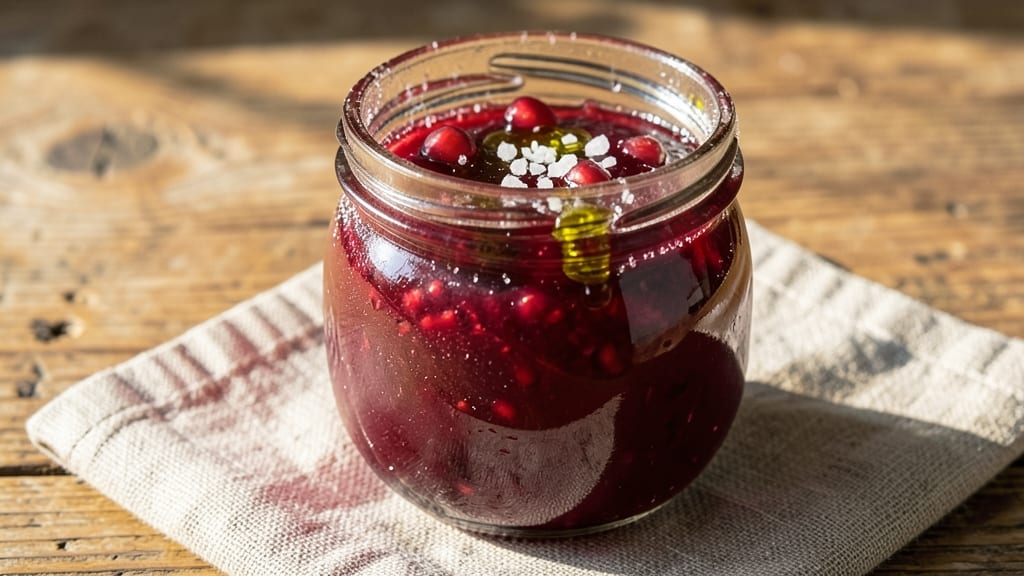
Making easy pomegranate jam transforms tart pomegranate arils into a vibrant, ruby-red spread that brightens toast, yogurt, or desserts with minimal effort. This recipe skips gelatin and delivers a naturally thickened, vegan-friendly jam in just 15 minutes—no pectin required.
The secret lies in pomegranate’s natural pectin, which activates with lemon juice and sugar to create a glossy, fruit-forward spread.
This method preserves the fruit’s bold flavor while achieving perfect texture through controlled cooking. You’ll need just three ingredients: pomegranate arils, sugar, and lemon juice, plus a pinch of salt to balance sweetness. The process is straightforward—simmer, stir occasionally, and let the jam thicken naturally without overcooking.
What you’ll end up with is a bright ruby spread that’s glossy, flavorful, and free of artificial additives. The jam’s natural sweetness shines through, making it versatile for breakfast, desserts, or even as a glaze for meats.
It stores well in the fridge for up to 2 weeks or can be canned for longer shelf life.
Perfect for gifting, meal prep, or satisfying a sweet craving, this jam delivers restaurant-quality results with minimal effort. Let’s get started—your kitchen will smell like sunshine in minutes.
Ingredients for easy pomegranate jam
Five simple ingredients transform tart pomegranate into a vibrant ruby spread perfect for breakfast or desserts.
| Ingredient | Amount | Notes |
|---|---|---|
| Pomegranate Arils 🍇 | 2 cups | Freshly extracted from pomegranate, no seeds |
| Granulated Sugar 🍚 | 1 ½ cups | White or raw cane preferred |
| Fresh Lemon Juice 🍋 | ¼ cup | From organic lemons, strained |
| Sea Salt 🧂 | ¼ tsp | Fine grain, Diamond Crystal preferred |
| Extra-Virgin Olive Oil 🫒 | 1 tbsp | For glossy finish, high-quality |
The pomegranate arils are the heart of this jam, so opt for fresh, seed-free arils—pre-packaged arils from Trader Joe's or Whole Foods work best, but extracting them yourself ensures maximum flavor. The sugar-to-fruit ratio is critical here: too little and the jam won't set properly; too much and the natural tartness disappears. Organic cane sugar adds subtle molasses notes, while white sugar delivers a cleaner finish. For lemon juice, freshly squeezed from organic lemons is non-negotiable—bottled juice lacks the acidity needed to activate the pomegranate's natural pectin.
No organic lemons? Substitute with bottled lemon juice, but reduce to 2 tbsp—it lacks the same acidity punch. Running short on sugar? Maple syrup or agave nectar can replace up to half the sugar, but the texture will be slightly softer. The olive oil might seem unusual, but it's essential for that glossy finish—use a fruity, extra-virgin variety like California Early Harvest. If you're concerned about oil separation, simply whisk it in at the end. For a spiced variation, add a 1/4 tsp ground cinnamon or cardamom with the sugar during cooking.
This jam thickens as it cools, so resist the urge to overcook—5-7 minutes of simmering is ideal. Store in a clean, sterilized glass jar with a tight seal. It keeps in the refrigerator for up to 2 weeks, though the flavor actually improves over time. For longer storage, transfer to a sterilized canning jar and process in a water bath for 10 minutes—this jam will last for 12 months on the shelf. The olive oil layer may separate; simply stir before use. Portion into small jars for gifting or meal prep—each jar makes a perfect breakfast companion.
Why You'll Love This Recipe
- I’ll be real: pomegranates are expensive, but this recipe uses every bit of the arils—no scraps, no waste. And a single batch stretches for toast, yogurt, or even drizzling over grilled chicken. That lemon juice? It’s the secret to making the sugar go further, so you’re not drowning in a sugar coma or a half-empty jar. Smart, simple, and delicious.
- No-Fuss Assembly: I swear, this takes less effort than making coffee—just toss arils, sugar, and lemon juice in a pot, simmer until it thickens, and boom. That’s it. No peeling, no dicing, no stress. The olive oil keeps it silky, and the salt cuts through the sweetness like a whisper.
- Tart-Sweet Magic: Honestly, the balance here is chef’s kiss—bright lemon juice and ruby arils play off the sugar’s warmth while the olive oil adds this unexpected depth. It’s not cloying, not bland—it’s the kind of jam that makes you pause mid-spoonful, like, "Wait, why isn’t this everywhere?"
- Year-Round Giftable: Between us, this jam is my go-to for hostess gifts, holiday presents, or even a last-minute "I forgot to buy wine" party favor. The olive oil keeps it shelf-stable for months, and the pomegranate’s jewel tones look stunning in a mason jar. Plus, it’s weirdly sophisticated—people assume it’s fancy, but it’s actually my lazy genius.
Step-by-step instructions for easy pomegranate jam
This method delivers a vibrant, jewel-toned jam with minimal effort—no pectin required.
Combine Pomegranate Arils and Sugar
In a medium saucepan, add the 2 cups pomegranate arils and 1.5 cups granulated sugar. Stir gently to distribute the sugar evenly among the arils. You'll notice the sugar begins to dissolve immediately as it draws out moisture from the fruit, creating a syrupy mixture. This initial step is crucial for balancing the natural tartness of the pomegranate with sweetness.
Let the mixture sit at room temperature for 5 minutes while you prepare the remaining ingredients. This brief pause allows the sugar to penetrate the arils, ensuring a more consistent texture in the finished jam. The pomegranate arils should remain whole at this stage—avoid crushing them, as this releases excess tannins that can make the jam bitter.
Add Lemon Juice and Salt
Pour in the 0.25 cup fresh lemon juice and 0.25 teaspoon sea salt, stirring thoroughly to combine. The lemon juice acts as a natural preservative and brightens the flavor profile, while the salt enhances the sweet-tart balance. You'll see the mixture begin to thicken slightly as the acid in the lemon reacts with the sugar.
Place the saucepan over medium-low heat, ensuring the mixture doesn't boil immediately. Instead, allow it to warm gradually to 180°F, stirring frequently to prevent scorching. The gentle heat helps the sugar dissolve completely and draws out more liquid from the pomegranate arils, creating a luscious, spreadable consistency.
Simmer Until Thickened
Once the mixture reaches 180°F, increase the heat to medium and bring it to a gentle boil. Let it simmer uncovered for 8-10 minutes, stirring every 2 minutes to prevent sticking. You'll notice the jam thicken noticeably as the liquid reduces—it should coat the back of a spoon smoothly without being overly stiff.
To test for doneness, place a small spoonful of jam on a chilled plate. If it wrinkles slightly when pushed with your finger, it's ready. If it spreads too thinly, continue simmering for another 1-2 minutes. The jam should hold its shape but remain spreadable—this balance ensures it's neither too runny nor too stiff.
Finish with Olive Oil and Cool
Remove the saucepan from heat and stir in the 1 tablespoon extra-virgin olive oil. This final step adds a subtle richness and helps create a glossy finish. The oil also contributes to the jam's shelf life by forming a protective layer on the surface. Skim off any foam that rises to the top with a spoon, as this can make the jam appear cloudy.
Transfer the jam to a clean, sterilized jar and let it cool to room temperature. As it cools, it will thicken further, achieving a perfect spreadable consistency. Store in the refrigerator for up to 2 weeks or process in a water bath for long-term storage. The finished jam should have a vibrant ruby hue and a bright, balanced sweet-tart flavor with a hint of citrus.
Pro Tips For Making Easy Pomegranate Jam
- Simmer Slow and Steady: Pomegranate arils release their juices fast, but rushing the cookdown turns your jam into syrup. Keep it at a gentle simmer—tiny bubbles, not a rolling boil—so the sugar caramelizes properly and the texture stays thick and glossy, not sticky and sad.
- Strain the Seeds: No one wants a mouthful of pomegranate seeds in their jam. After cooking, pour the mixture through a fine-mesh sieve lined with cheesecloth (or a clean kitchen towel) to catch every last bit. It’s messy, but the result is silky smooth—worth the extra 30 seconds.
- Salt the Sugar First: Toss the sugar with a pinch of salt before adding it to the pomegranate juice. This balances the sweetness right from the start, so you’re not left guessing if the jam needs more salt later. (Yes, even if the recipe doesn’t mention it—trust me.)
- Finish with Olive Oil: Stir in the extra-virgin olive oil off the heat once the jam is thickened. It coats the arils, adds richness, and keeps the jam from drying out over time. Skip this, and your jam might turn grainy after a few days—don’t let that happen.
Perfect pairings for these flavors
Breakfast Pairings
Spread your ruby pomegranate jam on toasted sourdough or brioche for an instant breakfast upgrade. The tart-sweet contrast cuts through buttery bread beautifully. I like to add a sprinkle of flaky sea salt and a drizzle of local honey for extra depth.
For a protein boost, pair with Greek yogurt or ricotta cheese—the jam’s acidity balances the creaminess perfectly. 🥖
Cheese Board Magic
This jam elevates any cheese board with its vibrant color and bright flavor. I recommend pairing it with aged cheddar, brie, or goat cheese—the jam’s acidity cuts through rich dairy.
Add walnuts or pecans for crunch, and a few fresh figs to complement the pomegranate’s natural sweetness. For a savory twist, include prosciutto or cured meats to contrast the sweet-spicy jam.
Dessert Enhancements
Use this jam as a glaze for pancakes, waffles, or French toast—it adds a jewel-toned finish that looks stunning. For a no-bake dessert, layer with mascarpone cheese and graham crackers in a trifle.
I also love drizzling it over vanilla ice cream or panna cotta for a sophisticated touch. The jam’s natural sweetness reduces the need for extra sugar in desserts.
Savory Surprises
Don’t limit this jam to sweet dishes! Brush it on grilled chicken or pork tenderloin as a glaze before roasting—it caramelizes beautifully. I’ve also used it as a filling for stuffed mushrooms or portobello caps, paired with feta cheese and herbs.
The acidity tenderizes meats while adding a fruity depth. For a vegetarian option, spread it on grilled halloumi with a sprinkle of za’atar.
Cocktail & Mocktail Twists
Add a spoonful of pomegranate jam to sparkling water with gin or vodka for a refreshing cocktail. I like to muddle a small amount with fresh mint and lime juice for a vibrant mocktail.
For a boozy version, stir it into champagne or prosecco—the jam’s ruby color makes it look like a festive celebration. For a non-alcoholic option, mix with ginger ale and lemon slices for a zesty drink.
Gifting & Preserving
Portion your jam into small amber glass jars with a ribbon seal for elegant gifting. I like to include a handwritten note about the recipe’s simplicity and versatility. For long-term storage, process the jam in a water bath canner for 10 minutes—it’ll last up to 12 months unrefrigerated.
The jam’s natural sweetness makes it a perfect homemade gift for holidays or housewarming presents. 🎁
Nutrition facts
Frequently asked questions
Why does this pomegranate jam recipe not require pectin?
Pomegranates contain natural pectin that activates when combined with sugar and acid (lemon juice). The 15-minute simmer helps extract and concentrate this pectin, creating a thick, spreadable consistency without additives. This method preserves the fruit's vibrant color and authentic flavor better than store-bought alternatives.
Can I use pre-packaged pomegranate seeds instead of fresh arils?
Yes, but with one important note: pre-packaged seeds often contain membranes that can make the jam cloudy. For the clearest ruby color, remove any white membranes before measuring 2 cups of arils. If using seeds, strain the finished jam through a fine-mesh sieve to achieve the same glossy texture.
How do I know when the jam is perfectly thickened?
Test for doneness by placing a small spoonful on a chilled plate. When ready, it should wrinkle slightly when pushed with your finger (like jelly) but still spread smoothly. The jam should coat the back of a spoon without dripping. If it spreads too thin, simmer 1-2 more minutes.
What can I do if my jam crystallizes in the fridge?
Crystallization happens when sugar separates from the liquid. To fix it, simply place the jar in a saucepan with 1 inch of hot water and warm gently while stirring until smooth. For prevention, stir the jam occasionally while cooling to redistribute the sugar. This won't affect flavor or safety.
Is this jam safe to eat without canning?
Yes, this recipe is safe to store in the fridge for up to 2 weeks without canning. The combination of sugar, acid, and olive oil creates a naturally preserved environment. For longer storage, process in a water bath for 10 minutes to extend shelf life to 12 months. Always use sterilized jars.