
Breakfast & Brunch
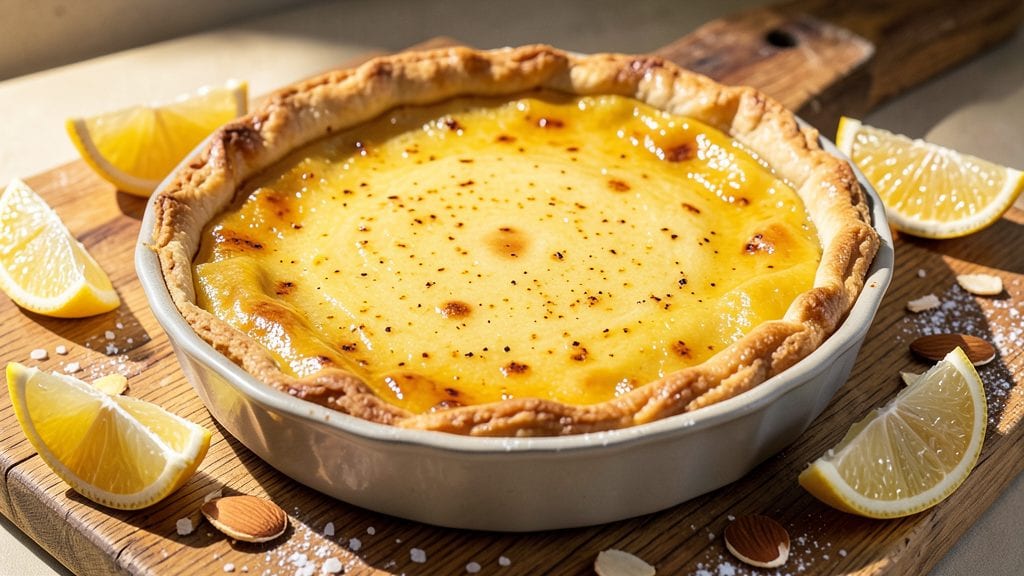
Creating a French lemon tart recipe that balances a crisp buttery crust with vibrant lemon curd is an art—and this method delivers professional results every time. The secret lies in blind-baking the crust to perfection before pouring in a silky, tangy filling that sets beautifully when chilled.
I’ve perfected this technique through years of baking, ensuring the crust stays flaky while the lemon curd remains glossy and bright.
This recipe starts with a classic French-style tart shell, where cold butter and precise flour measurements create the ideal foundation. The lemon curd, made from fresh juice and zest, requires careful tempering of the eggs to prevent curdling, a common pitfall in homemade versions.
With just 30 minutes of active prep and 45 minutes of baking time, you’ll have a dessert that looks and tastes like it came from a Parisian pâtisserie.
The final result is a tart with a golden, flaky crust that holds its shape, topped with a glossy lemon curd that’s neither too sweet nor overly tart.
The contrast between the buttery crust and the tangy filling makes every bite irresistible, and the chilling process ensures a clean slice every time. This is the kind of dessert that elevates any brunch or afternoon tea.
Whether you’re baking for a crowd or treating yourself, this recipe scales effortlessly and pairs perfectly with a dusting of powdered sugar or a dollop of whipped cream. Let’s get started on creating a tart that’s as impressive as it is delicious.
Ingredients for french lemon tart
Cold butter, precise flour ratios, and fresh lemons create this Parisian-style tart.
| Ingredient | Amount | Notes |
|---|---|---|
| All-Purpose Flour 🌾 | 1 ½ cups | Sifted for light texture |
| Unsalted Butter 🧈 | 1 cup | Cold, cubed for crust |
| Granulated Sugar 🍚 | ½ cup | Plus 2 tbsp for crust |
| Large Egg Yolks 🥚 | 4 whole | For curd binding |
| Large Eggs 🥚 | 2 whole | Room temperature |
| Fresh Lemon Juice 🍋 | 1 cup | From 4-5 lemons |
| Lemon Zest 🍋 | 2 tbsp | Fine, organic preferred |
| Heavy Cream 🥛 | ½ cup | Full-fat for richness |
| Powdered Sugar 🍚 | ¼ cup | For dusting |
| Fine Sea Salt 🧂 | ½ tsp | Kosher preferred |
| Vanilla Extract 🌿 | ½ tsp | Pure Madagascar |
| Cornstarch 🌾 | 1 tbsp | For curd stability |
| Ice Water 💧 | ¼ cup | For dough handling |
The butter is non-negotiable—European-style unsalted butter from Plugrá or Land O'Lakes gives the best flakiness. Keep it cold when cutting into the flour; warm butter creates a tough crust. For flour, King Arthur or Gold Medal brands work best, as they’re finely milled and consistent. The lemon juice should be freshly squeezed—organic lemons from Trader Joe's or your local market yield the brightest flavor. If using bottled juice, add an extra tablespoon of zest to compensate for the lack of freshness.
No European butter? Crisco or vegetable shortening can replace half the butter for a lighter crust, though it lacks flavor. Running short on cornstarch? Arrowroot powder at the same amount works perfectly. The eggs must be room temperature—cold yolks can cause the curd to break. For a less sweet curd, reduce the sugar to 0.375 cups and add an extra tablespoon of zest. The vanilla extract should be pure—imitation extracts won’t provide the same depth of flavor. If you can’t find Madagascar vanilla, Tahitian vanilla is a close second.
The crust dough must rest for at least 30 minutes before rolling to prevent shrinking. Wrap it tightly in plastic and refrigerate for up to 2 days. The lemon curd can be made 1 day ahead and stored in the fridge, covered with plastic wrap pressed directly on the surface to prevent a skin from forming. Once assembled, the tart needs 4-5 hours in the fridge to set properly. For a restaurant-quality finish, dust with powdered sugar just before serving—Confectioners' sugar from Domino is ideal for its fine texture.
Why You'll Love This Recipe
- No-Fuss Assembly: I swear, this crust only needs three ingredients—flour, butter, and a pinch of salt. You can mix it with your fingers (yes, really) and press it into a pan without rolling. The filling? Just yolks, sugar, and lemon juice, whipped together in minutes. That’s it. No standing over a stove for hours.
- Zesty Magic: The moment that tangy lemon curd hits your tongue—chef’s kiss—is what makes this tart worth every second. The butter-rich crust balances the bright acidity, while the eggs give it that silky, almost custardy texture. It’s the kind of dessert that makes you want to skip dinner.
- Showstopper Anywhere: Between us, this tart looks fancy enough for a brunch spread but simple enough to pull together for a last-minute potluck. I’ve served it at birthday parties, holiday gatherings, and even as a "I’m too tired to cook" weeknight treat. The crust holds up, the filling stays vibrant, and no one will guess it took less than an hour.
- Leftovers? More Like Leftovers: Honestly, the first time I made this, I panicked because I had way too much. But here’s the thing—it keeps beautifully for days in the fridge, and the flavor actually deepens the longer it sits. Slice it up for breakfast toast, pack it in lunches, or just eat it straight from the fridge like I do. (Don’t judge.) Plus, the ingredients are cheap—you’re basically making gourmet dessert on a budget.
Step-by-step instructions for French lemon tart
Master this classic tart with a delicate crust and velvety lemon curd filling.
Prepare the Buttery Crust
In a food processor, pulse the 1.5 cups all-purpose flour and 0.5 teaspoon fine sea salt until combined. Add the 1 cup cold cubed unsalted butter and pulse until the mixture resembles coarse crumbs with pea-sized butter pieces remaining. Gradually add the 0.25 cup ice water, 1 tablespoon at a time, until the dough just comes together when pressed.
Turn the dough onto a lightly floured surface and gently shape into a disk. Wrap in plastic wrap and refrigerate for at least 1 hour (or up to 2 days). This chilling time is crucial—it prevents the crust from shrinking during baking. Preheat your oven to 375°F while the dough chills.
Blind-Bake the Crust
Roll out the chilled dough between two sheets of parchment paper to a 12-inch round, about ⅛-inch thick. Carefully transfer the dough to a 12-inch tart pan with a removable bottom, trimming any excess. Press gently into the corners to ensure even thickness.
Line the crust with parchment paper, fill with pie weights or dried beans, and bake for 15 minutes. Remove the weights and bake for another 10-12 minutes until the edges are light golden brown and the base feels firm to the touch. Prick the bottom all over with a fork to prevent bubbling. Let cool completely on a wire rack.
Make the Lemon Curd Filling
In a medium saucepan, whisk together the 4 whole large egg yolks, 2 whole large eggs, 0.5 cup granulated sugar, 1 cup fresh lemon juice, 2 tablespoons lemon zest, 0.5 teaspoon vanilla extract, and 1 tablespoon cornstarch. Place the saucepan over medium-low heat and stir constantly with a silicone spatula.
Cook for 8-10 minutes until the mixture thickens enough to coat the back of a spoon. It should reach 170-175°F on an instant-read thermometer and pull away from the sides of the pan in ribbons. Immediately strain the curd through a fine-mesh sieve into a clean bowl to remove any zest bits. Stir in the 0.5 cup heavy cream and set aside to cool to room temperature.
Assemble and Chill the Tart
Pour the cooled lemon curd into the baked crust, spreading it evenly with an offset spatula. Dust the top with 0.25 cup powdered sugar for a delicate finish. Chill the tart uncovered in the refrigerator for at least 4 hours (or overnight) until the filling is completely set and firm.
This resting time allows the flavors to meld and the texture to develop properly. For best results, serve slices at room temperature, allowing them to sit for 10-15 minutes before cutting. The contrast between the crisp crust and silky lemon filling makes every bite perfect.
Pro Tips For Making French Lemon Tart
- Chill the Dough: DESCRIPTION: Roll out that puff pastry or shortcrust base and pop it in the fridge for 15 minutes before baking—yes, even if you're eager to get to the lemon curd. I used to skip this and ended up with a soggy bottom every time. The cold dough bakes more evenly and holds its shape when the tart goes in the oven.
- Whisk Egg Yolks Cold: DESCRIPTION: Beat those egg yolks and sugar over an ice bath in a metal bowl. The cold temperature keeps the mixture from cooking prematurely, which means a smoother, glossier curd instead of grainy scrambled eggs. I learned this the hard way after making curd that looked like cottage cheese.
- Blind-Bake the Crust: DESCRIPTION: Don’t skip the pie weights or dried beans—press parchment paper over the crust and fill it with something heavy before baking. This prevents the base from puffing up or cracking when the lemon curd goes in. I’ve seen enough collapsed tarts to know this step isn’t optional.
- Strain the Curd: DESCRIPTION: After cooking the lemon filling, strain it through a fine-mesh sieve into the tart shell. This removes any stray bits of cooked egg or zest that’ll make your curd look cloudy. I was skeptical—until I tried it and saw the difference in texture. Worth the extra 30 seconds.
Dietary considerations for french lemon tart
Gluten-Free Adaptation
For a gluten-free version, replace the all-purpose flour with a 1:1 gluten-free flour blend like King Arthur Measure for Measure or Bob’s Red Mill 1-to-1. Add ½ teaspoon xanthan gum to the dough to improve texture.
Chill the dough longer—2 hours minimum—since gluten-free doughs can be more fragile. The crust may be slightly denser but still delicious. 🥧
Low-Sugar Options
Reduce the granulated sugar in the crust to ¼ cup plus 1 tbsp and use a sugar substitute like erythritol or monk fruit sweetener in the curd (cut the sugar by half).
The curd will still taste bright but with less sweetness. I’ve found Lakanto Monk Fruit Sweetener works beautifully without altering the tart’s texture.
Dairy-Free Modifications
Swap the butter in the crust for dairy-free margarine like Miyoko’s Creamery or Earth Balance (use the same amount). For the curd, replace heavy cream with full-fat coconut cream (chilled overnight) and use dairy-free egg substitutes like Just Egg or tofu-based binders if avoiding eggs entirely.
The flavor remains rich but lighter.
Vegan Egg Substitutes
To make the curd vegan, replace the eggs with a flax or chia "egg"—mix 2 tbsp ground flaxseed or chia seeds with 6 tbsp water per egg, and let sit for 5 minutes to thicken.
Add 1 tbsp arrowroot powder to stabilize the curd. The texture will be slightly thicker but still velvety when chilled.
Nut-Free Considerations
This recipe is naturally nut-free, but always double-check labels on ingredients like vanilla extract or powdered sugar for cross-contamination warnings. If using store-bought crusts, opt for brands like Pepperidge Farm or Sara Lee, which clearly label their products as nut-free. Fresh ingredients like lemons and butter are inherently safe.
Nutrition facts
Frequently asked questions
Can I use store-bought crust instead of making it from scratch?
For a shortcut, use a high-quality pre-baked tart shell like Pepperidge Farm or Sara Lee. Just ensure it's fully baked and chilled before adding the lemon curd. If using a refrigerated crust, blind-bake it for 10-12 minutes at 375°F to prevent sogginess when the curd is poured in.
Why did my lemon curd turn grainy or separate?
This usually happens from overheating or adding cold eggs to the hot mixture. Always temper the eggs by whisking them with warm sugar first, then gradually adding the hot lemon mixture. Maintain medium-low heat and stir constantly—never let it boil. If it separates, strain it immediately through a fine-mesh sieve.
How do I prevent the crust from shrinking or puffing?
Chill the dough for at least 1 hour before rolling, and handle it gently to avoid stretching the gluten. Press it firmly into the tart pan, including the sides, to create an even base. Use pie weights or dried beans during blind-baking to keep the crust flat—never skip this step, as it prevents puffing.
Can I make this tart ahead of time?
Yes! The crust can be prepped 2 days ahead and the curd made 1 day ahead. Store both components separately in the fridge. Assemble the tart 4-5 hours before serving to let the filling set properly. The flavors actually improve with time, making it perfect for make-ahead desserts.
What’s the best way to slice a chilled tart cleanly?
Let the tart sit at room temperature for 10-15 minutes before slicing to soften the filling slightly. Use a hot, clean knife (dipped in hot water and wiped dry) for a clean cut. Press firmly and wipe the knife between slices to prevent filling from sticking. A sharp knife is key—dull blades crush the crust and drag through the curd.