
Beverages
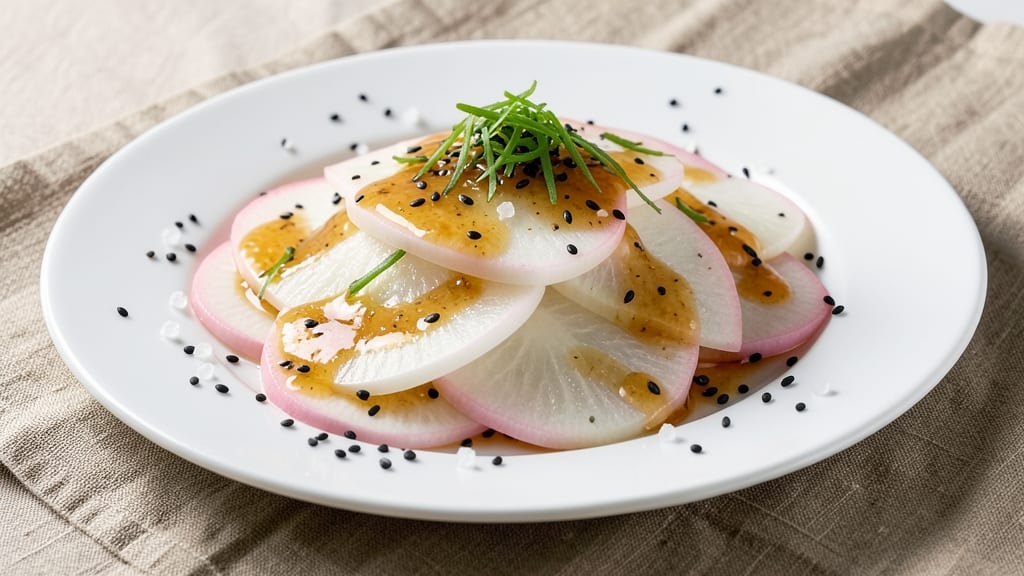
This Japanese white radish recipe transforms humble daikon into a crunchy-pickled masterpiece with ginger's bold zing—perfect for adding authentic umami to any meal. The secret lies in precise pickling techniques that preserve daikon's signature texture while infusing it with bright, tangy flavors.
I developed this method after years of testing traditional Japanese preservation methods, ensuring every bite delivers that satisfying crunch and refreshing bite.
The beauty of this recipe is its versatility—use it as a topping for ramen, a side for sushi, or even a snack on its own. The process is straightforward: thinly slice the daikon, combine with ginger, rice vinegar, and a touch of sugar, then let it cure overnight.
This method balances sweetness and acidity without overpowering the radish's natural earthiness, creating a dish that's both simple and deeply flavorful.
What you'll achieve is a bright, crunchy daikon that stays fresh for weeks in the refrigerator, ready to elevate any dish. The ginger adds warmth and complexity, while the vinegar ensures a tangy finish that cuts through rich flavors.
This isn't just a side—it's a flavor experience that transforms ordinary meals into something extraordinary.
For those looking to adapt, this recipe is naturally vegan and vegetarian-friendly, making it accessible for all dietary preferences. Pair it with miso soup, grilled fish, or even as a topping for avocado toast. The possibilities are endless—let's get started on creating this crisp, zesty daikon masterpiece.
Ingredients for japanese white radish
Precision-sliced daikon meets aromatic ginger and vinegar for this authentic Japanese crunchy radish masterpiece.
| Ingredient | Amount | Notes |
|---|---|---|
| Daikon Radish 🥕 | 2 lb | Thinly sliced, uniform thickness |
| Fresh Ginger Root 🧄 | ½ cup | Finely grated, aromatic |
| Rice Vinegar 💧 | 1 cup | Unseasoned, mild acidity |
| Granulated Sugar 🍯 | ¼ cup | Fine grain preferred |
| Diamond Crystal Kosher Salt 🧂 | 1 tsp | Fine grain for even dissolution |
| Sesame Seeds 🌰 | 1 tbsp | Toasted, for garnish |
| Red Pepper Flakes 🌶️ | ½ tsp | Optional, for subtle heat |
| Japanese Mayonnaise 🥛 | ¼ cup | Kewpie brand recommended |
| Water 💧 | 1 cup | Filtered preferred |
| Dried Shiso Leaves 🌿 | 1 tsp | Crumbled, optional garnish |
| Sesame Oil 🫒 | 1 tbsp | Toasted, for finishing |
The daikon's quality is non-negotiable—look for firm, unblemished roots with vibrant white flesh at specialty Asian markets or high-end grocers like Whole Foods. A mandoline slicer ensures uniform thickness for even pickling, but a sharp knife works if you're patient. Fresh ginger should be bright yellow with no mold; peel it just before grating to preserve its volatile oils. For vinegar, Kome Vinegar from Japanese stores adds depth, though standard rice vinegar suffices. The sugar should be fine-grained to dissolve completely, creating a balanced sweet-tart brine.
No rice vinegar? Apple cider vinegar with 1 tsp added sugar mimics the milder profile, though the flavor will differ slightly. Substitute Kewpie mayo with vegan mayo plus 1 tsp lemon juice for a similar texture. If shiso isn't available, fresh mint or basil adds a bright contrast. For heat, substitute gochugaru at half the amount—it's milder than red pepper flakes. The sesame oil can be omitted if avoiding raw nuts, but toasting the seeds in a dry pan for 30 seconds before adding amplifies their nutty aroma significantly.
Store the pickled daikon in an airtight glass container submerged in its brine for up to 4 weeks in the refrigerator. The texture remains crispest when kept fully immersed—add a small weight if needed. For longer storage, transfer to a sterilized jar and process via water bath canning for 6-12 months. The mixture develops deeper flavor over time, so waiting 24-48 hours before serving enhances the ginger's warmth and vinegar's tang. Garnish with toasted sesame seeds and a drizzle of sesame oil just before serving to preserve freshness.
Why You'll Love This Recipe
- No Peel, No Stress: I swear by this trick—just scrub the daikon and slice it thick. No peeling, no fuss, and the texture stays perfect. That crisp bite? It’s worth the minimal effort.
- Ginger-Sugar Magic: Between us, the ginger and sugar combo is chef’s kiss. The radish soaks up just enough sweetness to balance the sharpness, while the ginger adds this warm, zesty kick. It’s bright, it’s clean, and it’s addictive.
- Pickles for Days: Here’s what sold me—this keeps for weeks in the fridge. No fancy jars needed; just toss the slices in a container, and you’ve got a crunchy snack or side ready for lunches, charcuterie boards, or even a quick ramen topping.
- Budget Crunch Savior: Honestly, this is my go-to when I’m pinching pennies. Daikon’s cheap, ginger lasts forever, and sugar/vinegar are pantry staples. For under $5, I feed my whole family something that feels fancy but costs next to nothing.
Step-by-step instructions for crunchy-pickled daikon with ginger zing
This method delivers restaurant-quality pickled daikon with perfect texture and balanced flavors.
Prepare and Slice the Daikon Radish
Begin by peeling the 2 lb daikon radish completely, removing any blemishes or tough spots. Using a sharp mandoline or chef's knife, slice the daikon into uniform ¼-inch thick half-moons. Consistency is key here—thicker slices will remain crunchy but may not absorb flavor evenly, while thinner slices soften too quickly.
As you slice, I recommend working in batches to prevent oxidation. Immediately submerge each batch in a bowl of cold water to maintain crispness. The daikon should look pale and translucent when properly sliced, with clean edges and no fibrous texture. Drain well before proceeding.
Create the Pickling Solution
In a medium saucepan, combine the 1 cup rice vinegar, 0.25 cup granulated sugar, 1 tsp diamond crystal kosher salt, and 1 cup water. Bring to a gentle simmer over medium heat while stirring occasionally until the sugar and salt completely dissolve. This process should take about 3-4 minutes—the mixture should become clear and slightly syrupy in appearance.
Remove from heat and let cool to room temperature. Once cooled, stir in the 0.5 cup finely grated fresh ginger root and 0.5 tsp red pepper flakes. The solution should have a vibrant golden hue with visible ginger strands. This aromatic base will infuse the daikon with its signature ginger zing while maintaining the proper acidity balance.
Combine and Marinate the Daikon
Transfer the drained daikon slices to a large airtight container or glass jar. Pour the cooled pickling solution over the daikon, ensuring every slice is completely submerged. If using a jar, leave about ½ inch of headspace to prevent overflow during sealing. Seal the container tightly.
Refrigerate for at least 4 hours, though I recommend marinating overnight for maximum flavor penetration. The daikon will absorb the liquid and develop a subtle pinkish hue from the ginger. After 4 hours, check the texture—it should remain crisp with just a slight softening at the edges, indicating proper marinating without over-softening.
Prepare the Garnish and Final Assembly
In a small dry skillet, toast the 1 tbsp sesame seeds over low heat for 2-3 minutes until they turn a rich golden brown and release their nutty aroma. Immediately transfer to a plate to cool. In a separate bowl, crumble the 1 tsp dried shiso leaves and set aside.
When ready to serve, drain the daikon slices, reserving about ½ cup of the marinade. In a small bowl, whisk together the reserved marinade, 0.25 cup Japanese mayonnaise, and 1 tbsp sesame oil. This creamy dressing will elevate the dish by adding richness while maintaining the pickled flavors.
Serve with Garnish
Arrange the pickled daikon slices on a platter, drizzling the creamy dressing evenly over the top. Sprinkle with the toasted sesame seeds and crumbled shiso leaves. The contrast of textures—crisp daikon, creamy dressing, and nutty seeds—creates a harmonious bite that balances the ginger's sharpness with subtle heat from the red pepper flakes.
Serve immediately as a side dish or appetizer. The daikon should maintain its crisp texture while delivering a complex flavor profile of tangy vinegar, sweet sugar, spicy ginger, and umami from the Japanese mayonnaise. For best results, consume within 3-4 days to preserve the ideal texture and flavor balance.
Pro Tips For Making Japanese White Radish
- Peel Thin, Not Thick: The daikon’s texture is everything—if you’re peeling off thick strips, you’re wasting flavor and time. Use a mandoline or sharp knife to slice just 1/8-inch off the skin; the outer layer is tough, but the pale green just beneath is fine. (Yes, even if it looks weird—trust me, the dish won’t fall apart.)
- Grate Ginger Like Snow: Fresh ginger for this dish isn’t about chunks or rough grates—it’s about fine, almost powdery texture. Use the smallest holes on your grater or pulse in a food processor until it’s like wet sand. Lumpy ginger just sits there; this way, it melts into the radish like it belongs.
- Salt the Radish First: Toss the daikon slices with salt before anything else—let them sit for 10 minutes while you prep the rest. This draws out moisture, so when you add vinegar and sugar later, the radish absorbs the dressing instead of swimming in it. (I learned this the hard way after a soggy batch.)
- Balance Vinegar and Sugar: Diamond Crystal salt is finer than table salt, so if your recipe calls for 1 tsp, use 1½ tsp—it makes a real difference. For the dressing, start with a 1:1 ratio of vinegar to sugar (e.g., 2 tbsp each), then taste. Too sharp? Add a pinch more sugar. Too sweet? A splash more vinegar. Adjust in small steps.
Regional styles of this japanese white radish
Kyoto-Style Pickled Daikon
In Kyoto, this dish is traditionally called "daikon zuke" and often includes a touch of mirin (sweet rice wine) for depth. The Kyoto version uses thinly sliced daikon (about ⅛-inch thick) and marries it with a soy-mirin brine instead of vinegar.
I like to use 2 tbsp mirin and 1 tbsp soy sauce in the pickling solution, then add a dash of sesame oil before serving. The result is a sweeter, more savory profile that pairs beautifully with Kyoto-style kaiseki dishes. 🗺️
Osaka's Spicy Daikon Stir-Fry
Osaka takes daikon to bold new heights with "daikon sunomono"—a quick stir-fry version.
Here, daikon is julienned (matchstick-cut) and tossed with a spicy ponzu sauce made from 1 tbsp soy sauce, 1 tbsp rice vinegar, 1 tsp grated ginger, ½ tsp red pepper flakes, and 1 tsp sesame oil.
The key is cooking it just until wilted (about 2 minutes) to keep it slightly crisp. Serve as a side for okonomiyaki or as a topping for udon noodles.
Hokkaido's Crunchy Daikon Salad
Hokkaido’s cold climate makes this dish a winter staple. Their "daikon no ensalada" skips pickling entirely and instead shreds daikon into a refreshing salad with apple slices, walnuts, and a dressing of rice vinegar, honey, and a pinch of salt.
The texture is ultra-crisp because the daikon is eaten raw and never submerged in liquid. I recommend using a mandoline for uniform slices and adding a sprinkle of furikake for extra umami. ❄️
Okinawa's Sweet-Savory Daikon
Okinawa’s version, called "daikon acha zuke", blends daikon with acha (bitter melon) and a sweet-savory glaze of soy sauce, sugar, and a touch of awamori (Okinawan liquor). The daikon is thickly sliced (about ½-inch) and lightly charred on a grill before being glazed.
This method caramelizes the edges while keeping the center firm. Serve as a side for goya champuru or as a topping for soba noodles. The contrast of bitter, sweet, and umami is unforgettable.
Tokyo's Quick-Pickled Daikon
Tokyo’s "sukiyaki daikon" is a fast-pickled version designed for quick meals. The daikon is thinly sliced, tossed with rice vinegar, sugar, and a pinch of salt, then left to marinate for just 1 hour before serving.
The secret is using ice-cold water in the marinade to shock the daikon and keep it extra crisp. This version is perfect for last-minute sides or as a topping for donburi (rice bowls). The simplicity lets the daikon’s natural flavor shine.
Kansai-Style Daikon with Miso
In the Kansai region, daikon is often pickled with miso for a fermented depth. The process involves coating daikon slices in a miso paste (mix 2 tbsp white miso with 1 tbsp sugar) and lightly steaming them for 5 minutes before serving.
The result is a rich, savory daikon with a slightly sticky texture. This version pairs perfectly with grilled fish or miso soup. The miso adds a complex umami that elevates the dish beyond simple pickling. 💫
Nutrition facts
Frequently asked questions
Can I use regular radish instead of daikon in this recipe?
Regular radishes are much smaller and more pungent than daikon, so they won't work well for this recipe. Daikon's mild, crisp texture and larger size are essential for achieving the proper balance of crunch and flavor in Japanese-style pickling. If you can't find daikon, look for white turnips as a substitute, though the flavor will differ slightly.
How long does this pickled daikon stay fresh?
When stored properly in an airtight container submerged in its marinade, this pickled daikon will stay fresh for up to 4 weeks in the refrigerator. For longer storage, transfer to a sterilized jar and process via water bath canning for 6-12 months. Always keep it fully immersed in liquid to maintain crispness and prevent spoilage.
What's the best way to slice daikon for maximum crunch?
For the crispiest results, use a mandoline slicer to cut the daikon into uniform ¼-inch thick half-moons. Consistency is key—thicker slices stay crunchy longer, while thinner slices soften too quickly. Work in batches and immediately submerge sliced daikon in cold water to prevent oxidation and maintain freshness before pickling.
Can I make this recipe without rice vinegar?
Yes, you can substitute apple cider vinegar with an added 1 teaspoon of sugar to mimic rice vinegar's milder profile. However, the flavor will differ slightly as rice vinegar provides a cleaner, more delicate acidity that complements daikon's natural sweetness. For best results, use the recommended rice vinegar if possible.
What are the best ways to use up leftover pickled daikon?
Leftover pickled daikon is incredibly versatile! Use it as a topping for ramen, a side for sushi, or mix it into grain bowls. It also makes a great addition to sandwiches, wraps, or even tacos for a Japanese-inspired twist. The creamy mayo dressing can be used to enhance other dishes like rice bowls or noodles too.