
Snacks
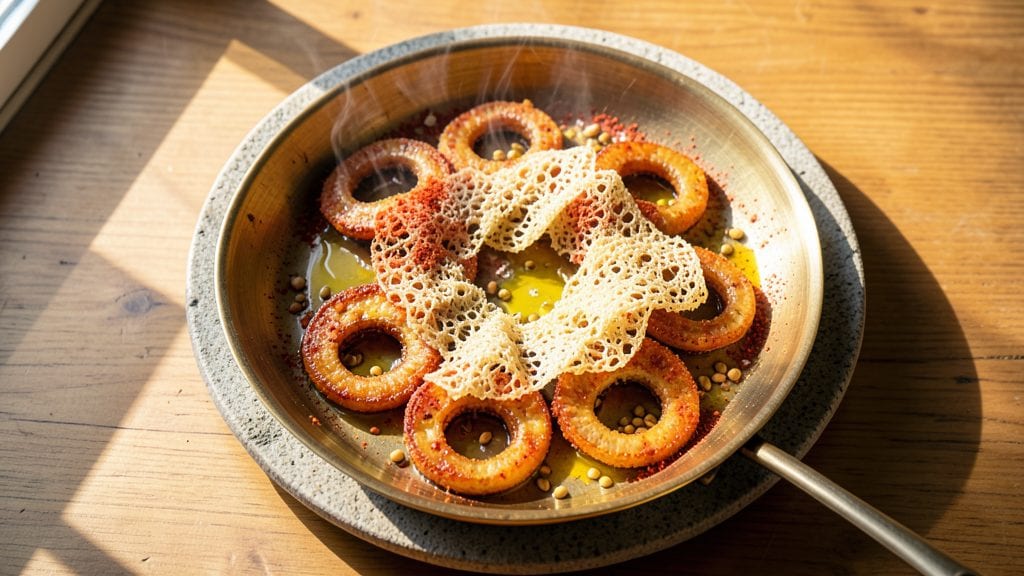
This Kathirikai fry recipe transforms humble banana blossom into crispy, golden rings with a spiced twist that feels like a taste of South India. The process begins with carefully peeling and slicing the blossom into perfect rings, then frying them to a satisfying crunch.
What makes this dish special is the aromatic blend of spices that coats each piece, creating layers of flavor that balance sweetness and heat.
The key to achieving that signature crispy texture lies in proper preparation—thin, even slices and the right oil temperature ensure they fry uniformly without becoming greasy. This traditional vegetarian dish pairs beautifully with sambar or steamed rice, making it a staple for festive occasions and everyday meals alike.
The cultural significance runs deep, as Kathirikai fry is often served during celebrations and family gatherings.
By following this method, you'll end up with a dish that's not only visually stunning but packed with flavor—crispy on the outside, tender within, and infused with the warm spices that make it unforgettable.
The aroma alone will draw everyone to the table, and the first bite delivers that perfect balance of textures and tastes. Let's get started on creating this beloved South Indian classic.
This recipe is designed to be both authentic and approachable, ensuring you can recreate the restaurant-quality results at home. Whether you're preparing for a special occasion or simply craving a taste of tradition, these crispy onion rings will become a new favorite.
The process is straightforward, but the reward is a dish that feels like a celebration in every bite.
Ingredients for kathirikai fry
Banana blossom rings, crispy spices, and golden frying oil—this South Indian classic needs just these ingredients.
| Ingredient | Amount | Notes |
|---|---|---|
| Banana Blossom 🍌 | 2 whole | Fresh, peeled into rings |
| All-Purpose Flour 🌾 | 1 cup | For coating, sifted |
| Rice Flour 🍚 | ½ cup | For extra crispiness |
| Mustard Seeds 🌶️ | 1 tbsp | Lightly toasted |
| Turmeric Powder 🧂 | ½ tsp | Bright yellow color |
| Red Chili Powder 🌶️ | 1 tsp | Adjust for heat |
| Cumin Seeds 🌿 | ½ tsp | Toasted for aroma |
| Asafoetida Powder 🌶️ | ¼ tsp | Essential for authentic taste |
| Salt 🧂 | ½ tsp | Kosher salt preferred |
| Vegetable Oil 🫒 | 2 cups | High smoke point |
| Lemon Juice 🍋 | 1 tbsp | Freshly squeezed |
| Fresh Coriander Leaves 🌿 | ¼ cup | Chopped for garnish |
Banana blossom is the star here—look for fresh, firm blossoms at Indian grocery stores or specialty markets. The outer purple layers are edible, but remove any wilted or bruised parts. If you can't find banana blossom, large white onions work in a pinch, though the texture won't be identical. The spices are non-negotiable: Penzeys or local Indian spice shops carry the best quality asafoetida and turmeric. Toast your whole spices (cumin and mustard seeds) in a dry pan for 30 seconds before grinding—they'll release their full aroma, making the difference between good and extraordinary.
No asafoetida? Garlic powder at half the amount adds depth, though it won't replicate the umami kick. Running short on rice flour? Cornstarch works too, but the texture will be slightly less crisp. The lemon juice is crucial—it tenderizes the banana blossom rings during frying. For extra crunch, double the flour coating and fry in batches. The oil temperature matters most: use a deep-fry thermometer to maintain 350°F (175°C). If you don't have one, test with a pinch of flour—it should sizzle and rise immediately.
Fry the blossom rings in small batches to avoid crowding the pan. They'll keep for 3 days in an airtight container, but they're best served fresh. Store the spice mix separately in a glass jar for up to 6 months—it doubles as a seasoning for other dishes. For a restaurant-style presentation, arrange the fried rings in a circle on a platter and drizzle with extra lemon juice before serving. Pair with mint chutney or tamarind sauce for the full experience.
Why You'll Love This Recipe
- No Chopping Needed: The banana blossom’s thick, fibrous petals don’t require dicing or slicing—just a quick rinse and tear. Honestly, I’ve made this while scrolling through my phone, and it still comes out crispy and golden.
- Crispy-Tender Magic: That double-dip in all-purpose and rice flour? It’s the secret—crunchy exterior, soft interior, and the mustard seeds sizzling in oil give it a smoky kick. Between us, it’s the kind of fry that disappears in minutes.
- Packable Lunch Savior: I swear by this for meal prep—stays crisp for days if you store it right (airtight container, parchment between layers). Toss it in a box with curd rice, and you’ve got a lunch that feels like a restaurant takeout.
- Budget Crunch Fix: Banana blossom is cheaper than most veggies, and flour is a pantry staple. For under $3, I feed four people a dish that tastes like a splurge. (Yes, even on a Tuesday night.)
Step-by-step instructions for kathirikai fry
Here's the method to achieve perfectly crispy banana blossom rings with a flavorful spiced coating.
Prepare the Banana Blossom Rings
Start by carefully peeling the 2 whole banana blossoms into even rings. I like to separate them gently using my fingers, making sure each ring is about ¼-inch thick. Place them in a bowl of cold water for 5 minutes to remove any bitterness—this step is crucial for a pleasant flavor. Drain well and pat completely dry with paper towels. Any moisture left behind will prevent the coating from sticking properly.
While the banana blossom rings soak, prepare your workstation. Line a plate with paper towels to drain excess oil later. Keep everything within easy reach since you'll be working quickly to maintain crispiness. The goal here is to create an even coating that will give you that signature golden-brown exterior.
Create the Spiced Coating
In a medium bowl, combine the 1 cup all-purpose flour, 0.5 cup rice flour, 1 tablespoon mustard seeds, 0.5 teaspoon turmeric powder, 1 teaspoon red chili powder, 0.5 teaspoon cumin seeds, 0.25 teaspoon asafoetida powder, and 0.5 teaspoon salt. Mix thoroughly to ensure all spices are evenly distributed. This blend is what gives kathirikai fry its distinctive flavor and vibrant color.
Toast the mustard seeds and cumin seeds separately in a dry skillet over medium heat for about 30 seconds until fragrant. Let them cool slightly before adding to your flour mixture. The aroma from these toasted seeds will elevate the overall flavor profile significantly. Once cooled, combine them with the other dry ingredients and mix again to distribute the toasted spices evenly.
Coat the Banana Blossom Rings
Working in batches, remove the banana blossom rings from the water and pat them completely dry once more. Dip each ring into the flour mixture, pressing gently to ensure an even coating all around. The coating should adhere well without clumping. I find it helpful to use two hands—one to hold the ring and the other to gently press the coating into place.
After coating, place the rings on a clean plate and let them sit for 5 minutes. This brief resting period allows the coating to adhere more firmly to the banana blossom. Don't skip this step—it makes a noticeable difference in how well the coating stays in place during frying. While waiting, heat the 2 cups vegetable oil in a deep frying pan over medium heat until it reaches 350°F.
Fry to Crispy Perfection
Carefully lower the coated banana blossom rings into the hot oil using a slotted spoon. Fry in small batches to avoid overcrowding, which can lower the oil temperature and result in greasy rather than crispy rings. Fry for 3-4 minutes on each side until they turn a rich golden brown color. You'll know they're ready when they float to the surface and maintain their shape without breaking.
Use a slotted spoon to transfer the fried banana blossom rings to the prepared plate lined with paper towels. Let them drain for 2-3 minutes to remove excess oil. This draining step is essential for achieving the right texture—too much oil makes them greasy, while proper draining maintains that perfect crispiness. While still warm, drizzle with 1 tablespoon lemon juice and sprinkle with the 0.25 cup chopped fresh coriander leaves for a bright finish.
Serve Immediately
Serve the kathirikai fry hot with your favorite dipping sauce or alongside a simple yogurt dip. The contrast between the crispy exterior and tender interior makes each bite satisfying. These rings are best enjoyed immediately while they're at their crispest. If you need to keep them warm, place them in a single layer in a 200°F oven for up to 10 minutes, but they won't be quite as crispy.
This method ensures you get that perfect balance of texture and flavor every time. The key to success lies in proper preparation, even coating, and careful frying. Once you master these steps, you'll have a delicious, crispy treat that's perfect for any occasion.
Pro Tips For Making Kathirikai Fry
- Soak the Blossom Right: Banana blossom soaks up water like a sponge—give it 20 minutes in cold water with a pinch of salt and turmeric. I learned this the hard way: skipping the soak leaves it bitter and tough. Don’t rush it; let it plump up properly before shredding.
- Mix Flours Separately: Combine all-purpose and rice flour after frying the blossom—don’t pre-mix them. The rice flour needs to stay dry until the last second to create that perfect crispy texture. I used to mix them early, and the batter turned gummy every time.
- Fry in Batches: Crowd the pan, and you’ll steam the blossom instead of frying it. Use a slotted spoon to drop pieces in single layers—about 3-4 at a time—so they sizzle, not bubble. Yes, it takes longer, but the result is worth it.
- Temper the Mustard: Bloom the mustard seeds in oil first, then add curry leaves and ginger. Skipping this step means they’ll burn before the flavors even develop. Low heat for 30 seconds—just until they pop—is all it takes. Trust me, it makes a real difference.
Regional styles of this recipe
Tamil Nadu Tradition
In Tamil Nadu, kathirikai fry is a beloved street food and festive dish, often served during Pongal and Diwali. The banana blossom, called kathirikai in Tamil, is a staple ingredient in South Indian cuisine.
Here, the dish is typically prepared with a lighter, more aromatic spice blend that emphasizes cumin and asafoetida, creating a delicate balance of flavors. The crispy rings are often paired with sambar and idli for a complete meal. 🌶️
The Tamil version focuses on freshness—using the youngest, most tender blossoms for the best texture. I’ve noticed that in this region, the dish is sometimes made with rice flour only, skipping the all-purpose flour, to achieve an extra-crispy finish.
The secret lies in frying at a precise 360°F (180°C)—just 10°F hotter than the standard recipe—to get that signature crunch.
Kerala Coastal Twist
In Kerala, kathirikai fry takes on a sweeter, coconut-infused profile, reflecting the region’s love for coconut-based flavors. Here, the spice mix often includes grated coconut (about 2 tbsp) and a touch of sugar (about ½ tsp) to balance the heat.
The banana blossom rings are sometimes marinated in coconut milk for 10 minutes before frying, adding a subtle richness. 🥥
Kerala’s version also incorporates kerala-style curry leaves—about 5-6 leaves, lightly crushed—into the flour coating. This adds a unique aromatic depth that’s distinct from Tamil Nadu’s style.
The dish is often served with avial (a coconut-yogurt stew) or appam, making it a popular breakfast or snack option along the coast.
Andhra Pradesh Spicy Kick
Andhra’s take on kathirikai fry is bold and fiery, with a spice blend that leans heavily on red chili powder (up to 1.5 tsp) and black pepper (about ¼ tsp).
The banana blossom rings are often double-coated—first in a thin batter of chickpea flour, then in the spiced flour mixture—for an extra-crispy, almost crunchy shell.
This version is a favorite at Andhra-style street food stalls, where it’s served with mint chutney and spicy tomato onion salad. 🌶️🔥
In Andhra, the dish is sometimes deep-fried twice: once to set the coating, and again after a 5-minute rest to achieve an even deeper golden color. The oil temperature here is critical—370°F (190°C)—to handle the extra coating without burning.
The result is a shatteringly crisp ring with a spicy, smoky kick that’s addictive.
Karnataka’s Mild & Herby
Karnataka’s version is lighter and herb-forward, with a focus on fresh coriander and fennel seeds (about ½ tsp) in the spice mix. The banana blossom rings are often sliced thinner (about ⅛-inch thick) and fried in mustard oil for a distinct nutty flavor.
This style is commonly served during Ugadi (Kannada New Year) and Dasara festivals, paired with bisi bele bath (a lentil-rice dish). 🌿
The Karnataka method also includes a lemon-tamarind dip (mix 1 tbsp tamarind paste, 1 tbsp lemon juice, and ½ tsp jaggery) that’s served alongside the fry.
This tangy contrast cuts through the richness of the fried rings beautifully. The dish here is all about balance—crispy texture, mild spices, and a refreshing dip.
Nutrition facts
Frequently asked questions
What's the secret to getting perfectly crispy banana blossom rings?
Pat the rings completely dry before coating and frying—any moisture ruins crispiness. Use a mix of all-purpose and rice flour (50/50 ratio) and fry at 350°F (175°C) in small batches. The 5-minute rest after coating helps the flour adhere better for that signature crunch.
Can I substitute banana blossom with another vegetable?
Yes! For a similar texture, use large white onions (sliced into rings) or eggplant (cut into thick rounds). Soak them in cold water for 5 minutes first to remove bitterness. The flavor won't be identical, but the frying technique works the same.
Why does my kathirikai fry taste bitter?
Bitterness comes from not soaking the banana blossom long enough or using old blossoms. Always soak for 5-10 minutes in cold water, then rinse thoroughly. For extra freshness, choose blossoms with purple outer layers and no yellowing.
How do I store leftover kathirikai fry?
Store in an airtight container at room temperature for up to 3 days. For longer storage, refrigerate for 5 days or freeze for 1 month. Reheat in a 350°F (175°C) oven for 5-7 minutes to restore crispiness. Microwaving makes them soggy!
What's the best way to serve kathirikai fry?
Pair with sambar, coconut chutney, or mint yogurt dip for the full South Indian experience. For a festive touch, arrange rings in a circular pattern on a platter and garnish with extra coriander.