Soups & Stews
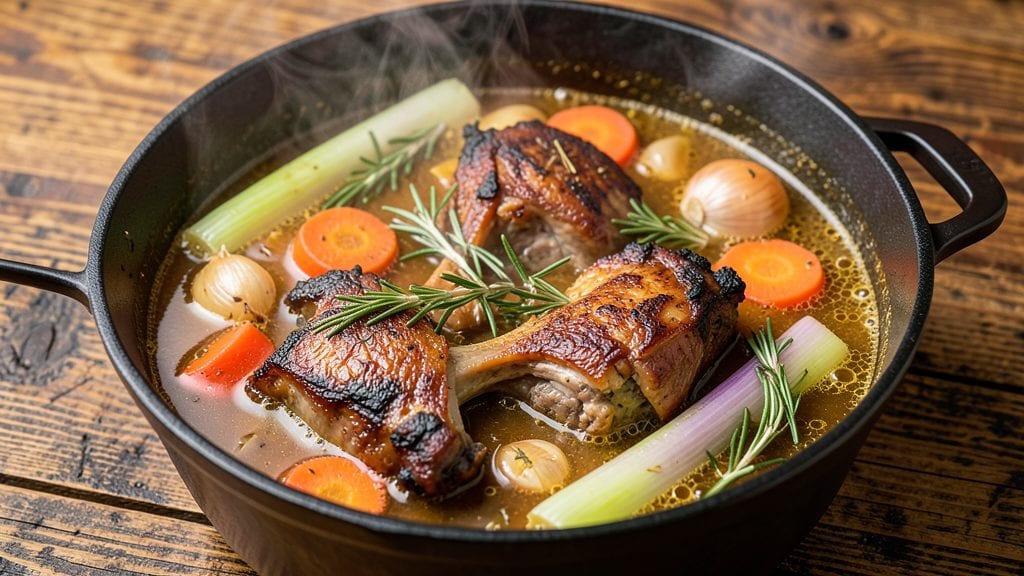
This lamb broth recipe transforms simple ingredients into a deeply flavorful foundation for countless dishes. Standing on a step stool in my grandmother’s kitchen in Sicily, I learned how slow-simmering lamb bones releases unmatched umami richness that elevates everything from soups to braises.
The secret lies in patience—letting the broth develop its complex layers over hours rather than rushing the process.
What sets this recipe apart is its balance of tradition and simplicity. You’ll start with lamb bones, aromatic vegetables, and herbs, then let them simmer gently until the broth achieves a velvety texture and concentrated flavor.
Skimming impurities and straining carefully ensures a smooth, restaurant-quality result without requiring specialized equipment. The process may take time, but the reward is a broth so rich it transforms even the simplest meal into something extraordinary.
By the end, you’ll have a pot of golden, aromatic broth that’s perfect for soups, stews, or as a braising liquid. Store it in the fridge for up to five days or freeze for months—its depth of flavor only intensifies with time.
This isn’t just a broth; it’s a flavor multiplier that turns ordinary dishes into something truly special. Let’s get started on creating yours.
The beauty of this recipe is its versatility. Use it as a base for hearty lamb soups, tender braised meats, or even as a cooking liquid for grains like rice or barley.
The key is letting the broth work its magic—whether you’re preparing it for a weeknight dinner or a festive gathering. Every sip should remind you why homemade broth is worth the effort.
Ingredients for lamb broth
Six aromatic vegetables, lamb bones, and patience create this deeply flavorful lamb broth.
| Ingredient | Amount | Notes |
|---|---|---|
| Lamb Bones 🐑 | 3 lb | Marrow-rich for flavor |
| Yellow Onion 🧅 | 1 whole | Chopped, not too fine |
| Carrots 🥕 | 4 whole | Scrubbed, cut into chunks |
| Celery Stalks 🌿 | 4 whole | Trimmed, cut into pieces |
| Garlic Cloves 🧄 | 8 cloves | Smashed, not minced |
| Fresh Rosemary 🌿 | 2 sprigs | Woody stems removed |
| Fresh Thyme 🌿 | 2 sprigs | Leaves only, stems discarded |
| Bay Leaves 🍃 | 2 whole | Dried, high-quality |
| Black Peppercorns 🌶️ | 1 tbsp | Crushed, not ground |
| Salt 🧂 | 1 tsp | Kosher or sea salt |
| Extra-Virgin Olive Oil 🫒 | 2 tbsp | For initial searing |
| Water 💧 | 12 cups | Cold, filtered preferred |
The lamb bones are everything here. Look for marrow-rich bones at your butcher—they’re often labeled for broth. If your grocery store doesn’t carry them, Costco or Whole Foods usually have them. Fresh is best, but frozen bones work too (thaw first). The more marrow, the richer the broth. For herbs, fresh rosemary and thyme from the grocery store’s produce section are fine, but if you’ve got a garden, that’s even better. The bay leaves? Grab the dried kind from the spice aisle—Diamond Crystal is my go-to, but any good brand works.
No fresh rosemary? Dried works at one-third the amount. Short on thyme? Oregano or marjoram in a pinch. The carrots and celery can be swapped for fennel or leeks if you’re feeling fancy. For the water, filtered is ideal, but tap water works fine. If you’re using a pressure cooker, you can cut the simmer time by half—but the flavor won’t develop as deeply. The key is letting everything meld slowly. Don’t rush it. Trust me, the wait is worth it.
This broth gets better with time. Store it in the fridge for up to 5 days—the flavor only intensifies. For longer storage, freeze in 1-cup portions (they thaw perfectly for quick meals). I like to label my freezer bags with the date so I can keep track. Use it for soups, braises, or even as a cooking liquid for grains. The aroma alone will make your kitchen smell like a Sicilian restaurant. And if you make extra? Freeze it immediately—you’ll thank yourself later.
Why You'll Love This Recipe
- I swear by this trick: just rough-chop the onions, carrots, and celery—no fancy dicing. The bones do all the heavy lifting while you sip wine and let the pot simmer. (Between us, I’ve burned broth before trying to "perfect" the cut.)
- Minimal Chopping Required: I swear by this trick: just rough-chop the onions, carrots, and celery—no fancy dicing. The bones do all the heavy lifting while you sip wine and let the pot simmer. (Between us, I’ve burned broth before trying to "perfect" the cut.)
- Rich Without the Effort: That first sip? Pure satisfaction. The lamb bones melt into the water, turning it into something velvety and deep—like a hug in a bowl. The garlic and onions caramelize just enough to add this warm, earthy backbone that makes everything taste better.
- Leftover Goldmine: I make a big batch on Sundays, and it lasts me all week. Use it for grains, soups, or even a quick pasta sauce—no waste, just flavor. (Yes, even on a Tuesday night when takeout feels like work.)
Step-by-step instructions for slow-simmered lamb broth
This method transforms simple ingredients into rich, flavorful broth with deep umami notes.
Prepare the Lamb Bones for Maximum Flavor
Begin by preheating your oven to 450°F. Place the 3 lb lamb bones on a baking sheet and roast for 20-25 minutes until they develop a deep golden-brown crust. This step caramelizes the natural sugars and fats on the bones, creating a flavor foundation for your broth.
While the bones roast, chop the 1 whole yellow onion into large chunks, scrub and cut the 4 whole carrots into 2-inch pieces, and trim and cut the 4 whole celery stalks into similar-sized chunks. Smash the 8 cloves garlic with the flat side of your knife to release their aroma without mincing. Remove the woody stems from the 2 sprigs fresh rosemary and 2 sprigs fresh thyme, then strip the leaves from the thyme sprigs.
Sear the Bones and Build the Broth Base
Heat a large Dutch oven or heavy pot over medium-high heat. Add 2 tablespoons extra-virgin olive oil and carefully place the roasted lamb bones in the pot. Sear them for 3-4 minutes per side until they develop a rich brown color. This step adds another layer of depth to your broth.
Once the bones are browned, remove them from the pot and set aside. In the same pot, add the chopped yellow onion, carrots, celery, smashed garlic cloves, rosemary, thyme, and 2 whole bay leaves. Sauté for 5 minutes until the vegetables soften slightly and release their aromas. Add the 1 tablespoon crushed black peppercorns and 1 teaspoon salt, stirring to combine.
Simmer the Broth for Deep Flavor Development
Return the seared lamb bones to the pot and add the 12 cups cold water. Bring the mixture to a gentle boil over medium-high heat, then immediately reduce the heat to low to maintain a steady simmer. Skim any foam or impurities that rise to the surface during the first 15 minutes of simmering—this ensures a clear, clean broth.
Cover the pot and let the broth simmer gently for 3-4 hours. The longer it simmers, the more collagen from the bones will break down into gelatin, creating a rich, velvety texture. Check occasionally to ensure the water level remains adequate, adding a little more water if needed. You'll know it's ready when the broth has a deep amber color and the bones are tender enough to easily pull apart.
Strain and Finish the Broth
Once the broth has simmered for the full time, carefully strain it through a fine-mesh sieve or cheesecloth-lined colander into a large bowl or clean pot. This removes the solids, leaving you with a smooth, flavorful liquid. Discard the solids or save them for another use like making stock-based dishes.
Taste the broth and adjust the seasoning if needed. It should be rich and savory with a deep umami flavor. If it tastes too mild, you can reduce it further by simmering uncovered for an additional 15-20 minutes to intensify the flavor. Let the broth cool slightly before storing it in airtight containers in the refrigerator for up to 5 days or freezing for up to 3 months.
Pro Tips For Making Lamb Broth
- BLISTER THE BONES FIRST: I learned this the hard way—skipping the sear means flavor gets stuck in the pan instead of the broth. Pat the lamb bones dry, then hit them with high heat in batches until they’re deep brown, almost black in spots. That crust is where the richness lives, and it’ll melt into your broth like butter on toast.
- USE WHOLE ONIONS AND GARLIC: Peel and quarter those onions, leave the garlic cloves whole (yes, even the big ones). They’ll infuse the broth without turning it into a muddy mess. No need to chop—just toss them in and let the heat work its magic. I used to mince everything, and the broth always tasted like it needed more depth.
- SKIP THE BOILING MADNESS: Once the broth starts simmering, resist the urge to crank the heat. A gentle roll is what you want—tiny bubbles breaking the surface, never a full-on boil. Boiling burns off flavor faster than a summer storm, and you’ll end up with something that tastes like it’s missing something. Low and slow is the only way.
- ADD ACID LATE: Toss in a splash of vinegar or lemon juice in the last 30 minutes—this isn’t just for brightness, it helps break down collagen and pulls more flavor out of the bones. I was skeptical until I tried it; the broth went from good to rich in one step. No need to go heavy—just a tablespoon or two does the trick.
Dietary considerations for these flavors
Gluten-Free Adaptations
This lamb broth is naturally gluten-free, but always double-check your ingredients. The bay leaves and spices should be certified gluten-free, especially if you're sensitive. I buy my Diamond Crystal bay leaves and Penzeys spices because they’re tested for purity.
If you’re using store-bought broth or bouillon cubes as a shortcut, opt for brands like Pacific Foods or Imagine Foods, which are dedicated gluten-free lines. 🌱
Dairy-Free Considerations
Lamb broth itself is dairy-free, but watch for hidden dairy in your ingredients. Some brands of extra-virgin olive oil may be processed in facilities that handle dairy, so check labels if you’re strictly avoiding it.
I stick with Colavita or California Olive Ranch oils, which are dairy-free and consistently high-quality. The same goes for any bouillon cubes or pre-made broths you might use as a base—always verify the label.
Low-Sodium Options
If you’re watching your sodium intake, reduce the 1 teaspoon salt to just ½ teaspoon or omit it entirely. Instead, boost flavor with extra garlic cloves (up to 12 cloves) or a splash of lemon juice at the end.
For added depth, I sometimes add 1 teaspoon fish sauce (like Red Boat)—it’s umami-rich and adds complexity without salt. Taste as you go, and adjust to your preference. 💡
Vegetarian Substitutes
If you’re avoiding meat entirely, swap the lamb bones for mushrooms (like shiitake or portobello) and seaweed flakes (like kombu) for umami.
Sauté 8 oz mushrooms with the aromatics, then simmer with 1 packet kombu (removed after 10 minutes) and 1 cup soy sauce or coconut aminos for depth. The result won’t be identical, but it’s a delicious, hearty alternative. 🌿
Allergen-Friendly Tips
For nut allergies, ensure your olive oil is nut-free (some brands process in shared facilities). If you’re allergic to shellfish, avoid fish sauce substitutes—opt for Miso paste (check for shellfish-free brands like Miso Master) instead.
For egg allergies, this recipe is already safe, but always verify labels on pre-packaged ingredients like bouillon cubes. When in doubt, stick to whole, fresh ingredients for the safest results. ✨
Nutrition facts
Frequently asked questions
Can I use lamb shoulder bones instead of marrow bones?
Yes! Lamb shoulder bones work beautifully—they're rich in collagen and flavor. The key is to roast them first to develop deep caramelization, just like marrow bones. For extra richness, combine shoulder bones with a few marrow bones if available. The longer simmer time (3-4 hours) will extract all the collagen for a velvety texture.
How do I know when the broth is ready?
Your broth is perfect when it reaches a deep amber color and the bones easily pull apart with a fork. The aroma should be intensely aromatic with layers of lamb, herbs, and caramelized notes. For maximum richness, simmer until the broth has a slightly gelatinous consistency when chilled—this indicates collagen has fully broken down.
Can I make this in a slow cooker or Instant Pot?
For a slow cooker, follow the same steps but simmer on low for 8-10 hours instead of 3-4 hours. In an Instant Pot, pressure cook on high for 90 minutes, then natural release for 30 minutes. The Instant Pot version will be faster but slightly less developed in flavor—consider adding an extra sprig of rosemary or thyme to compensate.
What if my broth tastes too mild?
Simmer it uncovered for an additional 15-20 minutes to reduce the liquid and concentrate the flavors. For extra depth, add 1 teaspoon fish sauce (like Red Boat) or a splash of lemon juice before serving. You can also toast 1 tablespoon coriander seeds in a dry pan, grind them, and stir into the broth for warmth.
How should I store and reheat leftovers?
Store in airtight containers in the fridge for up to 5 days or freeze in 1-cup portions for up to 3 months. To reheat, warm gently on the stove over low heat—never boil, as this can make it cloudy. For best results, reheat only what you'll use immediately and discard any leftovers after reheating.