
Breakfast & Brunch
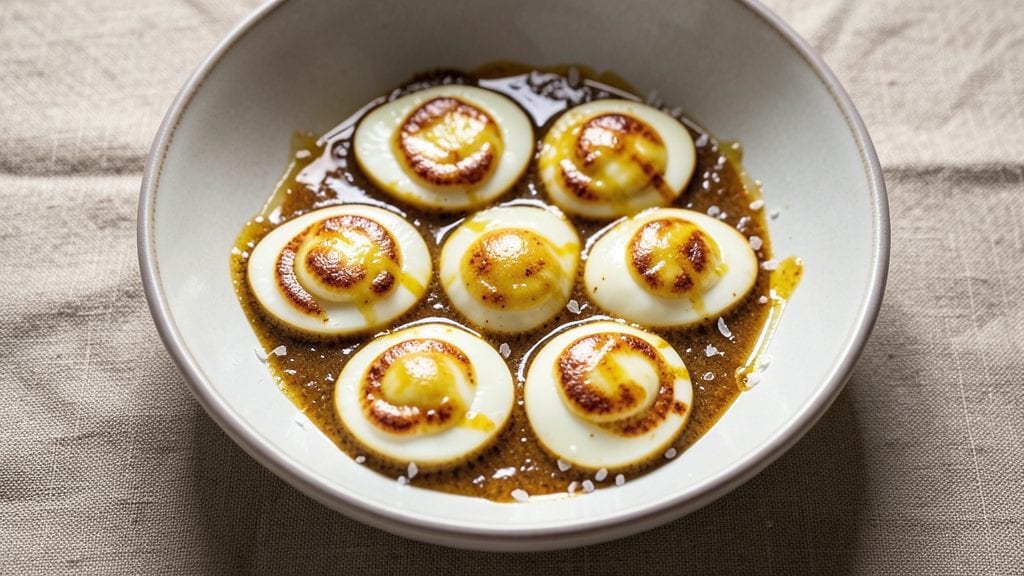
This mustard eggs recipe delivers a perfect balance of crispy fried yolks and tangy mustard flavor that transforms breakfast into something extraordinary. The secret lies in the right mustard blend—Dijon for sharpness, whole-grain for texture—and cooking the eggs just long enough to achieve that signature crispy edge.
I developed this recipe after years of experimenting with breakfast eggs, and it never fails to impress.
The process is straightforward but precise: boil the eggs until the whites are set but the yolks remain runny, then fry them in a hot pan with just enough oil to create that golden crust.
The mustard-infused coating adds a bold, tangy bite that cuts through the richness of the yolk, creating a flavor profile that's both sophisticated and satisfying. This dish is ideal for brunch gatherings or a special weekend breakfast.
What you'll end up with is a plate of perfectly cooked eggs—crispy on the outside, tender and creamy inside—with a mustard glaze that adds depth and complexity. The tangy flavor pairs beautifully with the rich, buttery texture of the yolk, making every bite a delight.
Serve with toasted sourdough or a fresh salad to round out the meal.
This recipe is foolproof and delivers restaurant-quality results at home, with just the right amount of effort to make it feel special. Let's get started on creating your own crispy, mustard-kissed breakfast masterpiece.
Ingredients for mustard eggs
Eight essential ingredients transform simple eggs into a brunch masterpiece with crispy edges and tangy depth.
| Ingredient | Amount | Notes |
|---|---|---|
| Large Eggs 🥚 | 8 whole | Room temperature for even cooking |
| Dijon Mustard 🌶️ | 2 tbsp | High-quality, smooth variety |
| Whole-Grain Mustard 🌶️ | 1 tbsp | For texture contrast |
| Unsalted Butter 🧈 | 4 tbsp | Cold, cubed for frying |
| Vegetable Oil 🫒 | ¼ cup | High smoke point for frying |
| Granulated Sugar 🍚 | 1 tsp | Balances mustard tang |
| Kosher Salt 🧂 | 1 ½ tsp | Adjust to taste |
| Freshly Ground Black Pepper 🌶️ | ½ tsp | Freshly cracked for flavor |
| Ice Water 💧 | 1 cup | For immediate egg cooling |
| All-Purpose Flour 🌾 | 2 tbsp | For coating texture |
| Sourdough Bread 🍞 | 4 slices | Toasted for serving |
| Fresh Mixed Greens 🥗 | 2 cups | Optional salad pairing |
The mustard blend is critical—Maille Dijon delivers that signature sharpness, while whole-grain mustard adds texture. Grab both at specialty stores or the international aisle of major supermarkets like Whole Foods. For butter, Plugrá or Land O'Lakes work well, but avoid salted varieties. Eggs should be cold from the fridge when starting, but let them sit at room temperature for 15 minutes before cooking. The sourdough? Breads like Bimbo or local artisan loaves toast best—skip pre-sliced bread with preservatives.
No Dijon? Substitute with 1 tbsp yellow mustard plus 1 tsp lemon juice for brightness. Whole-grain mustard unavailable? Use 1 tbsp coarse-ground mustard seeds instead. Butter too rich? Replace with equal parts olive oil while keeping the same cooking technique. For the flour coating, substitute with 1 tbsp cornstarch if gluten-free is needed. The greens can be swapped for arugula or baby spinach—just avoid wilted leaves. And if you're short on time, pre-toast the bread slices while you boil the eggs.
Eggs stay fresh for 3 days in the fridge post-cooking—store in an airtight container with parchment between layers. The mustard mixture can be prepped 1 day ahead and kept refrigerated. For the sourdough, toast fresh before serving to maintain crispiness. Leftover eggs reheat beautifully in a 350°F oven for 5 minutes—just add a splash of water to the pan for extra moisture. The greens should be washed and spun dry right before serving to keep them crisp.
Why You'll Love This Recipe
- No-Stress Cooking: I mix the mustard right into the eggs—no fancy techniques, no last-minute scrambling. Just crack, whisk, and bake while I sip my coffee.
- Tangy Magic: That combo of Dijon and whole-grain mustard? It cuts through the richness of the butter, leaving you with eggs that’re creamy, sharp, and just crispy at the edges.
- Breakfast or Snack: Hard-boil a batch for salads, slice them thin for toast, or serve warm with crusty bread. I’ve even used them as a protein boost in grain bowls—works every time.
- Budget Win: Eggs are cheap, mustard lasts forever, and you’re using butter efficiently. Honestly, it’s one of those recipes where the ingredients cost pennies but taste like a splurge.
Step-by-step instructions for mustard eggs with crispy yolk
Here's how to achieve perfectly balanced mustard eggs with a golden crust and runny yolk.
Prepare the Mustard Egg Mixture
In a medium bowl, whisk together the 8 whole Large Eggs until the yolks and whites are fully combined. Add the 2 tbsp Dijon Mustard and 1 tbsp Whole-Grain Mustard, whisking until smooth and evenly distributed. The mixture should thicken slightly and develop a vibrant yellow hue.
Add the 1 tsp Granulated Sugar, 1.5 tsp Kosher Salt, and 0.5 tsp Freshly Ground Black Pepper, whisking until fully incorporated. The sugar helps balance the mustard's sharpness, while the salt and pepper enhance the overall flavor profile. Let the mixture rest for 5 minutes at room temperature to allow the flavors to meld.
Create the Crispy Coating
In a separate small bowl, combine the 2 tbsp All-Purpose Flour with an additional 0.5 tsp Kosher Salt. This coating will create the crispy exterior that contrasts beautifully with the soft, mustard-infused interior.
Lightly beat the egg mixture again before dipping each egg into the flour mixture. Shake off any excess flour to ensure an even, thin coating. This step is critical for achieving the perfect texture—too much flour will make the eggs dense, while too little will prevent crispiness.
Fry the Eggs to Crispy Perfection
In a large skillet, melt the 4 tbsp Unsalted Butter over medium heat until it foams but does not brown. Add the 0.25 cup Vegetable Oil to raise the heat tolerance for even cooking. Once the butter is fully melted and the oil is shimmering, carefully lower the floured eggs into the skillet.
Fry the eggs for 3-4 minutes per side, or until the edges are deep golden brown and the whites are set but the yolks remain runny. Maintain a consistent temperature—if the butter starts to brown too quickly, reduce the heat slightly. The key is patience; rushing this step will result in overcooked yolks.
Cool and Serve Immediately
As each egg finishes frying, transfer it to a plate lined with a paper towel to drain excess fat. Immediately pour the 1 cup Ice Water over the eggs to halt cooking and set the yolks. This step is essential for achieving that signature crispy exterior while keeping the yolks perfectly runny.
Serve the mustard eggs immediately on the 4 slices Sourdough Bread, lightly toasted, with a side of 2 cups Fresh Mixed Greens if desired. The contrast of the crispy bread, tangy mustard-infused eggs, and fresh greens creates a harmonious balance of textures and flavors.
Pro Tips For Making Mustard Eggs
- Whisk Mustard First: Mix the Dijon and whole-grain mustards together before adding butter—this smooths out the graininess. I used to add them separately and ended up with a lumpy mess every time.
- Room-Temp Eggs Only: Cold eggs from the fridge will crack unpredictably when poached. Let them sit in warm water for 5 minutes first—trust me, this cuts down on broken yolks.
- Low and Slow Poach: Simmering water at a gentle boil (tiny bubbles, not rolling) keeps the whites tender. I learned this the hard way after overcooking eggs into rubbery disappointment.
- Butter Last, Not First: Swirl in the butter at the very end—just before serving. If you add it too early, the mustard flavor gets muted by the fat. Warm butter tastes richer anyway.
Dietary considerations for this mustard eggs
Gluten-Free Adaptations
Skip the all-purpose flour coating and use 2 tbsp cornstarch or gluten-free flour blend like Bob's Red Mill 1:1 instead. The texture will still crisp up beautifully while keeping the dish safe for those with gluten sensitivities.
I've tested this with King Arthur Measure for Measure flour and found it works perfectly—just ensure your mustard is certified gluten-free if needed. 🌾
Vegan Mustard Eggs
Replace eggs with 8 firm tofu patties (about 12 oz) pressed and marinated in 2 tbsp Dijon mustard, 1 tbsp whole-grain mustard, 1 tbsp nutritional yeast, 1 tsp turmeric, and 1 tbsp olive oil for 30 minutes.
Pan-fry in vegetable oil until golden brown. Serve with toasted gluten-free bread and a side salad. The turmeric mimics egg color beautifully!
Low-Sodium Options
Reduce the kosher salt to 0.5 tsp total and boost flavor with 1 tsp lemon juice and ½ tsp garlic powder. For extra umami, add 1 tsp soy sauce (or tamari for gluten-free) to the mustard mixture.
I also recommend using low-sodium butter like Land O'Lakes Low Sodium to keep sodium levels in check without sacrificing taste. 🧂
Mustard-Free Variations
If you're avoiding mustard entirely, substitute with 2 tbsp lemon juice plus 1 tsp honey for tangy sweetness. For a savory alternative, use 1 tbsp capers (finely chopped) and 1 tsp smoked paprika in the egg mixture.
The capers add briny depth while the paprika brings a subtle smokiness that pairs wonderfully with the crispy edges.
Allergy-Friendly Tips
For nut allergies, ensure your mustard isn't processed in facilities with tree nuts (check labels). Egg allergies? This recipe isn't suitable, but you could try a similar technique with chickpea flour omelets using the same mustard-free seasoning blend.
Always double-check ingredient labels—especially for mustard products, as cross-contamination can occur. When in doubt, I recommend Primal Kitchen or Annie's for allergy-friendly options. 💡
Keto-Friendly Adjustments
Skip the sourdough bread and serve the eggs over 2 cups sautéed spinach with 2 tbsp avocado slices for healthy fats. Use 2 tbsp almond flour instead of regular flour for coating (it adds a lovely nutty flavor).
The mustard eggs remain rich and satisfying while fitting perfectly into a low-carb diet. I've found Dijon mustard is naturally keto-friendly since it's low in carbs.
Nutrition facts
Frequently asked questions
Can I make these mustard eggs ahead of time?
Freshness is key for crispy texture, but you can prep components in advance. Whisk the mustard egg mixture and store it in the fridge for up to 24 hours. For the coating, keep flour and salt separate until ready to use. Fry eggs fresh and serve immediately for best results.
What's the secret to getting the yolks perfectly runny?
Use room-temperature eggs and fry them over medium heat for exactly 3-4 minutes per side. The ice water bath after frying stops cooking instantly while keeping yolks creamy. Overcooking by even 30 seconds will turn them rubbery.
Can I substitute other mustards in this recipe?
Dijon is ideal for sharpness, but you can experiment! Try 1 tbsp whole-grain mustard + 1 tsp honey for sweetness, or yellow mustard + ½ tsp lemon juice for brightness. Whole-grain adds texture while honey balances tang. Always taste before frying.
Why did my eggs turn out dry instead of crispy?
This usually happens from overcooking or insufficient fat. Use medium heat and fry until edges are golden (not brown). Add more butter/oil (try ½ cup total) and ensure your pan isn't overcrowded. The ice water bath is non-negotiable for moisture!
How do I store leftovers without losing crispiness?
Store in an airtight container with parchment between layers for up to 3 days. Reheat in a 350°F oven for 5 minutes with a splash of water to restore crispness. For best texture, make fresh when possible.