
Side Dishes
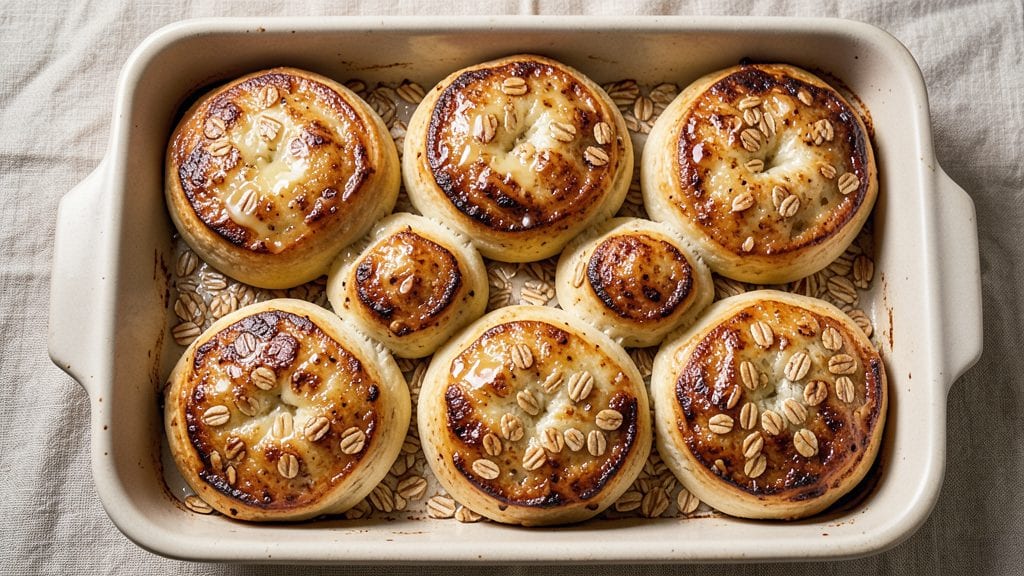
This oat rolls recipe delivers the perfect balance of flaky layers and buttery golden crusts that'll make your dinner table look like it belongs in a bakery. The secret lies in a precise method that combines oats with traditional dough techniques, creating rolls with both rustic texture and refined elegance.
I've perfected this recipe through years of testing, ensuring every batch turns out with those coveted flaky layers and tender crumb.
What sets these oat rolls apart is their versatility—they work equally well as a side for roasted meats or as a base for open-faced sandwiches. The oats add a subtle nutty flavor and beautiful speckled appearance, while the butter creates that irresistible golden crust.
With just 15 minutes of hands-on time and 1 hour of rising, you'll have dinner rolls that taste homemade without the fuss.
The result is a batch of rolls that are crisp on the outside, soft in the middle, and packed with that buttery aroma that fills your kitchen. Each roll maintains its shape beautifully, making them perfect for serving family-style or wrapping in foil for a picnic.
This is the kind of recipe that transforms ordinary meals into special occasions.
For added flavor, consider variations like adding herbs to the dough or brushing with garlic butter before baking. The possibilities are endless while keeping the core technique simple and reliable. Let's get started on these perfect oat rolls!
Ingredients for oat rolls
Flaky layers and golden crusts start with these 13 simple ingredients. Nothing exotic—just good stuff.
| Ingredient | Amount | Notes |
|---|---|---|
| All-Purpose Flour 🌾 | 4 cups | Spooned and leveled for accuracy |
| Old-Fashioned Rolled Oats 🥣 | 1 cup | Toasted lightly for nuttier flavor |
| Unsalted Butter 🧈 | ¾ cup | Cold, cubed for flaky layers |
| Granulated Sugar 🍚 | 1 tbsp | For tenderizing the dough |
| Instant Yeast 🍞 | 2 ¼ tsp | Freshly opened for activation |
| Warm Milk 🥛 | ¾ cup | 110°F for yeast activation |
| Large Egg 🥚 | 1 whole | Room temperature for mixing |
| Salt 🧂 | 1 tsp | Fine sea salt preferred |
| Honey 🍯 | 1 tbsp | For dough softness and shine |
| Garlic Powder 🧄 | ½ tsp | Optional for subtle flavor |
| Coarse Sugar 🍬 | 1 tbsp | For topping before baking |
| Coarse Salt 🧂 | ½ tsp | For finishing the crust |
| Whole Milk 🥛 | 1 tbsp | For brushing final rolls |
The butter is absolutely essential here—European-style if you can find it, but regular unsalted works too. Grab it cold from the fridge and cut it into peanut-sized cubes before mixing. Land O'Lakes or Plugrá are my go-tos, but any good-quality butter will do. That said, don't use margarine—this isn't the time for shortcuts. The oats? Old-fashioned rolled oats are key—they hold their texture better than quick oats. Toast them in a dry pan for 3-4 minutes before adding to the dough for extra flavor. And if you're feeling fancy, swap the granulated sugar for turbinado sugar—it adds subtle crunch.
No butter? Lard or shortening in a pinch (though your crust won't be as golden). Short on oats? Crushed cornflakes work in a bind, but they won't have that same nutty depth. The yeast is non-negotiable—if it's past its expiration date, it won't activate. Fresh yeast from the refrigerated section is best, but single-use packets work too. For the milk, whole milk gives the richest flavor, but 2% or even skim works if that's what you've got. And if you're adding garlic powder, toasted garlic powder takes it to the next level—just pulse a few cloves in a spice grinder for 10 seconds.
This dough needs time to rise—at least 1 hour, but up to 2 hours if your kitchen is cool. Shape the rolls and let them proof for another 20-30 minutes before baking. Store baked rolls in an airtight container at room temperature for 2 days, or freeze for up to 3 months. To reheat, wrap in foil and warm in a 350°F oven for 10 minutes. Pro tip: Brush the tops with melted butter right after baking for that bakery-fresh shine.
Why You'll Love This Recipe
- No-Knead Magic: I swear by this trick—just mix, let it rise, and bake. The oats add texture without extra effort, and the butter-rich dough practically shapes itself.
- Sweet & Savory Flex: A pinch of sugar in the dough makes them ridiculously good plain, but they’re also the perfect vessel for jam, cheese pull, or even a savory herb twist.
- Pantry Staple Power: I always have these five ingredients on hand. No specialty shopping, no last-minute panic—just pull it together when you need a quick bread fix.
- Week-Long Companion: Bake a batch on Sunday, freeze half, and pull them out for toast, sandwiches, or even French toast all week. Budget-friendly and zero waste.
Step-by-step instructions for oat rolls recipe
Here's how to create those irresistible buttery, flaky oat rolls with golden crusts that'll disappear in minutes.
Activate the Yeast and Mix the Dough Base
In a small bowl, whisk together the 0.75 cup warm milk (110°F), 2.25 tsp instant yeast, and 1 tbsp granulated sugar. Let it sit for 5-10 minutes until frothy—this confirms your yeast is alive and ready to work its magic. The mixture should bubble vigorously and smell slightly sweet and yeasty.
In a large bowl, combine the 4 cups all-purpose flour, 1 tsp salt, and 0.5 tsp garlic powder. Make a well in the center and pour in the yeast mixture along with the 1 whole large egg and 1 tbsp honey. The honey adds moisture and helps create that beautiful shine on your finished rolls. Use a wooden spoon to gently mix until a shaggy dough begins to form.
Incorporate Cold Butter and Oats for Flaky Layers
Cut the 0.75 cup unsalted butter into small cubes and add them to the dough. Using your hands or a pastry cutter, work the butter into the dough until it resembles coarse crumbs with pea-sized butter pieces. This cold butter is what creates those beautiful flaky layers when baked.
Now fold in the 1 cup old-fashioned rolled oats using your hands. The oats will add texture and a subtle nuttiness that pairs perfectly with the buttery richness. Once incorporated, turn the dough out onto a lightly floured surface and knead gently for 2-3 minutes just until it comes together. Over-kneading develops gluten, which can make your rolls tough instead of tender.
Shape and Proof the Dough for Maximum Rise
Divide the dough into 4 equal pieces (about 8 ounces each) and shape each into a smooth ball. Place them on a parchment-lined baking sheet, spacing them about 2 inches apart—they'll expand as they proof. Cover the baking sheet loosely with plastic wrap and let the dough rise at room temperature for 1-1.5 hours or until nearly doubled in size.
Here's the thing—don't rush this step. The dough needs time to develop flavor and structure. You'll know it's ready when the rolls look puffy and have slightly rounded tops. If your kitchen is cold, you might need to extend this to 2 hours for optimal rise. The proofing stage is where the magic happens for that light, airy texture.
Create Flaky Layers with Butter and Sugar
Once proofed, preheat your oven to 375°F. In a small bowl, mix together 1 tbsp coarse sugar and 0.5 tsp coarse salt. This combination creates the perfect balance of sweetness and saltiness that'll caramelize beautifully on top of your rolls.
Working with one roll at a time, gently press down on the top to flatten slightly. Place 1 teaspoon of the sugar-salt mixture on top, then use your thumb to make a small indentation in the center. Add a small piece of the 0.75 cup unsalted butter (about 1/4 tsp) to each indentation. The butter will melt and create steam during baking, which helps develop those stunning flaky layers.
Bake to Golden Perfection and Finish with Milk
Bake the rolls for 15-18 minutes until they're deep golden brown and sound hollow when tapped on the bottom. The edges should be crisp, and the tops should have those beautiful caramelized sugar spots. If they brown too quickly, tent with foil to prevent over-browning while they finish baking.
As soon as they come out of the oven, brush each roll generously with 1 tbsp whole milk using a pastry brush. This creates a beautiful, glossy finish that adds to the buttery flavor. Let them cool on a wire rack for 5 minutes before serving—this prevents the bottoms from getting soggy while you enjoy their warm, flaky goodness.
Pro Tips For Making Oat Rolls
- TOAST YOUR OATS: Skip the raw oats—toss them in a dry skillet over medium heat for 3-4 minutes until golden and fragrant. I learned this the hard way: cold oats make the dough dense and chewy, while toasted ones add crunch and depth that cuts through the richness of the butter.
- WEIGH YOUR FLOUR: Scoop-and-level measuring is a disaster here. Use a kitchen scale for the all-purpose flour—1 cup packed is about 140g, not the 125g you’d get loose. My first batch turned out gummy because I eyeballed it, and oat rolls demand precision.
- LET THE DOUGH RISE TWICE: The first rise gets all the glory, but the second—after shaping—is where the magic happens. Cover the shaped rolls loosely and let them sit for 20-30 minutes before baking. This ensures they puff properly; I used to skip it and ended up with pancake-flat tops.
- USE COLD BUTTER: Take the unsalted butter straight from the fridge and cut it into cubes. Cold butter creates steam pockets in the oven, giving those rolls a tender crumb and a crackly top. I was skeptical until I tried it—now I never use softened butter.
Best sauces and condiments for this recipe
Buttery Garlic Glaze
For a rich, savory finish, brush your warm oat rolls with a buttery garlic glaze made by melting 2 tbsp unsalted butter with 1 minced garlic clove and ½ tsp lemon juice in a small saucepan over low heat.
Keep it warm until serving—this adds a luxurious touch that complements roasted meats or hearty stews. 🧄
Honey Butter Spread
Mix ½ cup softened butter with 2 tbsp honey and a pinch of sea salt for a sweet-savory spread that pairs perfectly with these rolls. I like to add ½ tsp cinnamon for warmth, especially when serving with breakfast or brunch.
Store leftovers in an airtight container in the fridge for up to 1 week.
Herb-Infused Olive Oil
Combine ¼ cup extra-virgin olive oil with 1 tbsp finely chopped fresh rosemary, 1 tbsp fresh thyme, and 1 minced garlic clove. Let it infuse for 10 minutes before drizzling over warm rolls. This Mediterranean-inspired drizzle adds brightness and complexity, especially with grilled meats or seafood. 🌿
Spiced Maple Syrup
Simmer ½ cup pure maple syrup with ½ tsp ground cinnamon, ¼ tsp cayenne pepper, and 1 star anise pod for 5 minutes.
Strain out the star anise and drizzle over rolls for a sweet-spicy contrast. This works beautifully with pork dishes or as a standalone dessert dip. 🍁
Cheese Sauce Dip
Melt ½ cup shredded cheddar and ½ cup shredded mozzarella with 2 tbsp heavy cream and 1 tbsp butter in a saucepan over low heat. Stir in ½ tsp Dijon mustard and ¼ tsp smoked paprika for depth.
Serve warm for a cheesy, indulgent pairing that’s perfect with soups or salads. 🧀
Whipped Brown Butter
Brown ½ cup butter in a skillet over medium heat until golden and nutty, then whisk vigorously until it lightens and cools slightly. The result is a rich, aromatic spread that adds a sophisticated touch. Drizzle over warm rolls or use as a finishing sauce for grilled vegetables. 🔥
Nutrition facts
Frequently asked questions
Why do these oat rolls need two rising times?
The first rise allows the yeast to activate and develop flavor, while the second rise after shaping creates that perfect airy texture. Skipping either step can make your rolls dense instead of light and fluffy. Think of it like giving the dough two chances to become its best self!
Can I make these rolls without yeast?
Not for this recipe—the yeast is essential for that signature rise and tender crumb. However, you could try a quick bread version by replacing the yeast with 1 tsp baking powder and 1 tsp baking soda, but the texture will be denser and less flaky. The oats will still add great texture, though!
What's the secret to getting that perfect golden crust?
The combination of cold butter, coarse sugar, and proper baking temperature (375°F) creates caramelization for that golden color. Don't skip brushing with milk after baking—it adds that bakery-fresh shine! The butter also needs to stay cold until the last moment to create those flaky layers.
How do I store leftover oat rolls?
Keep them fresh in an airtight container at room temperature for 2 days, or freeze for up to 3 months. To reheat, wrap in foil and warm in a 350°F oven for 10 minutes. For extra crispiness, broil for 1-2 minutes after reheating. They also freeze beautifully before baking—just thaw overnight before serving.
Can I add cheese or herbs to the dough?
For savory rolls, try adding ½ cup shredded cheddar or 1 tbsp chopped rosemary to the dough. The oats will help balance rich flavors. Just be mindful not to overwork the dough—fold in any additions gently after mixing. Herbs like thyme or sage work beautifully too!