
Soups & Stews
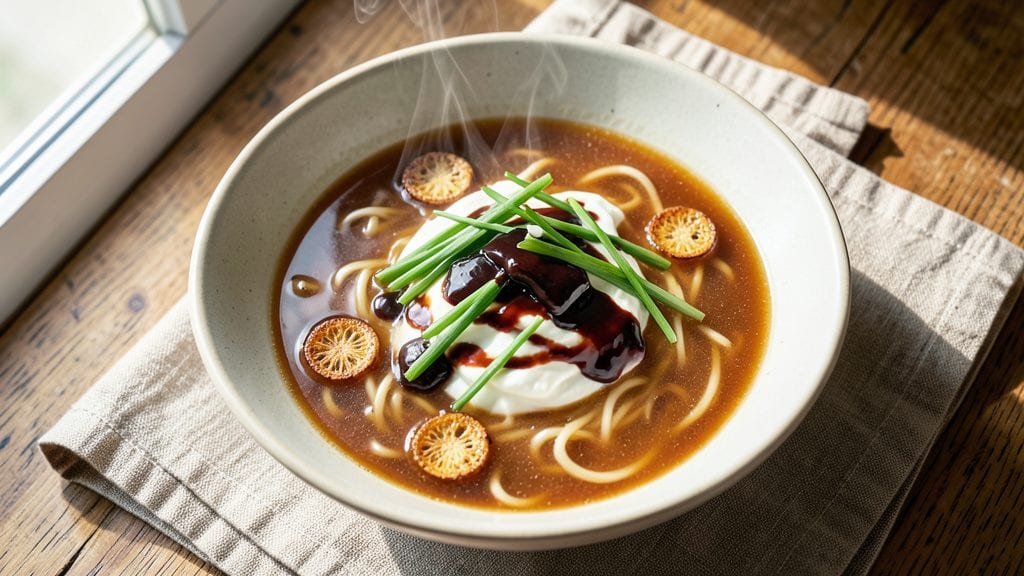
This umami-packed ramen broth without noodles is the game-changer I never knew I needed—deep, savory, and flexible enough to turn any meal into a comforting bowl experience.
Standing on a step stool in my grandmother’s kitchen in Sicily, I learned how simple ingredients could create something extraordinary, and this broth is proof. The secret lies in balancing miso, soy, and aromatics to build layers of flavor that make every spoonful satisfying.
What makes this recipe special is its versatility—use it as a base for rice bowls, zucchini noodles, or even lettuce cups if you're feeling adventurous. I developed it after craving that rich ramen taste without the carb overload, and it’s become a staple in my weekly rotation.
The broth simmers for hours, developing a depth that store-bought versions can’t match, while the toppings—soft-boiled eggs, mushrooms, or chashu—let you customize every bowl to your liking.
By the time you’re done, you’ll have a hearty, restaurant-quality broth that’s ready to be transformed into a full meal in minutes. The aroma alone will have everyone gathering around the table, and the first sip delivers that perfect umami punch.
This isn’t just soup—it’s a flavor experience that turns simple ingredients into something unforgettable.
Whether you’re serving a crowd or treating yourself to a solo dinner, this broth delivers bold flavor without the fuss. Let’s get cooking—your taste buds will thank you.
Ingredients for ramen without noodles
Simple ingredients that build layers of umami—no noodles needed for this soul-warming broth base.
| Ingredient | Amount | Notes |
|---|---|---|
| Dashi Powder 🍜 | 2 tbsp | High-quality brand for authentic umami |
| White Miso Paste 🧈 | ½ cup | Japanese white miso preferred |
| Light Soy Sauce 🍶 | ¼ cup | Kikkoman preferred for balance |
| Dark Soy Sauce 🍶 | 1 tbsp | For deeper color and flavor |
| Sesame Oil 🫒 | 1 tbsp | Toasted for nutty aroma |
| Garlic Cloves 🧄 | 6 cloves | Smashed for intense flavor |
| Fresh Ginger 🌿 | 2 tbsp | Grated, not powdered |
| Scallions 🧅 | 4 whole | White and green parts separated |
| Dried Shiitake Mushrooms 🍄 | 4 whole | Rehydrated in hot water |
| Green Onions 🧅 | ¼ cup | Chopped for garnish |
| Water 💧 | 6 cups | Filtered preferred for clarity |
| Chicken Stock 🍗 | 2 cups | Homemade or high-quality store-bought |
| Vegetable Oil 🫒 | 1 tbsp | For sautéing aromatics |
| Salt 🧂 | 1 tsp | Diamond Crystal preferred |
| White Pepper 🌶️ | ½ tsp | Freshly ground for subtle heat |
The miso and dashi are your flavor anchors. Japanese white miso from Marukome or Hatsu-maru delivers that clean, funky umami without overpowering. Dashi powder? Hondashi is my go-to—it’s pure dashi essence, no fillers. For the shiitake mushrooms, Trader Joe’s or Asian markets have the dried ones in bulk. Soak them in hot water for 20 minutes, then strain and use the liquid too—it’s packed with flavor. Fresh ginger and garlic? Don’t use powdered—the fresh versions make all the difference here.
No white miso? Substitute with a mix of red miso and soy sauce, but reduce the soy by half to avoid saltiness. Running low on dashi? Kombu and bonito flakes steeped in water work, but it’s a bit more work. No shiitake? Cremini mushrooms chopped fine will give you earthiness, though not the same depth. The sesame oil is non-negotiable for that nutty aroma, but if you’re avoiding it, toasted sesame seeds sprinkled at the end add a similar touch. For the stock, homemade is ideal, but Pacific Foods or Kitchen Basics brands are solid store-bought options.
This broth tastes even better the next day—plan ahead. Keeps in the fridge for 5-6 days, or freeze in ice cube trays for up to 3 months. I like to portion it into 1-cup servings so I can grab exactly what I need for a quick bowl. The aromatics? Save the scallion whites and ginger scraps—freeze them in a bag for your next batch. And trust me, you’ll want to make this again.
Why You'll Love This Recipe
- Five-Ingredient Magic: I swear, this is the kind of recipe where you measure, stir, and boom—depth of flavor without the fuss. That umami punch from the dashi and miso? It turns even a simple protein into something restaurant-worthy, no chopping required.
- Umami Bomb: Between us, the combo of white miso’s creaminess and dark soy’s molasses depth is ridiculously satisfying. A splash of sesame oil at the end? That’s the secret weapon—nutty, toasty, and impossible to resist.
- Leftovers That Shine: This broth improves the next day. I’ve used it to poach eggs, toss with greens, or drizzle over rice—each time better than the last. Honestly, I make a big batch just to have it on hand.
- Budget-Friendly Luxury: For under $10, you get a flavor profile that costs $20 at a ramen spot. The dashi powder and miso stretch like crazy, and you’re left with a base that feels indulgent without breaking the bank. (Yes, even on a Tuesday night.)
Step-by-step instructions for ramen broth without noodles
This umami-rich broth delivers deep flavor with minimal effort—perfect for any ramen bowl.
Bloom the Aromatics in Vegetable Oil
Heat 1 tablespoon vegetable oil in a large pot over medium heat. Add the 6 smashed garlic cloves and 2 tablespoons grated fresh ginger, stirring constantly for 1-2 minutes until fragrant but not browned. The ginger should release its aromatic oils, filling your kitchen with a warm, citrusy scent.
Next, add the 4 whole dried shiitake mushrooms (rehydrated in hot water for 20 minutes and drained) and the white parts of 4 whole scallions, chopped into ½-inch pieces. Sauté for 3-4 minutes until the mushrooms soften slightly and the scallions become translucent. This step builds the flavor foundation—don't rush it, as patience here ensures depth in the final broth.
Develop the Umami Base
Reduce heat to low and sprinkle in the 2 tablespoons dashi powder, stirring vigorously to dissolve completely. This step is critical—if you see any undissolved powder, add 1 tablespoon water and stir again. The dashi should blend seamlessly into the oil and aromatics, creating a silky base.
Add the 6 cups water and 2 cups chicken stock, bringing the mixture to a gentle simmer. Stir in the 0.5 cup white miso paste, ensuring it dissolves fully. The broth will darken slightly as the miso integrates, releasing its complex umami notes. Simmer uncovered for 10 minutes to allow the flavors to meld—this is where the magic happens.
Balance and Finish the Broth
Remove the pot from heat and stir in the 0.25 cup light soy sauce, 1 tablespoon dark soy sauce, and 1 tablespoon toasted sesame oil. The dark soy sauce will deepen the color, while the sesame oil adds a nutty aroma. Return to low heat and add the 1 teaspoon salt and 0.5 teaspoon white pepper, stirring until fully incorporated.
Taste and adjust seasoning—this broth should be rich but not overpowering. If it needs brightness, add a splash of chicken stock; if it needs more depth, a pinch of white miso paste works wonders. The final texture should be velvety, with a balance of saltiness, umami, and subtle sweetness from the aromatics.
Strain and Garnish
Line a fine-mesh strainer with cheesecloth or a coffee filter to catch any fine particles, then strain the broth into a clean pot. Discard the solids—your broth is now crystal clear and packed with flavor. For garnish, reserve the green parts of the scallions and 0.25 cup chopped green onions, which will add freshness when served over noodles or paired with proteins.
Keep the broth warm over low heat or transfer to a thermos for up to 48 hours—its flavors only improve with time. This versatile base works equally well in traditional ramen bowls, as a dipping sauce, or even as a hearty soup on its own. The key to its success lies in the layered umami development, where each ingredient plays a precise role in creating harmony.
Pro Tips For Making Ramen Without Noodles
- STIR THE MISO LAST: I learned this the hard way—adding white miso paste early turns your broth into a gluey mess. Wait until the dashi powder and soy sauces are fully dissolved and simmering, then whisk in the miso with the heat off. The paste needs to melt smoothly, not clump like a science experiment gone wrong.
- SIMMER LOW AND SLOW: Your broth will taste flat if you rush it. Once everything’s combined, reduce to the gentlest simmer you can manage—just small, occasional bubbles. I’m talking almost no movement. This lets the flavors marry properly, not just boil away. (Yes, even if you’re impatient like me.)
- DARK SOY SAUCE FIRST: Skip the urge to mix the light and dark soy sauces before adding them. Toss in the dark soy sauce first—it’s thicker and needs a head start to dissolve. Then add the light soy. This prevents streaks and ensures a smooth, rich color from the get-go.
- FINISH WITH SESAME OIL: This isn’t the prettiest method, but it’s the tastiest. Heat the broth until it’s steaming but not boiling, then drizzle in the sesame oil off the heat. Stir gently—it’ll coat the surface and add that nutty aroma without burning. (Your future self will thank you.)
Flavor customization for this ramen without noodles
Spicy Miso Kick
If you love heat, stir in 1 teaspoon gochujang (Korean chili paste) or ½ teaspoon red pepper flakes when adding the soy sauces. For a smoky twist, add ½ teaspoon smoked paprika with the sesame oil.
I once made a batch with 1 tablespoon chili crisp—it added a sweet-spicy depth that had my family begging for seconds. Balance is key: start with less and adjust to taste. 🌶️
Creamy Coconut Twist
Swap half the chicken stock for coconut milk (2 cups total) to create a silky, tropical-inspired broth. Add 1 tablespoon fish sauce for umami depth and finish with lime zest for brightness.
This version works beautifully with shredded chicken or tofu, and the coconut milk makes it feel like a vacation in a bowl. I first tried this after a trip to Bali—it’s now a summer staple in my kitchen.
Herb-Infused Clarity
Brighten the broth with fresh herbs like cilantro, Thai basil, or tarragon (1 tablespoon each). Add them during the final 10 minutes of simmering to preserve their bright flavors.
For a Mediterranean touch, I’ve added rosemary and thyme with the garlic—it pairs surprisingly well with the miso. Strain out the herbs before serving to keep the broth crystal clear.
Protein-Packed Variations
Transform this broth into a full meal by adding proteins during the last 5 minutes of simmering. For chashu, slice 1 pound pork shoulder thinly and simmer until tender. For seafood lovers, add 8 ounces shrimp or 12 clams in the final 3 minutes.
I often make a double batch—half as broth, half as a hearty stew with added proteins. The broth’s depth carries all the flavors beautifully.
Vegetarian Umami Boost
Skip the chicken stock and use vegetable stock instead, then add 1 tablespoon soy sauce extra for depth. Boost umami with ½ cup rehydrated kombu (seaweed) or 1 tablespoon nutritional yeast.
For texture, stir in 1 cup cooked lentils or shiitake mushrooms during the final simmer. This version is just as rich—my vegetarian friends swear by it, and it’s become a weeknight favorite.
Smoky Chipotle Depth
For a smoky, slightly sweet profile, add 1-2 chipotle peppers in adobo sauce (minced) with the garlic. Adjust to taste—chipotle adds heat and complexity without overpowering. I also like to finish with ½ teaspoon cinnamon for warmth.
This variation feels like a cross between ramen and pozole, and it’s perfect for chilly evenings. 🔥
Nutrition facts
Frequently asked questions
Can I use this broth as a base for other dishes besides ramen?
This umami-packed broth works beautifully as a dipping sauce for dumplings, a base for rice bowls, or even as a hearty soup on its own. I've used it to make quick stir-fries by adding proteins like shrimp or chicken during the final simmer. The key is its versatility—it adapts to whatever you're serving!
What are good alternatives to noodles for serving this broth?
Try steamed rice, zucchini noodles, or even lettuce cups for a low-carb option. For extra texture, I like using shredded cabbage or thinly sliced radishes. The broth's rich flavor pairs perfectly with these alternatives while keeping the dish light and refreshing.
How do I make this broth vegetarian?
Replace the chicken stock with vegetable stock and add ½ cup rehydrated kombu or 1 tablespoon nutritional yeast for extra umami. The miso already provides plenty of depth, so no additional adjustments are needed. This version is just as satisfying and perfect for plant-based diets.
Can I make this broth in a slow cooker?
Yes! Combine all ingredients in your slow cooker and cook on low for 4-6 hours or high for 2-3 hours. The slow cooking enhances the flavors even more. Just be sure to strain it well before serving to remove any solids that may have softened too much during cooking.
What's the best way to store leftover broth?
Store in an airtight container in the fridge for 5-6 days or freeze in 1-cup portions for up to 3 months. The flavors actually improve over time! When reheating, warm gently on the stove or microwave until steaming hot—never boil to preserve the delicate balance of flavors.