
Soups & Stews
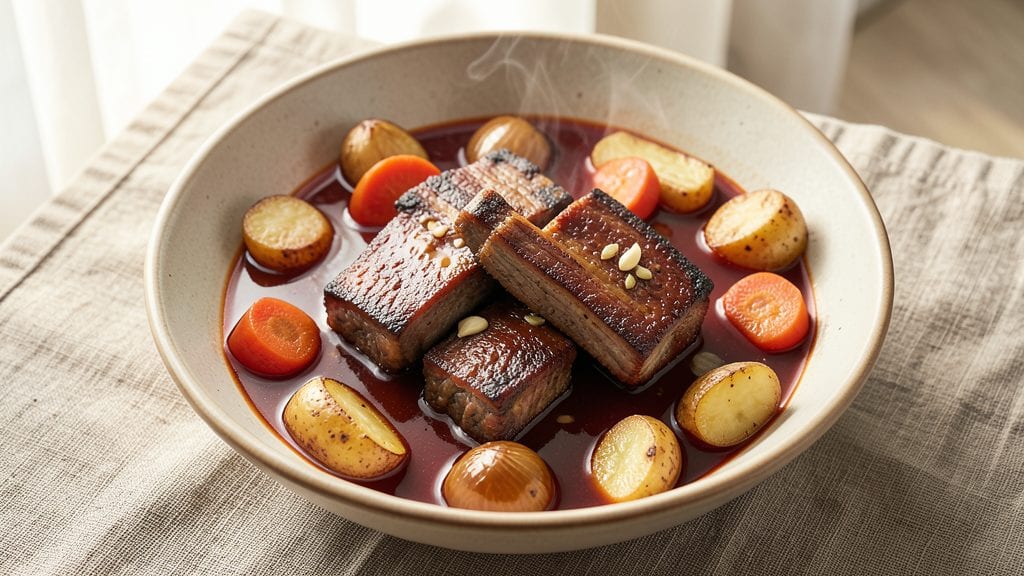
This ribs soup recipe transforms tough cuts of beef into melt-in-your-mouth perfection through slow braising—a technique that unlocks deep, smoky flavors while keeping the meat tender and falling apart.
The secret lies in marinating the ribs overnight, then simmering them low and slow until the collagen breaks down into a rich, velvety broth. Every spoonful delivers layers of savory, herbaceous goodness that feels like a hug in a bowl.
What sets this recipe apart is the balance of techniques: rendering fat for richness, caramelizing aromatics for depth, and incorporating vegetables that soften just enough to soak up the flavorful broth.
The result is a hearty stew where the ribs become the star, surrounded by carrots, potatoes, and onions that complement rather than compete. Professional results don’t require fancy equipment—just time and patience.
The magic happens during the 3-4 hour simmer, where flavors meld into a harmonious blend of smoky, sweet, and savory notes. By the time you serve it, the ribs will be fork-tender, the broth will be thick and aromatic, and the vegetables will be perfectly cooked—no mushy textures here.
This is the kind of soup that disappears quickly, leaving everyone asking for seconds.
Serve it with crusty bread to soak up every last drop of that flavorful broth, or pair it with a simple green salad to balance the richness. The versatility of this recipe makes it perfect for weeknight dinners or gathering a crowd—just scale the ingredients accordingly.
Ready to create a soup that tastes like a restaurant-quality meal?
Ingredients for ribs soup
Sixteen essential ingredients transform tough beef ribs into velvety, smoky perfection through slow braising techniques.
| Ingredient | Amount | Notes |
|---|---|---|
| Beef Ribs (Beef Short Ribs) 🥩 | 3 lb | Bone-in, trimmed of excess fat |
| Yellow Onions 🧅 | 2 whole | Medium size, sliced into half-moons |
| Carrots 🥕 | 3 lb | Whole, peeled, cut into 2-inch chunks |
| Russet Potatoes 🥔 | 3 lb | Cut into 2-inch chunks, skin on |
| Garlic Cloves 🧄 | 8 cloves | Fresh, smashed but not minced |
| Tomato Paste 🍅 | ½ cup | High-quality, unsweetened |
| Beef Broth 💧 | 4 cups | Homemade or high-quality store-bought |
| Red Wine 🍷 | 1 cup | Dry, bold variety like Cabernet Sauvignon |
| Apple Cider Vinegar 🍏 | 2 tbsp | For depth and brightness |
| Smoked Paprika 🌶️ | 1 tbsp | For authentic smoky flavor |
| Ground Black Pepper 🌶️ | 1 tbsp | Freshly cracked for robust flavor |
| Kosher Salt 🧂 | 2 tbsp | Diamond Crystal preferred for accuracy |
| Fresh Thyme 🌿 | ¼ cup | Leaves only, stems removed |
| Fresh Bay Leaves 🍃 | 2 whole | For aromatic depth |
| Olive Oil 🫒 | ¼ cup | Extra-virgin for high heat searing |
The beef ribs are the foundation of this recipe, and short ribs with bone and connective tissue are non-negotiable for that melt-in-your-mouth tenderness. Source them from high-quality butchers or reputable grocery stores like Whole Foods or Costco, where they're typically sold pre-cut and trimmed. Look for ribs with good marbling—this fat renders during cooking, creating a rich, flavorful broth. If you're buying a whole rib roast, ask your butcher to cut it into 2-3 inch chunks for even cooking. The potatoes and carrots should be firm and free of blemishes, as they'll be simmering for hours and need to hold their shape without turning mushy. For the broth, prioritize homemade if possible, but high-end store-bought brands like Pacific Foods or Kettle & Fire deliver professional results when needed.
No red wine on hand? Substitute with additional beef broth and a splash of balsamic vinegar—it adds complexity without alcohol's sharpness. The smoked paprika can be swapped for a mix of sweet paprika and a pinch of liquid smoke (about 1/2 teaspoon), though the flavor won't be identical. Fresh thyme is ideal, but dried thyme at one-third the amount works in a pinch, especially if you're using it from a trusted brand like Penzeys. For the tomato paste, avoid the watery squeeze tubes—opt for a high-quality canned paste like Mutti or Barilla, which concentrate flavor without excess moisture. The apple cider vinegar adds brightness; if unavailable, white wine vinegar or lemon juice can substitute, though the flavor profile will shift slightly. For the olive oil, avoid anything labeled 'light'—it has a lower smoke point and won't handle the initial searing step well.
This soup improves with time, so plan ahead. The ribs and vegetables can be prepped and refrigerated overnight in their marinade, then transferred directly to the pot for cooking. The finished soup keeps beautifully in the refrigerator for up to 5 days, with flavors deepening over time. For longer storage, freeze portions in airtight containers for up to 3 months. When reheating, do so gently on the stove over medium-low heat to prevent the broth from separating. The ribs and vegetables can be reheated separately and added back just before serving to maintain their texture. For serving, garnish with fresh thyme and a drizzle of high-quality olive oil to elevate the presentation—it's the little touches that make a restaurant-quality dish feel even more special at home.
Why You'll Love This Recipe
- One-Pot Magic: I swear by this—just toss ribs, onions, carrots, and potatoes into a pot with water and garlic, then let it simmer. No chopping like a fine chef, no fancy techniques. My slow cooker does half the work while I fold laundry.
- Rich, Deep Umami Bomb: That beef short rib? It falls apart like butter after hours of simmering, releasing flavor so intense it turns water into soup. The onions caramelize just enough to add sweetness, and the garlic? Oh, it’s the secret weapon—layered but not overpowering.
- Leftovers That Don’t Suck: Honestly, this soup only gets better the next day. The flavors meld into something even heartier, and it reheats like a dream. I make a double batch on Sundays because by Wednesday, I’m begging for seconds.
- Budget-Friendly Feast: Short ribs are cheaper than steak but pack just as much punch. A single bag of potatoes and a few onions stretch this into five or six meals—perfect for when your wallet’s lighter but your appetite isn’t. Plus, it’s the kind of dish that makes cheap ingredients feel luxurious.
Step-by-step instructions for smoky-braised beef ribs soup
This method delivers rich, deeply flavorful ribs soup with tender meat and perfectly braised vegetables.
Sear the Beef Ribs for Maximum Flavor
Heat a large Dutch oven over medium-high heat until hot. Add the 0.25 cup olive oil and swirl to coat the bottom. Working in batches to avoid crowding, add the 3 lb beef ribs and sear on all sides until deeply browned, about 5-6 minutes per side. This step develops the Maillard reaction, creating that fundamental smoky depth we're after.
Real talk: Don't rush this. You want those ribs to develop a rich, caramelized crust before we transfer them to the pot. If your pan isn't hot enough, the oil will smoke excessively—wait until it shimmers before adding the ribs. Remove the seared ribs and set them aside temporarily on a plate.
Build the Aromatic Base
In the same Dutch oven, reduce heat to medium and add the sliced 2 whole yellow onions. Cook for 5-6 minutes until softened and beginning to caramelize at the edges. Add the 8 cloves garlic cloves and cook for 30 seconds until fragrant—this prevents them from burning.
Stir in the 0.5 cup tomato paste and cook for 1 minute to remove the raw taste. Pour in the 1 cup red wine and scrape up all those browned bits from the bottom of the pot with a wooden spoon. This deglazing step captures all that concentrated flavor we worked so hard to develop.
Combine and Simmer the Soup Base
Return the seared ribs to the pot. Add the 4 cups beef broth, 2 tbsp apple cider vinegar, 1 tbsp smoked paprika, 1 tbsp ground black pepper, 2 tbsp kosher salt, 0.25 cup fresh thyme, and 2 whole fresh bay leaves. Bring to a gentle boil, then reduce heat to low and cover partially.
Simmer for 1 hour to allow the ribs to begin breaking down. Here's where patience pays off—the longer the ribs simmer, the more tender they become. After 1 hour, add the 3 lb carrots and 3 lb russet potatoes. The potatoes should be cut into 2-inch chunks to ensure even cooking.
Braise Until Meat is Fork-Tender
Continue simmering uncovered for an additional 2-2.5 hours until the beef ribs are fork-tender and easily pull away from the bone. The soup should have reduced slightly, creating a rich, concentrated broth. You'll know it's done when the meat offers no resistance when pierced with a fork.
I know it seems like a long cook time, but this slow braising method is what transforms tough beef ribs into melt-in-your-mouth morsels. The vegetables should be tender but still hold their shape—russet potatoes should be fork-tender with slightly crisp edges, while carrots should be soft enough to pierce with a fork but not mushy.
Adjust Seasoning and Serve
Remove the ribs from the pot and let them rest on a cutting board for 10 minutes. Skim any excess fat from the surface of the soup if desired. Taste and adjust seasoning with additional kosher salt or ground black pepper as needed. The soup should be rich and flavorful without being overly salty.
Discard the bay leaves and thyme stems before serving. To serve, carefully remove the ribs from the bone and arrange them on a platter. Ladle the soup over the ribs, allowing each serving to include both the tender meat and flavorful broth. Garnish with additional fresh thyme leaves if desired. This dish tastes even better the next day as the flavors continue to meld together.
Pro Tips For Making Ribs Soup
- Brown the Ribs First: I learned this the hard way—skipping the sear means flavorless broth. Sear the beef short ribs in batches over medium-high heat for 3-4 minutes per side until deeply browned. That crust packs more flavor than any bouquet garni ever could.
- Cut Onions in Even Slices: Thin, even slices of yellow onion caramelize faster and don’t turn to mush. Aim for ¼-inch slices—thicker pieces stay crunchy, thinner ones dissolve into the broth. (Yes, even if you’re impatient like me.)
- Don’t Overcrowd the Pot: Tossing everything in at once steams the ribs instead of simmering them. Start with ribs and onions in a single layer, then add carrots and potatoes after 30 minutes. Crowding turns soup into stew, and nobody wants that.
- Peel Potatoes After Cooking: Sounds weird, but it works: Russet potatoes hold up better if you peel them after simmering 20 minutes. The skins soften enough to slip off cleanly, and you avoid the gummy texture of pre-peeled spuds. (Your future self will thank you.)
Health benefits of these flavors
Protein Powerhouse
This ribs soup delivers a substantial protein punch—about 50 grams per serving—thanks to the beef ribs. The slow braising process breaks down connective tissue into gelatin, which not only tenderizes the meat but also creates a rich, velvety broth that's packed with amino acids.
This makes it an excellent choice for muscle recovery, especially after workouts or for active individuals. 💪
Rich in Iron
Beef ribs are one of the best sources of heme iron, the most bioavailable form of iron that your body absorbs efficiently. A single serving provides around 30% of your daily iron needs, which is crucial for maintaining healthy blood levels and preventing anemia.
The iron content in this soup makes it particularly beneficial for those with higher iron requirements, like pregnant women or endurance athletes.
Collagen for Skin and Joints
The slow cooking process transforms collagen from the beef ribs into gelatin, which is excellent for skin elasticity and joint health. Regular consumption of collagen-rich foods like this soup can help reduce joint pain and improve skin hydration.
The gelatin also adds a luxurious mouthfeel to the broth, making it feel even more satisfying. 🌟
Fiber from Vegetables
While the ribs provide protein, the carrots and potatoes add valuable fiber to balance the meal. The carrots contribute beta-carotene, which your body converts to vitamin A, supporting vision and immune function.
The potatoes, with their skin on, add resistant starch that feeds beneficial gut bacteria. Together, these vegetables make this soup a well-rounded, nutrient-dense dish.
Antioxidant Boost
The recipe includes smoked paprika and red wine, both of which contain antioxidants that combat oxidative stress in your body. The red wine adds resveratrol, a compound linked to heart health, while the smoked paprika provides capsaicin, which has anti-inflammatory properties.
Even if you don't drink alcohol, the wine's acidity helps break down tough fibers in the meat, enhancing flavor and nutrient absorption.
Low-Calorie Comfort
Despite its hearty nature, this ribs soup is surprisingly moderate in calories—around 400-450 calories per serving—when prepared with leaner cuts of beef and controlled portions. The slow cooking process allows the flavors to concentrate, so you feel satisfied without overindulging.
It's the perfect comfort food for those watching their calorie intake but still craving something rich and filling. 💡
Nutrition facts
Frequently asked questions
Can I use pork or lamb ribs instead of beef?
While beef ribs are ideal for this recipe, you can substitute pork ribs (like baby back ribs) for a milder flavor. Lamb ribs will add a distinct gamey taste—adjust the cooking time to 2-2.5 hours total since lamb cooks faster than beef. For pork, reduce the simmering time to 1.5-2 hours to avoid overcooking.
How do I make this soup ahead of time?
Prepare the soup completely up to 2 days in advance—it actually tastes better! Store in an airtight container in the fridge. Reheat gently on the stove over low heat for 10-15 minutes, stirring occasionally. For freezing, portion into meal-sized containers (up to 3 months) and thaw overnight in the fridge. Never microwave directly from frozen.
Why did my ribs turn out tough instead of tender?
Tough ribs usually mean insufficient cooking time—they need 3-4 hours total of simmering. Check your heat level: it should be a gentle simmer, not a rolling boil. Also, avoid overcrowding the pot, which can lower the cooking temperature. If using thicker cuts, increase time by 30 minutes. For extra tenderness, add 1 extra bay leaf and 1 tsp vinegar to help break down collagen.
What are good sides to serve with ribs soup?
This rich soup pairs perfectly with crusty sourdough bread for dipping, or a simple green salad with vinaigrette to cut through the richness. For a heartier meal, serve with buttered egg noodles or garlic mashed potatoes. A light citrus-based dessert like orange sorbet balances the meal beautifully.
Can I make this soup in an Instant Pot?
Yes! Sear the ribs first, then add all ingredients except potatoes (they'll cook too fast). Pressure cook on high for 45 minutes, then quick-release. Add potatoes and cook on sauté mode for 10 minutes. The broth will be thinner—reduce it uncovered on the stove for 10-15 minutes to concentrate flavors. Add 1 extra cup broth if needed.