
Sauces & Condiments
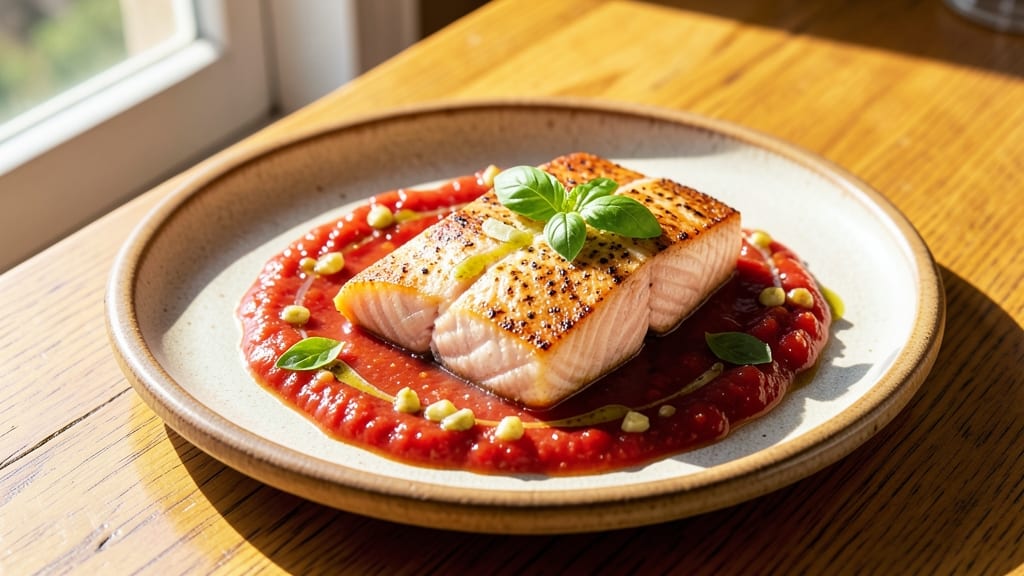
This tomato basil salmon sauce recipe transforms simple ingredients into a vibrant, restaurant-quality dish that highlights the delicate flavor of flaky salmon. The bright acidity of the tomato sauce cuts through the richness of the fish, creating a perfect balance that’s both elegant and approachable.
I developed this recipe after years of testing different combinations to find the ideal pairing—one that enhances rather than overpowers the natural sweetness of the salmon.
The secret lies in a simplified tomato sauce made with high-quality canned tomatoes, fresh basil, and a touch of garlic, all simmered until thickened but still bright.
The salmon itself is cooked to perfection—seared in a hot pan for crisp edges and finished with the sauce to lock in moisture. This method ensures every bite delivers tender, flaky fish with a glossy, flavorful coating that feels like a chef’s touch.
What makes this dish truly special is how effortlessly it comes together—30 minutes from start to finish, with minimal cleanup. The sauce is versatile enough to pair with roasted vegetables, quinoa, or crusty bread, making it ideal for weeknight dinners or elegant gatherings.
The result is a dish that’s both pescatarian-friendly and packed with fresh, high-quality ingredients that shine.
Once you try this combination, you’ll never settle for plain salmon again. The bright, acidic tomato sauce elevates the fish to new heights while keeping the preparation simple and foolproof. Let’s get cooking—your taste buds will thank you.
Ingredients for tomato sauce for salmon
Bright, acidic tomato sauce meets delicate salmon in this restaurant-quality dish.
| Ingredient | Amount | Notes |
|---|---|---|
| Center-Cut Salmon Fillets 🐟 | 2 pieces | Skin-on, 6-8 oz each |
| Canned San Marzano Tomatoes 🍅 | 14 ½ oz | Crushed by hand |
| Fresh Basil Leaves 🌿 | ½ cup | Packed, stems removed |
| Garlic Cloves 🧄 | 3 cloves | Minced, fresh preferred |
| Shallots 🧅 | 2 whole | Minced, or 2 tbsp shallot powder |
| Extra-Virgin Olive Oil 🫒 | ¼ cup | High-quality, fruity |
| Lemon Juice 🍋 | 2 tbsp | Freshly squeezed |
| Dry White Wine 🍷 | ½ cup | Sauvignon Blanc preferred |
| Unsalted Butter 🧈 | 2 tbsp | Cold, cubed |
| Kosher Salt 🧂 | 1 ½ tsp | Divided usage |
| Freshly Ground Black Pepper 🌶️ | ½ tsp | Light hand |
| Heavy Cream 🥛 | ¼ cup | Full-fat for richness |
| Fresh Parsley 🌿 | 2 tbsp | Chopped, for garnish |
The San Marzano tomatoes are non-negotiable for this sauce—look for the 28-ounce cans at specialty stores or Whole Foods for that signature sweetness. Fresh basil should be vibrant green with no wilting; Trader Joe's often carries perfect bunches. For the salmon, center-cut fillets with skin-on ensure even cooking and crisp edges. If you can't find San Marzano, Muir Glen is a solid backup, though the flavor won't be identical. The shallots add depth without overpowering; if you're short on time, shallot powder works in a pinch but fresh is ideal.
No white wine? Substitute fish stock with a splash of lemon juice—it keeps the acidity balanced. Fresh basil can be swapped for dried at one-third the amount, but the flavor won't be as bright. For a richer sauce, add 1 tbsp heavy cream at the end. The butter is critical for finishing—it adds silkiness and helps emulsify the sauce. If you're avoiding dairy, olive oil works but lacks richness. Always taste as you go; the sauce should be tangy but not overpowering the salmon's natural sweetness.
This sauce freezes beautifully—portion into ice cube trays for single servings. It keeps in the fridge for 5 days and in the freezer for 3 months. The salmon cooks in 10 minutes if seared properly; don't overcook or it'll turn rubbery. Garnish with parsley right before serving to keep it vibrant. Leftovers reheat well in a skillet with a splash of water to prevent drying.
Why You'll Love This Recipe
- Foolproof in Minutes: I swear by this—just 10 minutes of prep, no fancy techniques. Slice shallots while the oven preheats, crush garlic into the tomatoes, and let the salmon sear itself while everything simmers. Honestly, the hardest part is waiting for the basil to wilt just right.
- Sunshine in a Sauce: That first spoonful of San Marzano tomatoes caramelized with garlic? It’s like summer in a bowl. The basil’s bright punch cuts through the richness of the salmon, and the crispy skin? Absolute magic. (Yes, even on a Tuesday night.)
- Leftovers That Don’t Suck: Double the sauce, halve the effort. This keeps beautifully for days—toss it over pasta, use it in omelets, or just reheat with a splash of water. My freezer’s stocked with portions because, between us, I’d rather eat this than takeout.
- Weeknight Superhero: Budget-friendly but feels fancy. Center-cut salmon’s affordable, and a single can of tomatoes stretches into multiple meals. Throw in a baguette and a bottle of wine, and suddenly you’ve got dinner guests covered without stressing. (They’ll never know it took me 25 minutes.)
Step-by-step instructions for tomato basil salmon sauce
This method balances rich tomato depth with bright acidity—essential for highlighting flaky salmon.
Sauté Aromatics Until Fragrant
Heat the 0.25 cup extra-virgin olive oil in a large skillet over medium heat. Add the 2 minced shallots and cook for 3-4 minutes until softened and translucent. The shallots should release their natural sweetness without browning.
Add the 3 minced garlic cloves and cook for another 30 seconds until the aroma fills the kitchen. Be careful not to let the garlic burn—it should just perfume the oil. This aromatic base forms the flavor foundation for the entire sauce.
Build the Tomato Sauce Base
Pour in the 14.5 oz crushed San Marzano tomatoes and 0.5 cup dry white wine. Stir well to combine, then bring the mixture to a gentle simmer over medium-low heat. Let it cook uncovered for 8-10 minutes until the liquid reduces by about one-third and the flavors concentrate.
Season with 0.75 tsp kosher salt and 0.25 tsp freshly ground black pepper. Taste and adjust if needed—the tomatoes should be bright but balanced. This reduction step develops the sauce's depth while maintaining its natural sweetness.
Finish with Cream and Acid
Reduce heat to low and stir in the 0.25 cup heavy cream and 2 tbsp lemon juice. The cream will create a velvety texture while the lemon juice cuts through the richness, creating that essential bright-acidic balance. Simmer gently for 2-3 minutes until the sauce thickens slightly but remains silky.
Remove from heat and stir in the 0.5 cup packed fresh basil leaves and 2 tbsp chopped fresh parsley. Let the herbs steep for 5 minutes to infuse their flavors before straining if you prefer a smoother sauce, or leave them in for a more rustic texture.
Cook the Salmon to Flaky Perfection
While the sauce simmers, season the 2 center-cut salmon fillets with the remaining 0.75 tsp kosher salt and 0.25 tsp black pepper. Heat a separate skillet over medium-high heat and melt the 2 tbsp unsalted butter until foaming.
Add the salmon skin-side down and cook for 4-5 minutes until the skin is crispy and golden brown. Flip carefully and cook for another 2-3 minutes until the salmon reaches 145°F internally and flakes easily with a fork. The butter should baste the fish, adding richness without overpowering the delicate texture.
Combine and Serve Immediately
Pour the tomato basil sauce over the cooked salmon and let it rest for 1-2 minutes to meld flavors. The residual heat will gently cook the salmon further while the sauce clings to its flaky texture. Serve immediately with the sauce spooned over the top, garnished with additional chopped parsley if desired.
Each bite should deliver perfectly flaky salmon with a sauce that balances rich tomato, bright acidity, and herbal freshness. The sauce's acidity cuts through the fish's natural oils, creating harmony in every mouthful.
Pro Tips For Making Tomato Sauce For Salmon
- CRANK THE HEAT FIRST: Your sauce starts with a screaming-hot pan—no simmering yet. Sear the shallots and garlic in about 2 tablespoons of olive oil until they’re golden (not browned) and smell like a provence market. This builds flavor faster than low-and-slow ever will, and it prevents that dull, cooked-on taste that ruins tomato sauces.
- SALT THE TOMATOES: Drain the San Marzano tomatoes and toss them with 1 teaspoon of salt right in the can (yes, even if they’re low-sodium). Let them sit for 10 minutes while you prep the rest—this breaks down the skins and softens the texture, so your sauce isn’t chunky or watery. I learned this the hard way after straining three batches of mushy tomato pulp.
- SKIP THE BASIL UNTIL THE END: Tossing fresh basil into simmering sauce kills its bright flavor—it turns bitter and slimy. Instead, rip the leaves, sprinkle them over the finished sauce off the heat, and let them steep for 2 minutes before serving. Pro move: Use a mortar and pestle to crush a few leaves into the oil before cooking for a subtle aromatic boost.
- TEST THE SALMON AT 120°F: Salmon’s done when it hits 120°F internally, not when it flakes easily. Overcooking turns it dry and rubbery, especially with a tomato sauce that’s already acidic. Use an instant-read thermometer—no guessing. If you don’t have one, cut into the thickest part: it should opaque at the edges but still be slightly translucent in the center.
Wine and beer pairings for tomato sauce for salmon
Crisp White Wine
The Sauvignon Blanc in this recipe is non-negotiable for balancing the dish’s richness. Look for a crisp, dry example from New Zealand or Loire Valley—their bright citrus and herbal notes mirror the tomato sauce’s acidity.
I love Cloudy Bay or Oyster Bay for their zesty finish that cleanses your palate between bites. 🍷
Light Beer Pairings
A Belgian witbier like Stella Artois or a German Helles complements the dish beautifully. The subtle spice and light body won’t overpower the salmon’s delicate flavor. For a craft option, try a wheat beer with lemon and coriander notes—it echoes the sauce’s herbal brightness.
Avoid heavy lagers or IPAs, which could clash with the dish’s refined balance.
Italian Reds for Contrast
If you prefer red wine, a Chianti Classico or Pinot Noir from Oregon adds earthy depth without overwhelming the tomato sauce. The acidity in these wines enhances the dish’s bright flavors. I recommend chilling them slightly (55-60°F) to soften tannins and preserve their freshness. 🍇
Non-Alcoholic Options
For a refreshing alternative, serve sparkling water with lemon or a ginger beer—the effervescence cuts through the sauce’s richness. A cucumber-mint infused water also works, especially on hot days. The crispness keeps the dish feeling light and vibrant.
Dessert Wine Pairing
If you’re serving this as part of a multi-course meal, finish with a Moscato d’Asti—its sweetness contrasts the dish’s acidity while harmonizing with the tomato’s natural sugars. The light bubbles and floral notes create a perfect transition to dessert.
Pro Tip: Temperature Matters
Always serve white wine slightly chilled (45-50°F) and reds at room temperature (60-65°F). Use an ice bucket for whites and let reds breathe for 15 minutes before pouring. Proper temperature ensures every sip enhances the dish’s flavors rather than competing with them. ✨
Nutrition facts
Frequently asked questions
Can I use fresh tomatoes instead of canned in this recipe?
Fresh tomatoes work but require extra prep. Roast 4 large vine-ripened tomatoes at 400°F for 20 minutes until softened, then blend with 1 tbsp olive oil and 1 tsp sugar to mimic canned tomato sweetness. Fresh versions lack the concentrated flavor of San Marzano, so expect a lighter sauce.
How do I prevent the salmon from drying out?
Keep cooking times strict: 4-5 minutes per side for 6-8 oz fillets at 145°F internal temp. Use a meat thermometer and avoid overcrowding the pan. For extra moisture, baste with butter during cooking or serve immediately after plating.
Can I make this sauce ahead of time?
Yes! Prepare the sauce up to 2 days ahead and refrigerate. Reheat gently on low heat with 1 tbsp water to restore silkiness. For longer storage, freeze in ice cube trays and thaw overnight in the fridge. The salmon should always be cooked fresh for best texture.
What are the best sides for this dish?
Light, fresh sides work best: lemon-herb roasted asparagus, wild rice pilaf, or garlic sautéed spinach. For texture contrast, add crusty sourdough bread or creamy polenta. Avoid heavy starches like mashed potatoes that could overwhelm the delicate flavors.
Why does my sauce taste too acidic?
Too much lemon juice or undercooked tomatoes cause excess acidity. Balance it by adding 1 tsp sugar or 1 tbsp heavy cream to round out flavors. For future batches, reduce lemon to 1 tbsp and simmer tomatoes longer (12-15 minutes) to concentrate natural sweetness.