
Main Courses
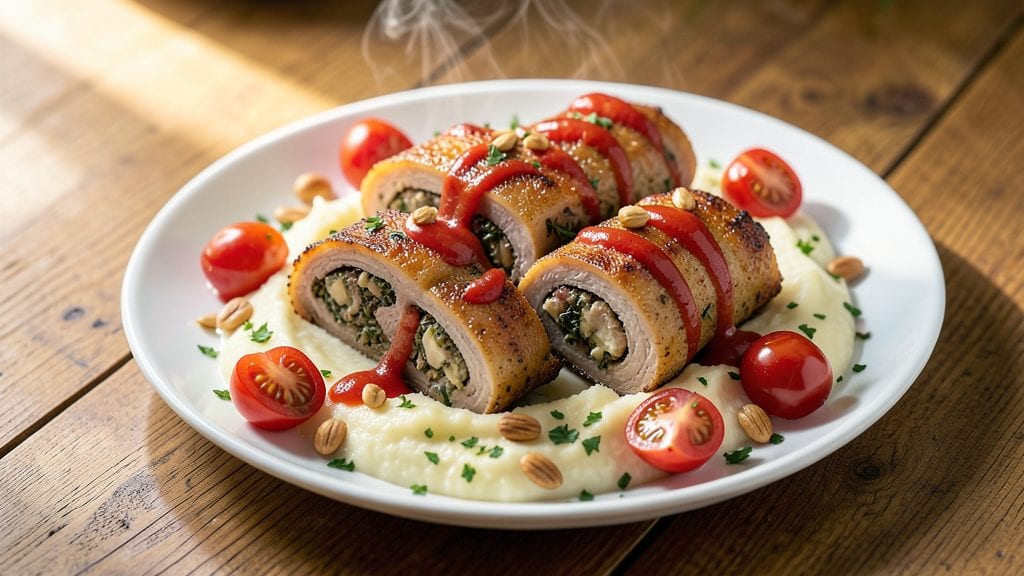
This veal braciole recipe brings classic Italian technique to your home kitchen with tender veal layered in herbed filling and slow-braised to perfection. Standing on a stool in my Nonna’s kitchen, I learned how rolling meat this way transforms simple ingredients into a restaurant-worthy centerpiece.
The key lies in the precise rolling and braising—where patience rewards you with melt-in-your-mouth texture and deep, savory flavors.
The process starts with thin veal slices layered with a mix of breadcrumbs, garlic, parsley, and cheese, then rolled and secured before braising in a rich tomato sauce.
While it requires some hands-on work upfront, the slow cooking does all the heavy lifting—breaking down the meat into tender perfection while infusing it with aromatic sauce.
This dish is the kind of meal that turns a weeknight into a celebration, especially when paired with polenta or crusty bread to soak up every last drop.
What makes this recipe special is its balance of tradition and approachability—no fancy equipment needed, just time and care. The herbed filling adds complexity without overpowering the delicate veal, while the braising process creates a sauce so flavorful it becomes the star.
Whether you’re cooking for a special occasion or simply craving a taste of Italy, this dish delivers the kind of results that make you feel like you’ve been transported to a bustling trattoria.
For those short on time, a slow cooker adaptation works beautifully—just adjust the cooking time and liquid ratio. The end result remains the same: tender, flavorful veal that’s worth every minute of effort. Let’s get started on creating this Italian masterpiece.
Ingredients for veal braciole
Simple ingredients that transform into restaurant-quality veal braciole with just time and care.
| Ingredient | Amount | Notes |
|---|---|---|
| Veal Cutlets 🥩 | 1 ½ lb | Thinly sliced, 1/4-inch thick |
| All-Purpose Flour 🌾 | ½ cup | For dredging meat |
| Large Eggs 🥚 | 2 whole | Beaten for egg wash |
| Plain Breadcrumbs 🍞 | 1 cup | Panko for extra crunch |
| Fresh Parsley 🌿 | ¼ cup | Chopped, stems removed |
| Garlic Cloves 🧄 | 6 cloves | Minced, fresh preferred |
| Parmesan Cheese 🧀 | ½ cup | Freshly grated, block preferred |
| Dried Oregano 🍃 | 1 tsp | Italian or Mediterranean blend |
| Ground Black Pepper 🌶️ | ½ tsp | Freshly cracked |
| Olive Oil 🫒 | ¼ cup | Extra-virgin for richness |
| San Marzano Crushed Tomatoes 🍅 | 2 cups | No-salt-added preferred |
| Tomato Paste 🍅 | 2 tbsp | Smooth, no sugar added |
| Dry White Wine 🍷 | ½ cup | Pinot Grigio or Sauvignon Blanc |
| Vegetable Broth 💧 | 1 cup | Low-sodium preferred |
| Salt 🧂 | 1 tsp | Kosher or sea salt |
The veal is your canvas here—look for thinly sliced cutlets at your butcher or grocery store's meat counter. Costco or Whole Foods often have pre-sliced options, but if you're buying whole, ask for it cut to 1/4-inch thickness. The thinner the slices, the easier they roll and the more evenly they cook. For the breadcrumbs, panko works best—it stays crispy even after braising. If you can't find it, regular breadcrumbs (pulse dry bread in a food processor) will do, but they'll be softer. Fresh parsley is non-negotiable for that bright Italian flavor—the kind in plastic containers at the grocery store is fine, but if you can grab a bunch and chop it yourself, do it. The difference is noticeable.
No white wine? Extra vegetable broth works, but you'll lose some depth. Short on parsley? Fresh basil at half the amount gives a different but still delicious twist. The tomato paste can be skipped if you're using high-quality crushed tomatoes, but I always include it—it's what gives that rich, concentrated flavor. For the cheese, Parmigiano-Reggiano is ideal, but Pecorino Romano adds a sharper bite. If you're using pre-grated, toast it in a dry pan for 2 minutes first to remove excess moisture. The garlic? Fresh is a must—jarred garlic just doesn't cut it here.
This dish tastes even better the next day, so make it ahead if you can. The sauce thickens as it sits, so if it's too thin after braising, simmer uncovered for 10 minutes to reduce. Store leftovers in an airtight container in the fridge for up to 4 days, or freeze for 3 months. The meat stays tender when reheated gently—just warm it through with a splash of broth or water. For serving, I always keep a jar of the sauce separate so I can drizzle it over polenta or pasta at the table.
Why You'll Love This Recipe
- Pantry-Friendly Magic: I swear by this recipe because it turns exactly what I have into something special—no fancy pantry runs needed. Flour, eggs, breadcrumbs? That’s my bread-and-butter trifecta, and the parsley adds that fresh pop without overcomplicating things.
- Crispy-Creamy Payoff: That first bite—crunchy breadcrumb crust giving way to tender veal—is the kind of contrast that makes you pause mid-chew. Honestly, the egg wash seals in the flavor while the breading stays light, so it doesn’t turn into a greasy mess.
- Weeknight to Dinner Party: Between us, this is my "I have 20 minutes and company’s coming" go-to. For weeknights, I make a double batch and freeze half—then reheat it later for zero stress. And if you’re hosting? Fancy it up with a lemon wedge and a sprinkle of parsley, and suddenly it’s chef’s kiss elegant.
- Leftovers That Don’t Lie: Unlike some recipes where reheating turns everything sad, these braciole stay juicy and crispy even the next day. I’ll be real: my kids beg for them cold in sandwiches, and my husband saves them for "emergency" lunches. That’s a win for anyone who hates food waste.
Step-by-step instructions for Italian-style veal braciole
Here's how to create tender, flavorful veal braciole with a perfect herbed filling and rich tomato sauce.
Prepare the Herbed Filling
In a food processor, combine the 0.25 cup fresh parsley, 6 cloves garlic cloves, 0.5 cup parmesan cheese, 1 tsp dried oregano, and 0.5 tsp ground black pepper. Pulse until finely chopped but still slightly textured—you want visible flecks of parsley and garlic for maximum flavor. Transfer this mixture to a small bowl and set aside.
This is the heart of your braciole's flavor. I like to add a pinch of extra salt here (about ¼ tsp) because the parmesan already contains some salt. The filling should look like a vibrant greenish-brown paste with visible herb bits throughout.
Assemble and Roll the Veal Cutlets
Lay each of the 1.5 lb veal cutlets flat on a clean cutting board. Spread about 1 tablespoon of the herbed filling evenly over each cutlet, leaving a ½-inch border around the edges. Fold the long sides inward first, then roll tightly from the bottom up to form neat cylinders. Secure each roll with a kitchen twine or toothpick to keep them from unraveling during cooking.
I press down gently on the filling as I roll to ensure it stays contained. If the filling feels too wet, add 1 tablespoon of the plain breadcrumbs to help bind it. The rolls should be about 1½ inches in diameter—thick enough to hold their shape but not so large they're difficult to cook evenly.
Bread and Brown the Braciole
In a shallow dish, whisk together the 2 whole large eggs. In another dish, combine the 0.5 cup all-purpose flour with 1 tsp salt. Dredge each veal roll first in the flour mixture, shaking off any excess, then dip into the beaten eggs, letting any excess drip off, and finally coat thoroughly in the 1 cup plain breadcrumbs. Press the breadcrumbs gently onto the rolls to help them adhere.
Heat 0.25 cup olive oil in a large skillet over medium-high heat until shimmering. Working in batches if needed, add the breaded veal rolls and cook for 3-4 minutes per side until golden brown and crispy. Don't crowd the pan—this prevents proper browning. Transfer the cooked braciole to a plate and tent loosely with foil to keep warm.
Build the Tomato Sauce
In the same skillet, reduce heat to medium and add 2 tbsp tomato paste. Stir for 1 minute until it darkens slightly and becomes fragrant. Pour in the 0.5 cup dry white wine and scrape up any browned bits from the bottom of the pan—this adds incredible depth of flavor. Let the wine simmer for 2-3 minutes until reduced by half.
Add the 2 cups san marzano crushed tomatoes and 1 cup vegetable broth. Stir in the remaining 1 tsp dried oregano and bring to a gentle simmer. Return the cooked veal braciole to the skillet, spooning sauce over them. Cover and simmer for 15-20 minutes until the sauce thickens slightly and the veal is cooked through to an internal temperature of 145°F. The sauce should coat the back of a spoon but still be saucy enough to cling to the meat.
Serve with Fresh Herbs
Transfer the veal braciole to a serving platter and spoon the remaining sauce over the top. Garnish with additional fresh parsley and a final sprinkle of parmesan cheese. Serve immediately with crusty bread or over al dente spaghetti to soak up every last bit of that rich tomato sauce.
Each bite should deliver tender veal with bursts of herbed filling, all wrapped in a crispy breadcrumb crust. The sauce should be vibrant, slightly tangy, and just thick enough to coat the meat beautifully. If the sauce seems too thin when serving, you can reduce it further by simmering uncovered for an extra 2-3 minutes.
Pro Tips For Making Veal Braciole
- Pound Thin, Pound Even: Veal cutlets are stubborn—don’t just whack them with a meat mallet. Lay the cutlets flat between two sheets of plastic wrap (yes, it’s messy but worth it) and pound them to ¼-inch thickness with even pressure. I used to skip this, and my braciole always ended up chewy in spots. A rolling pin works too, but plastic wrap prevents sticking and makes the job faster.
- Salt the Veal First: Season the veal cutlets with 1 teaspoon of salt per pound at least 30 minutes before breading. This lets the salt penetrate the meat, not just sit on the surface. I learned this the hard way—dry, bland braciole after rushing the seasoning. Trust me, the flavor’s worth the wait.
- Dredge, Dip, Repeat: For that perfect crispy crust, dredge the cutlets in flour, dip in egg, then press into breadcrumbs—twice. The first coat locks in moisture; the second builds the crunch. I was skeptical until I tried it—now my braciole stays tender inside with a shatteringly crisp exterior. (Yes, it’s extra effort, but it’s the thing that matters most.)
- Rest Before Frying: After breading, let the cutlets sit on a wire rack for 10 minutes before frying. This lets the breading adhere properly instead of sliding off into the pan. I used to skip this, and half my braciole would end up in the grease. Sounds weird, but it works—your future self will thank you.
Regional styles of veal braciole
Roman-Style Braciole
In Rome, braciole often features a simpler filling with pork or veal, combined with pine nuts and raisins for a sweet-savory contrast. I’ve adapted this by replacing half the parsley with chopped walnuts and adding 2 tbsp golden raisins to the herbed mixture.
The nuts add crunch, while the raisins soften during braising, creating pockets of sweetness that balance the acidity of the tomato sauce. 🌰
For an authentic Roman touch, serve with creamy polenta instead of pasta—it’s a classic pairing in trattorias. If you’re short on time, use pre-cooked polenta from a tube (just heat and serve), but homemade is worth the effort.
The Romans also love to finish their braciole with a drizzle of extra-virgin olive oil straight from the bottle, so keep a small carafe on the table for guests to add as they please.
Southern Italian Variations
Down in Calabria or Sicily, braciole often includes soppressata or nduja for a spicy kick. I like to add 1 tbsp finely chopped nduja to the herbed filling—it’s smoky, spicy, and adds incredible depth.
For a milder version, use thinly sliced prosciutto instead. The Southern Italians also tend to use more tomato paste (up to 3 tbsp) to intensify the sauce’s richness. 🌶️
In these regions, braciole is often served with fresh crusty bread or almond biscuits—simple, sturdy carbs that let the meat shine. If you’re feeling ambitious, try making focaccia from scratch with rosemary and sea salt.
The crispy crust soaks up the sauce beautifully, and the herby notes complement the veal perfectly.
Northern Italian Twist
Up in Lombardy or Piedmont, braciole sometimes incorporates saffron or white wine reduction for a more refined flavor. I’ve made a version where I infuse 1 pinch of saffron threads into the white wine before adding it to the sauce—it adds a delicate floral note that elevates the dish.
For a heartier touch, swap the parsley for fresh sage and add 1 tbsp grated Pecorino Romano to the filling. 💛
The Northern Italians also prefer their braciole served with risotto or gnocchi—creamy, buttery, and rich enough to stand up to the bold flavors. If you’re serving with pasta, try pappardelle or tagliatelle, which hold the sauce better than spaghetti.
The wider noodles also make the dish feel more substantial, perfect for a chilly evening.
American Adaptations
In the U.S., braciole often gets a cheesier filling with additions like mozzarella or provolone. I’ve seen versions where the herbed mixture includes ½ cup shredded mozzarella, which melts slightly during braising, creating gooey pockets of cheese.
For a Southern U.S. twist, add 1 tsp smoked paprika to the filling—it gives the dish a subtle smokiness that pairs well with the tomato sauce. 🔥
American home cooks also love to serve braciole with mac and cheese or cornbread—comfort food pairings that make the dish feel extra cozy.
If you’re going this route, I recommend using sharp cheddar for the mac and cheese and adding a sprinkle of crispy fried onions on top for texture. The contrast between the creamy pasta and the rich, herby braciole is pure comfort food magic.
Nutrition facts
Frequently asked questions
Can I substitute veal with another type of meat?
For a budget-friendly version, use pork tenderloin or chicken breast cut into thin strips. If you prefer beef, top round or sirloin work well—they stay tender when rolled and braised. The cooking time may vary slightly (check for 145°F internal temp), but the technique remains the same.
How do I keep the rolls from unraveling while cooking?
Secure each roll tightly with kitchen twine or toothpicks before breading. For extra insurance, press the edges gently with your fingers as you roll. If using toothpicks, remove them before serving—they’ll dissolve in the sauce. Pro tip: Chill the rolls for 15 minutes in the fridge after rolling to help them hold shape during cooking.
Can I make this ahead of time?
This dish tastes even better the next day! Assemble the rolls, bread them, and refrigerate uncovered on a wire rack for 2-3 hours to dry the breading. Then proceed with the recipe. Store leftovers in an airtight container for up to 4 days or freeze for 3 months. Reheat gently in the sauce to prevent drying.
What’s the best way to reheat veal braciole?
Gently reheat in the sauce over low heat for 10-15 minutes, covered, until warmed through. Avoid microwaving—it makes the breading soggy. For crispy breading, broil for 2-3 minutes at the end, watching closely to prevent burning. Add a splash of broth or water if the sauce seems too thick.
Why did my braciole turn out dry?
Overcooking is the most common culprit—veal is delicate and dries out quickly. Use a meat thermometer and remove it when it hits 145°F. Another issue could be thin slices—stick to ¼-inch thickness for even cooking. For extra moisture, add 2 tbsp broth to the sauce during reheating.