
Desserts
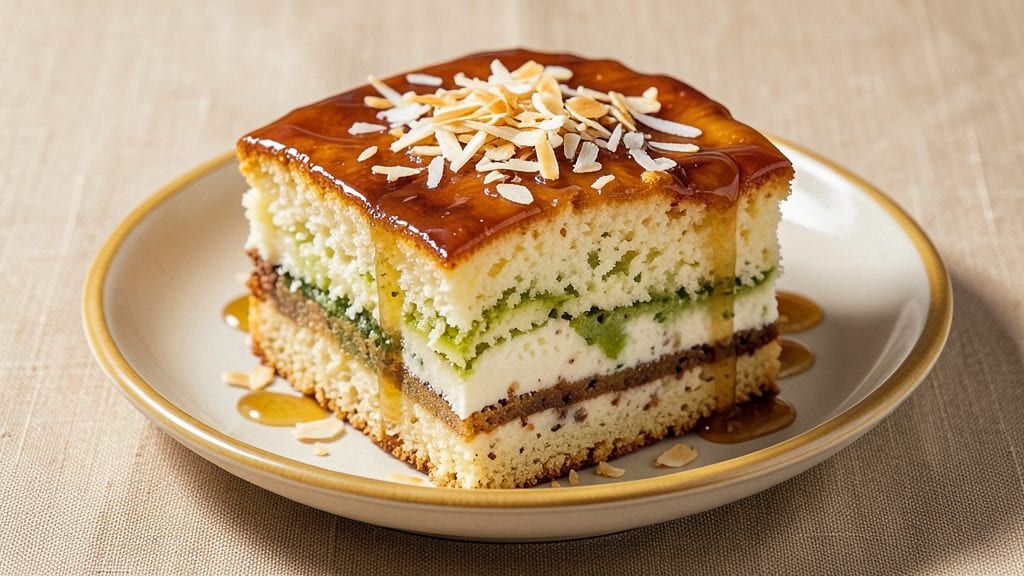
This Vietnamese cake recipe delivers the delicate balance of coconut-jelly layers infused with fragrant pandan flavor—perfect for special occasions or weekend treats. The combination of creamy coconut custard and vibrant jelly creates a texture that's both light and satisfying, a hallmark of Vietnamese dessert traditions.
What makes this recipe special is the pandan extract, which adds a subtle floral aroma that sets it apart from other coconut cakes.
The process involves layering coconut milk custard with jelly made from agar-agar and coconut water, resulting in a dessert that's both visually stunning and deeply flavorful.
This recipe requires patience, as each layer must set properly, but the end result is worth the effort—a cake that's elegant enough for celebrations yet simple enough for everyday indulgence. The pandan flavor, often associated with Southeast Asian desserts, brings a unique depth that elevates the coconut's natural sweetness.
By the time you serve this cake, you'll have a dessert that's creamy, fragrant, and beautifully layered—each bite offering a harmonious blend of textures and flavors. The coconut custard remains rich and velvety, while the jelly adds a refreshing contrast, making every slice a delightful experience.
This recipe is perfect for those who appreciate the artistry of Vietnamese cuisine.
Whether you're preparing it for a family gathering or simply craving a taste of Vietnam, this coconut-jelly cake with pandan flavor will transport you to the bustling streets of Hanoi.
The traditional presentation, with its intricate layers and vibrant colors, makes it a showstopper on any dessert table. Let's create this timeless treat together.
Ingredients for vietnamese cake
Elegant layers of coconut custard and pandan-infused jelly await with these carefully selected ingredients.
| Ingredient | Amount | Notes |
|---|---|---|
| Coconut Milk (Full-Fat, Canned) 🥥 | 2 cans | Thick, unsweetened variety for custard |
| Granulated Sugar 🍯 | 2 cups | White or raw cane for balanced sweetness |
| Cornstarch 🌾 | ½ cup | For custard thickening consistency |
| Pandan Extract (Food-Grade) 🌿 | 1 tbsp | Pure, concentrated for authentic aroma |
| Large Egg Yolks 🥚 | 6 whole | Fresh, room-temperature for custard |
| Unsalted Butter 🧈 | ½ cup | Cold, cubed for custard richness |
| Coconut Water (Unsweetened) 🥥 | 1 ½ cups | Fresh or high-quality carton brand |
| Agar-Agar Powder 🌱 | 2 tbsp | High-grade for jelly clarity |
| Lemon Juice (Fresh) 🍋 | 1 tbsp | Bright, organic preferred |
| Vanilla Extract 🌸 | 1 tsp | Pure, high-quality for depth |
| Salt 🧂 | ¼ tsp | Fine sea salt for balance |
| Coconut Flakes (Toasted) 🥥 | ½ cup | Lightly toasted for garnish |
| Fresh Pandan Leaves (Optional) 🌿 | 2 whole | For infusion in jelly layer |
The pandan extract is non-negotiable for authentic flavor—look for food-grade brands at Asian markets or specialty stores like Whole Foods. If using fresh pandan leaves, blanch them briefly to soften before infusion. Coconut milk should be full-fat and unsweetened; brands like Aroy-D or Thai Kitchen deliver consistent quality. For agar-agar, Japanese brands (available at Amazon or Asian grocery stores) provide superior clarity. Egg yolks must be fresh—older yolks yield weaker custards. Toast your coconut flakes lightly in a dry pan until golden for garnish, as store-bought versions often lack freshness.
No pandan extract? Substitute with 1 tbsp vanilla extract plus 1 tsp almond extract, though the floral notes won't be identical. Cornstarch can be swapped for arrowroot powder at a 1:1 ratio, though custard texture may differ slightly. Coconut water substitutes include light coconut milk (diluted 1:1 with water) or lime water (for acidity). Agar-agar alternatives like gelatin won't deliver the same vibrant jelly texture—this is a traditional technique. For the butter, European-style (like Plugrá) adds superior flavor, though standard unsalted works. Vanilla extract must be pure; imitation versions lack depth.
Store coconut milk cans unopened for 6 months in a pantry, opened for 3 days refrigerated. Pandan extract keeps indefinitely in a cool, dark place. Agar-agar lasts 12 months sealed; once opened, refrigerate for 3 months. Custard layers can be prepped 1 day ahead—cover tightly with parchment to prevent skin formation. Jelly layers set best when refrigerated 4+ hours before assembly. For presentation, dust with extra coconut flakes or a light pandan-infused sugar (mix 1 cup sugar with 1 tsp extract). Fully assembled cake holds 3 days refrigerated, though texture softens after 2 days.
Why You'll Love This Recipe
- Pandan Perfection in Minutes: I swear, this takes less time than waiting for takeout. Just whisk yolks, sugar, and cornstarch—no folding, no stress—then steam it. The pandan extract does all the flavor work for you while you sip coffee.
- Creamy Without the Effort: That rich coconut milk and egg yolk combo? Pure velvet texture with zero guilt. No butter, no heavy cream, just silky smoothness that somehow feels lighter than it tastes.
- Lunchbox or Dessert Hero: Between us, this cake is my secret weapon for both. Pack it cold for a no-fuss office lunch, or serve it warm with condensed milk for a dessert that’ll have everyone asking for the recipe.
- Budget-Friendly Luxury: Honestly, the ingredient list won’t break the bank. Canned coconut milk and a tiny bottle of pandan extract stretch to multiple batches, and the leftovers? Still amazing reheated or chilled. Fancy treat, zero splurge.
Step-by-step instructions for Vietnamese cake recipe: coconut-jelly layers with pandan flavor
Master this delicate balance of textures and flavors with precise technique for perfect layers.
Prepare the Pandan-Infused Coconut Custard
In a medium saucepan, combine the 2 cans coconut milk, 2 cups granulated sugar, 0.5 cup cornstarch, 1 tbsp pandan extract, 6 whole large egg yolks, and 0.5 cup unsalted butter. Whisk continuously over medium heat until the mixture thickens to a smooth, pudding-like consistency—this should take approximately 8-10 minutes. You'll know it's ready when it coats the back of a spoon and leaves a clean trail when you run your finger through it.
Remove from heat immediately to prevent curdling. Stir in 1 tbsp lemon juice and 1 tsp vanilla extract. Transfer to a shallow dish and cover with plastic wrap pressed directly onto the surface to prevent skin formation. Refrigerate for at least 4 hours or until completely chilled—this step is critical for achieving the signature silky texture.
Create the Clear Pandan Jelly Layer
In a separate saucepan, combine 1.5 cups unsweetened coconut water, 2 tbsp agar-agar powder, and the 2 whole fresh pandan leaves (if using). Bring to a rolling boil over high heat while stirring constantly to dissolve the agar-agar completely. Once boiling, reduce heat to medium-low and simmer for exactly 5 minutes—this precise timing is essential for achieving the perfect jelly consistency.
Remove from heat and let sit for 2 minutes to allow the agar to fully activate. Strain through a fine-mesh sieve into a clean bowl to remove any plant fibers. Pour into a shallow rectangular dish (approximately 8x8 inches) and refrigerate for 3-4 hours until completely set. The jelly should be firm enough to hold its shape when gently pressed with a finger.
Assemble the Layered Cake
Once both the custard and jelly are fully set, begin assembly. Spread an even layer of the chilled pandan coconut custard in the bottom of an 8-inch round springform pan. Using a serrated knife, carefully slice the jelly into 8 equal rectangular pieces (about 1-inch wide). Arrange 4 jelly pieces side by side in the center of the custard layer, leaving a ½-inch border around the edges.
Spread another thin layer of custard over the jelly, then repeat with the remaining jelly pieces and a final layer of custard. Press lightly with a spatula to ensure all layers adhere properly. The final layer should be smooth and even—any imperfections will show in the finished cake.
Chill and Garnish for Presentation
Cover the assembled cake with plastic wrap and refrigerate for a minimum of 6 hours, preferably overnight. This extended chilling time allows the layers to fully meld and develop their signature texture contrast. When ready to serve, run a thin knife around the edge of the pan to loosen the cake, then release the springform ring.
Garnish with the 0.5 cup toasted coconut flakes arranged in a decorative pattern on top. Serve chilled in ½-inch slices for the perfect balance of creamy custard and refreshing jelly. The contrast between the rich pandan custard and the light, citrus-infused jelly creates the authentic Vietnamese dessert experience.
Pro Tips For Making Vietnamese Cake
- Whisk yolks cold: Grab those yolks straight from the fridge and whisk them with sugar before adding coconut milk—this keeps the texture silky instead of grainy. I learned this the hard way after a batch turned out like wet sand.
- Shake, don’t stir: Mix the coconut milk and cornstarch in a jar and shake it like you’re angry at it—this breaks up lumps better than a spoon ever will. (Yes, even if you’re impatient like me.)
- Low and slow wins: Simmer the mixture on medium-low heat, or you’ll end up with a burnt bottom before the center sets. I used to rush it, and the first few batches were more sad than delicious.
- Pandan first, then sugar: Add the pandan extract to the yolk mixture before combining with coconut milk—this distributes the flavor evenly instead of pooling weirdly. (Your future self will notice the difference.)
Flavor customization for these flavors
Pandan Intensity
The pandan extract is the soul of this cake, but you can adjust its strength to suit your taste. For a subtle floral note, reduce to ½ tbsp—this still delivers aroma without overpowering the coconut.
If you love bold flavors, increase to 1.5 tbsp, but pair it with 1 extra tsp vanilla extract to soften the intensity.
Fresh pandan leaves add a different dimension—blanch 3-4 leaves in 1 cup hot water for 5 minutes, then strain and use the infused water in the jelly layer. 🌿
Sweetness Balance
Vietnamese desserts often balance sweetness with acidity. If your coconut custard tastes too rich, add 1 extra tbsp lemon juice or ½ tsp white vinegar to brighten the flavor.
For the jelly layer, reduce sugar by ¼ cup if you prefer a more refreshing taste—just dissolve the agar-agar in 1 cup coconut water instead of the full 1.5 cups. Taste as you go: the jelly should complement, not compete with, the custard's richness. 🍯
Texture Variations
Want a lighter cake? Replace ½ cup coconut milk in the custard with ½ cup coconut water, then add 1 extra tbsp cornstarch to maintain thickness. For a chewier jelly layer, increase agar-agar to 2.5 tbsp and simmer the mixture for 7 minutes instead of 5.
If you prefer no jelly, layer the custard with toasted coconut pudding (mix ½ cup toasted coconut flakes with 1 cup chilled custard). 🥥
Spiced Twist
Infuse warmth by adding ½ tsp cinnamon or ¼ tsp cardamom to the custard while cooking. For a chili-lime kick, stir in ¼ tsp Tajín (chili-lime seasoning) with the lemon juice.
This works surprisingly well with the pandan’s floral notes—just balance it with 1 extra tsp vanilla to harmonize the flavors. Serve with mango slices for a tropical contrast. 🌶️
Nutty Enhancement
Top each slice with crushed peanuts or toasted sesame seeds for a savory crunch. For a matcha twist, dust the cake with ½ tsp matcha powder before serving—this pairs beautifully with the pandan’s earthiness.
If you love caramelized flavors, drizzle 2 tbsp coconut caramel (melt ½ cup coconut sugar with 2 tbsp coconut cream) over the top. 🥜
Seasonal Adaptations
In summer, add ½ cup diced mango or lychee to the jelly layer for a refreshing burst. For winter, swap coconut water for pandan-infused apple juice (simmer 2 apples with 1 tbsp pandan extract and 1 cup water, then strain).
A pandan-cinnamon syrup (simmer ½ cup sugar, ½ cup water, 1 tsp pandan, and ½ tsp cinnamon) drizzled over slices adds festive flair. ❄️
Nutrition facts
Frequently asked questions
What makes this Vietnamese coconut cake different from regular coconut custard?
The key difference is the pandan-infused jelly layers and the precise balance of textures. While regular coconut custard is smooth and creamy, this recipe adds vibrant jelly made with agar-agar and coconut water, creating a refreshing contrast. The pandan extract gives it that authentic floral aroma that sets it apart from standard coconut desserts.
Can I make this cake without pandan extract?
Yes, but the flavor will be different. You can substitute with 1 tbsp vanilla extract + 1 tsp almond extract for a floral note, though it won't be identical. For a more authentic taste, try using fresh pandan leaves—blanch 2-3 leaves in 1 cup hot water for 5 minutes, then strain and use the infused water in the jelly layer.
How do I know when the jelly is set properly?
The jelly should be firm enough to hold its shape when gently pressed with a finger. It typically takes 3-4 hours in the fridge to set completely. If it's still wobbly, refrigerate for another hour. For extra clarity, ensure you're using high-quality agar-agar and straining out all plant fibers before pouring.
Can I make this cake ahead of time?
The custard and jelly layers can be prepared 1 day ahead and stored separately in the fridge. Assemble the cake 6 hours before serving to allow the layers to meld. The fully assembled cake keeps well in the fridge for 3 days, though the jelly may soften slightly after 2 days.
What's the best way to slice this layered cake?
Use a hot, thin-bladed knife (dip in hot water and wipe dry between slices) for clean cuts. Slice into ½-inch thick pieces to maintain the perfect balance of custard and jelly. Serve immediately after slicing to enjoy the best texture contrast.