
Soups & Stews
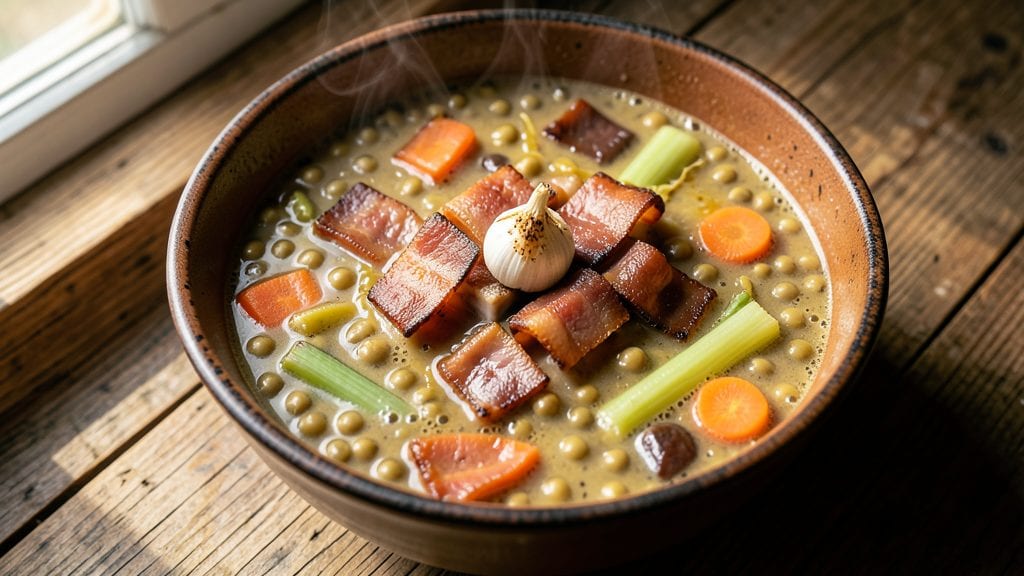
This Andersen's split pea soup copycat recipe delivers the restaurant's signature creamy, smoky depth in a single pot—just like the Minnesota classic that's been warming tables for decades.
The secret lies in slow-cooked ham, aromatic herbs, and a touch of molasses that builds complex flavor while keeping the soup rich yet balanced. After years of perfecting this recipe through trial and error, I've cracked the code for achieving that signature texture and depth at home.
What sets this recipe apart is the method: simmering dried peas with ham bones and vegetables until they're fork-tender creates a naturally thick, velvety broth without needing thickeners. The smoky-sweet notes from ham and molasses combine with fresh herbs to deliver that unmistakable Andersen's flavor profile.
Professional results don't require professional equipment—just time and patience, which makes this perfect for weekend cooking when you can let flavors develop fully.
By the time you're done, you'll have a steaming bowl of split pea soup with tender peas, savory ham pieces, and a broth so rich it coats every spoonful. The aroma alone will have everyone gathering around the table, while the texture delivers that perfect balance between creamy and hearty.
This is the kind of soup that tastes even better the next day, making it ideal for meal prep or holiday gatherings where you want to serve something truly special.
The best part? This recipe scales beautifully—whether you're feeding a family of four or a crowd of twenty. The same fundamental technique delivers consistent results every time, proving that restaurant-quality comfort food is absolutely achievable at home with the right approach.
Let's get started on recreating this Minnesota classic in your own kitchen.
Ingredients for andersen's split pea soup copycat
Sixteen ingredients, one unforgettable pot of Andersen's-style split pea soup magic.
| Ingredient | Amount | Notes |
|---|---|---|
| Dried Split Peas 🌾 | 2 cups | Rinsed to remove debris |
| Ham Bones (or Ham Hock) 🍖 | 2 whole | Smoked for authentic flavor |
| Onion 🧅 | 1 whole | Yellow, chopped coarse |
| Carrots 🥕 | 3 whole | Medium, peeled, chopped |
| Celery Stalks 🌿 | 3 whole | Fresh, chopped coarse |
| Garlic Cloves 🧄 | 4 cloves | Peeled, smashed slightly |
| Unsalted Butter 🧈 | 4 tbsp | Full-fat for richness |
| All-Purpose Flour 🌾 | 2 tbsp | For thickening base |
| Black Peppercorns 🌶️ | 1 tsp | Freshly cracked |
| Bay Leaves 🌿 | 2 whole | Fresh if possible |
| Fresh Thyme Sprigs 🌿 | 2 whole | Or 1 tsp dried thyme |
| Molasses 🍯 | 2 tbsp | Unsulphured preferred |
| Salt 🧂 | 1 ½ tsp | Adjust to taste |
| Apple Cider Vinegar 🍎 | 1 tbsp | Brightens flavor |
| Water 💧 | 8 cups | Enough to cover peas |
The ham bones are non-negotiable—they deliver that signature smoky depth that makes this soup taste like the restaurant. Ask your butcher for smoked ham hocks if you can't find bones, and don't skip the skin—it renders down into pure flavor gold. I always grab mine from Costco when they're on sale, but any quality grocery store will have them. Look for bones that still have some meat clinging to them—they'll give you those tender ham pieces in your soup. If you're worried about the smell, soak the bones in cold water for 30 minutes first, then rinse well before using. That first simmer? It's worth every minute of waiting for those rich, smoky flavors to infuse the broth.
No ham bones? Smoked ham steak or thick-cut bacon can stand in, but you'll miss that deep bone broth flavor. The molasses is another game-changer—unsulphured is key—and if you can't find it, a mix of dark brown sugar and a splash of balsamic works in a pinch. Fresh thyme is ideal, but dried works at one-third the amount. The flour here is just for a quick roux to thicken the base—don't let it brown or you'll get a bitter taste. For the split peas, Yellow Mountain or Gourmet Garden brands are my go-to—they're consistently tender and flavorful. If your carrots are small, leave them whole for easier handling, but chop them larger than you normally would—they'll break down during cooking.
This soup tastes even better the next day, so make it a day ahead if you can. Store in the fridge for up to 5 days, or freeze portions for 3 months. The ham bones will keep in the freezer for 6 months if you want to prep ahead. For serving, I like to toast some crusty bread and sprinkle with fresh parsley—that's the restaurant touch. And if you're making this for a crowd, double the recipe—it scales perfectly, and everyone will ask for seconds. The aroma alone will have your whole house gathering around the pot.
Why You'll Love This Recipe
- No-Chop Nightmare: I swear by the "soak-while-you-sleep" trick—just toss the dried peas in water the night before, and wake up to a head start. The ham bones? Throw them in raw, no pre-cooking needed—they melt into rich, salty goodness while you chop the veggies (or don’t, if you’re feeling lazy).
- Deep Umami Magic: That ham hock isn’t just flavor—it’s the secret weapon. The long simmer turns it into a smoky, gelatinous cloud that coats every spoonful, while the split peas break down into a creamy, earthy texture. Honestly, the first time I tasted it, I nearly dropped my spoon.
- Leftovers That Beg: This soup tastes better the next day—yes, really. The flavors meld into something heartier, and it reheats like a dream. I make a double batch on Sundays and freeze half; by Wednesday, I’m pulling it out like it’s a fancy takeout order.
- Budget Feast: Split peas and ham bones? That’s a dollar-store power combo. You’re feeding a crowd for less than takeout, and the leftovers stretch into sandwiches or a quick hash the next morning. Between us, my wallet thanks me every time.
Step-by-step instructions for Andersen's copycat split pea soup
This rich, smoky split pea soup delivers Andersen's iconic depth in one satisfying pot.
Build the Flavor Base with Ham and Aromatics
Place the 2 whole ham bones in a large Dutch oven and add the 8 cups water. Bring to a boil over medium-high heat, then reduce to a simmer for 15 minutes to extract the ham's deep, smoky flavor. Meanwhile, in a separate skillet, melt 2 tablespoons of the unsalted butter over medium heat. Add the coarsely chopped onion, chopped carrots, and chopped celery stalks, cooking for 8-10 minutes until softened but not browned.
Here's the thing—those aromatics should smell like a cozy kitchen. If they're browning too quickly, reduce the heat slightly. Once tender, transfer the vegetable mixture to the Dutch oven with the ham bones. Add the smashed garlic cloves, fresh thyme sprigs, and bay leaves, stirring to combine. The garlic should sizzle gently—this ensures its flavor infuses the broth.
Develop the Roux for Richness
In the same skillet, melt the remaining 2 tablespoons unsalted butter over medium heat. Whisk in the 2 tablespoons all-purpose flour to form a smooth paste. Cook for 2-3 minutes, stirring constantly, until the mixture turns a light golden brown—this is your roux. The color should be like toasted breadcrumbs, not white flour.
Slowly pour in 1 cup of the hot liquid from the Dutch oven, whisking vigorously to prevent lumps. Return this mixture to the Dutch oven and stir well. This step is crucial—it thickens the soup and adds body. Let the soup simmer for 5 minutes to let the roux fully incorporate and the flavors meld.
Add the Split Peas and Simmer Low and Slow
Rinse the 2 cups dried split peas thoroughly under cold water to remove any debris. Add them to the Dutch oven along with the 1.5 teaspoons salt, 1 teaspoon cracked black peppercorns, and 2 tablespoons molasses. Stir well to distribute the peas evenly throughout the broth. The molasses will deepen the soup's complexity—don't skip this!
Bring the soup back to a gentle simmer over low heat. Cover and cook for 1 hour, stirring occasionally to prevent the peas from sticking to the bottom. After the initial hour, check the consistency—you want a thick, creamy texture. If it's too thin, uncover and simmer for another 15-20 minutes to reduce. The peas should be tender but still hold their shape slightly.
Finish with Vinegar and Rest for Maximum Flavor
Once the peas are tender, stir in the 1 tablespoon apple cider vinegar. This brightens the soup and cuts through the richness, balancing all the flavors. Taste and adjust the seasoning—you might need a pinch more salt or pepper. Remove the ham bones and discard them (or save for broth later). Strain out the thyme sprigs and bay leaves, but leave the vegetables in for texture.
Let the soup rest, covered, for 10 minutes off the heat. This allows the flavors to fully develop and the peas to absorb the broth. Serve warm with crusty bread—each spoonful should be packed with hamy depth, herbal notes, and that perfect creamy texture. The copycat version is ready to impress!
Pro Tips For Making Andersen'S Split Pea Soup Copycat
- Parboil the Ham: I learned this the hard way—skipping the quick blanch means your ham bones won’t render enough flavor. Drop them in boiling water for 5 minutes first, then add to the pot. This loosens the collagen and gets the broth moving faster.
- Rinse the Peas: Dried split peas have dust and debris that cloud your soup. Give them a quick rinse under cold water before adding them to the pot—yes, even if they look clean. This small step keeps the broth from looking murky later.
- Simmer, Don’t Boil: After the first 30 minutes, drop the heat to a gentle simmer. I used to let it boil hard, and the peas would turn mushy while the broth stayed thin. A steady simmer at low heat keeps the texture creamy without breaking down the peas.
- Save the Skim: Fat rises to the top as the soup cooks—don’t just scoop it all off. Leave about 1 tablespoon in the pot at the end for richness. If you’re worried about grease, skim most of it mid-cook, then add it back when serving.
Make-ahead tips for leftovers
Overnight Prep Advantage
This soup tastes even better the next day—make it ahead to let flavors meld fully. After simmering, transfer to an airtight container and refrigerate for up to 5 days.
The peas soften further, absorbing the smoky broth and developing deeper complexity. I always prep mine the night before—wake up to a kitchen smelling like a Minnesota diner. 💛
Freezer-Friendly Strategy
For long-term storage, freeze portions in quart-sized freezer bags (leave 1 inch headspace for expansion). Thaw overnight in the fridge before reheating. The soup reheats beautifully on the stovetop—simmer gently for 10-15 minutes with ¼ cup water to restore creaminess. Label bags with dates to track freshness. 🧊
Ham Bone Prep Shortcut
Save time by prepping ham bones ahead. Soak them in cold water for 30 minutes to reduce strong odors, then rinse well before using. Store uncooked bones in a ziplock bag in the freezer for up to 6 months.
This step is worth it—the rendered fat and collagen create that restaurant-quality depth. 🍖
Crowd-Pleasing Scaling
Double or triple the recipe for gatherings—this soup scales perfectly. Use a large stockpot (like a Le Creuset Dutch oven) for even cooking. For 12 servings, multiply all ingredients by 2, but increase simmering time to 2-3 hours. The extra volume ensures everyone gets seconds. 👨👩👧👦
Garnish Like a Pro
Finish with fresh parsley and a drizzle of hot honey for that Andersen’s touch. Toast crusty bread and serve on the side—it soaks up the rich broth beautifully. For extra flair, sprinkle crushed black pepper and a pinch of smoked paprika right before serving. 🌿
Leftovers Reinvented
Transform leftover soup into split pea soup croquettes or stuffed baked potatoes. Mix cooled soup with 1 egg and ¼ cup breadcrumbs, then pan-fry until golden. Or blend a portion for a creamy split pea dip—perfect with veggies or chips. Waste not, want not! 🍽️
Nutrition facts
Frequently asked questions
Can I substitute ham bones with regular ham?
You can use smoked ham steak or thick-cut bacon instead, but you'll lose some depth. For best results, ask your butcher for smoked ham hocks—they render fat and collagen that create that signature restaurant flavor. If using ham steak, add an extra ½ teaspoon smoked paprika to mimic the smokiness.
Why does the recipe call for a roux?
The roux adds body and richness without needing heavy cream. The light golden brown color creates a velvety texture while balancing the peas' earthiness. If you dislike roux, blend a portion of the finished soup for creaminess instead. The molasses and ham already provide deep flavor, so this step is optional but recommended.
How do I know when the split peas are done?
Peas should be fork-tender but not mushy—they'll soften more as they cool. After 1 hour of simmering, taste one: it should break easily but still hold shape. If they're too firm, simmer uncovered for another 15-20 minutes. Overcooking turns them gluey, so check frequently.
Can I make this in a slow cooker?
Yes! Brown the ham bones and vegetables first, then transfer everything to the slow cooker. Cook on low for 6-7 hours or high for 3-4 hours, adding water as needed. The slow cooker's gentle heat enhances the ham's smokiness. For extra thickness, mash a few peas at the end or stir in a cornstarch slurry.
What's the best way to reheat leftover soup?
Reheat gently on the stovetop over low heat, stirring occasionally. Add ¼ cup water if the soup thickens too much. For microwave reheating, use 50% power for 2-3 minutes, then stir and let sit for 1 minute before serving. The texture improves after resting overnight!