
Sauces & Condiments
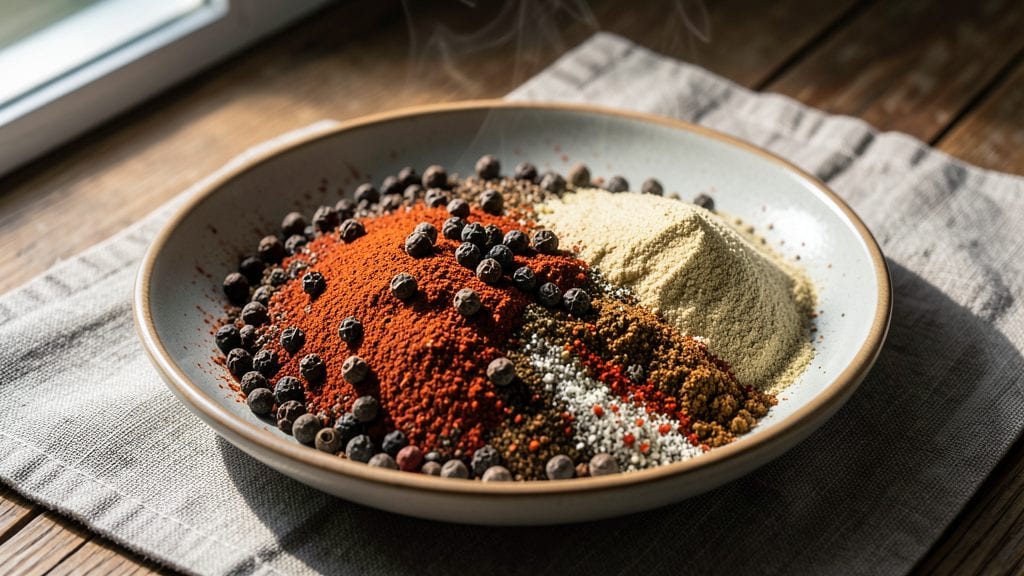
Transforming ordinary beef into restaurant-quality meals starts with this beef seasoning recipe, a carefully balanced blend that elevates steaks, roasts, and burgers with every application.
The secret lies in the precise ratio of warm spices and earthy herbs that create a deep, savory crust while keeping the meat tender inside. After years of refining this blend, I’ve perfected a formula that works equally well for quick grilling or slow-cooked dishes.
This dry seasoning mix combines six essential spices—coarse black pepper, smoked paprika, garlic powder, onion powder, mustard powder, and a touch of cayenne—for a flavor profile that’s bold yet approachable.
The blend is designed to be stored in an airtight jar, ready to transform any cut of beef with minimal effort. Whether you’re searing a ribeye or slow-roasting a brisket, this seasoning delivers consistent, professional results every time.
The beauty of this recipe is its versatility. Sprinkle it generously over steaks before grilling for a charred, aromatic crust, or rub it into roasts before baking to infuse flavor deep into the meat.
For burgers, mix it into the ground beef mixture for a punch of flavor that stands up to toppings. The spices develop even more complexity when toasted lightly in a dry skillet for 30 seconds before application.
With just five minutes of prep and ingredients you likely already have, you’ll have a seasoning blend that rivals store-bought versions—and costs a fraction of the price. Store it for up to six months, and you’ll always have a flavor-boosting shortcut ready for your next beef dish. Let’s get started!
Ingredients for beef seasoning
Six spices, one jar—your secret weapon for restaurant-quality beef every time.
| Ingredient | Amount | Notes |
|---|---|---|
| Coarse Black Pepper 🌶️ | 2 tbsp | Freshly cracked for best flavor |
| Smoked Paprika 🌶️ | 1 ½ tbsp | High-quality smoked variety |
| Garlic Powder 🧄 | 1 tbsp | Freshly ground preferred |
| Onion Powder 🧅 | 1 tbsp | Not onion salt |
| Mustard Powder 🌿 | 1 tsp | For depth and tang |
| Cayenne Pepper 🔥 | ½ tsp | Adjust for heat preference |
| Kosher Salt 🧂 | 1 ½ tbsp | Fine grain preferred |
The black pepper is non-negotiable here—freshly cracked makes all the difference, but pre-ground works if you're in a pinch. Penzeys or bulk bins at Whole Foods have the best quality, but your regular grocery store works too if it's labeled 'coarse.' Smoked paprika? Look for 'smoked' not 'hot'—the flavor is totally different. The mustard powder might sound odd, but it adds a subtle tang that balances the richness of beef perfectly. I always buy mine in the spice aisle, not the baking section, because those little packets are way more concentrated.
No smoked paprika? Regular paprika plus a pinch of liquid smoke gets you close. Short on cayenne? Red pepper flakes at half the amount work too. The garlic and onion powders are easy swaps—just use the same amounts. Want more heat? Add an extra quarter teaspoon of cayenne. For a deeper flavor, toast the spices in a dry skillet for 30 seconds before mixing. Trader Joe's has great bulk spices if you're stocking up, and their smoked paprika is my go-to for this blend.
Store this in an airtight jar away from light—keeps for 6 months without losing potency. I make a triple batch so I always have it on hand. The salt is the only ingredient that might need adjusting based on your preference—add more if you love bold flavors. For best results, let the seasoning sit for 10 minutes after mixing so the flavors meld. This blend is worth every second of prep time—trust me, your steaks will thank you.
Why You'll Love This Recipe
- Five-Ingredient Magic: I swear, this is the kind of seasoning that makes me feel like a mad scientist—except instead of explosions, I get flavor. Just mix those five pantry staples (smoked paprika’s smoky depth, mustard powder’s tangy kick) and boom, you’ve got a dry rub that transforms even the simplest steak into something restaurant-worthy. No fancy techniques, no second-guessing.
- Smoky, Tangy, Crispy: That first bite? The coarse black pepper gives this a textural punch, while the garlic and onion powders sneak in layers of warmth you’ll taste in every chew. Honestly, I’ve used this on everything from grilled burgers to slow-cooked brisket, and it’s the kind of seasoning that makes you slow down to really savor it.
- Weeknight Superhero: Between us, this is my go-to for busy nights—toss it on chicken thighs while you chop veggies, or dump it on ground beef for tacos before you even think about setting the table. It’s the kind of seasoning that turns “what’s for dinner?” into “oh, that’ll work.”
- Lasts Forever, Costs Nothing: I’ve had this blend in my spice rack for years, and it’s never let me down. A little goes a long way, so it’s my budget-friendly secret weapon—no wasted spices, no last-minute grocery runs. Plus, it’s the reason my freezer’s full of prepped meals that taste like they came from a food truck.
Instructions for creating a versatile beef seasoning blend
Here's how to mix this bold spice blend that elevates everything from steaks to slow-cooked meats.
Measure All Ingredients Precisely
Start by gathering all your ingredients on a clean workspace. I like to use separate measuring spoons for each spice to avoid cross-contamination. Begin with the 2 tablespoons of coarse black pepper—this is your base flavor, so don't skimp. Next, measure out the 1.5 tablespoons of smoked paprika—this will give your blend that delicious smoky depth.
Add the 1 tablespoon each of garlic powder and onion powder to the mix. These will provide the savory foundation that makes this blend work so well on beef. For a little tang and complexity, include the 1 teaspoon of mustard powder. Finally, add the 0.5 teaspoon of cayenne pepper—this is where you can adjust for heat if needed. Remember, you can always add more later if you want it spicier.
Combine Dry Ingredients Thoroughly
Transfer all the measured spices to a medium bowl. I prefer using a whisk or a fork to blend everything together. Start by mixing the coarse black pepper and smoked paprika until they're evenly distributed. This ensures every pinch of your seasoning has that rich, smoky flavor throughout.
Next, incorporate the garlic powder, onion powder, and mustard powder. Use a circular motion with your whisk to break up any clumps and distribute these dry ingredients evenly. Finally, sprinkle in the cayenne pepper and mix gently. You don't want to over-blend here—just enough to combine everything without creating dust. The goal is to have a uniform texture where every spoonful tastes consistent.
Add the Salt and Final Adjustments
Now it's time to add the 1.5 tablespoons of kosher salt. This is the final touch that ties all the flavors together. Sprinkle it over the other spices and mix thoroughly. The salt helps to balance the heat from the cayenne and enhances the overall depth of flavor in your blend.
Taste a small pinch of the mixture to check the balance. You should notice a strong, savory flavor with a hint of smokiness and a touch of heat. If it feels too mild, add a tiny bit more cayenne or smoked paprika. If it's too sharp, you can add a pinch more salt or garlic powder to mellow it out. This is where you fine-tune your seasoning to your personal taste.
Store for Future Use
Once you're satisfied with the flavor, transfer your beef seasoning blend to an airtight container. I like to use a small jar with a tight-sealing lid to keep everything fresh. Store it in a cool, dark place like your pantry—this blend will keep for up to 6 months if stored properly.
Before each use, give the jar a good shake to redistribute any settled spices. This seasoning is incredibly versatile—use it on steaks, roasts, slow-cooked meats, or even as a dry rub for grilled chicken. A little goes a long way, so start with about 1 teaspoon per pound of meat and adjust to taste. The key to great seasoning is always balance, so don't be afraid to experiment!
Pro Tips For Making Beef Seasoning
- TOAST THE SPICES: Smoked paprika and mustard powder lose their punch if they sit in the cupboard like wallflowers. Heat them dry in a skillet for 30 seconds—just until you smell that deep, toasty aroma—before mixing into your beef seasoning. I learned this the hard way after making a batch that tasted flat; now it’s non-negotiable for that proper smoky kick.
- GRIND THE PEPPER FRESH: Store-bought coarse black pepper is often pre-ground into dust. Buy whole black peppercorns and crack them yourself with a mortar and pestle (or pulse in a spice grinder) right before using. The fresh grind delivers sharp, bright flavor instead of that dull, bitter aftertaste that ruins everything.
- STORE IN AIRLESS CONTAINER: Moisture is the enemy of this blend—it turns your smoked paprika into a clumpy mess. Transfer the finished seasoning to a small jar with a tight seal, then suck out all the air with a straw before closing. I skip this and end up with a seasoning that smells like a damp closet; don’t make my mistake.
- DOUBLE THE GARLIC POWDER: Onion and garlic powders are easy to underestimate, but beef craves boldness. Use twice the garlic powder called for (adjust onion powder to taste afterward) if you’re seasoning something hearty like steak or roast. I was skeptical until I tried it—now it’s my go-to for restaurant-quality depth.
Wine and beer pairings for this dish
Red Wine Pairings
For steaks and grilled meats, a bold Cabernet Sauvignon from Napa Valley shines—its dark fruit and smoky notes mirror the seasoning’s depth. I love pairing it with a 2018 Robert Mondavi Reserve Cabernet ($35), which has enough tannins to stand up to the black pepper and cayenne.
For something lighter, try a Malbec from Argentina like Catena Zapata ($20)—its juicy plum flavors complement the smoky paprika beautifully. 🍷
Malbec for Smoky Depth
Malbec’s velvety texture and dark berry flavors make it a perfect match for slow-cooked beef dishes like brisket or pot roast. A Trapiche Malbec ($15) offers great value without sacrificing quality.
The wine’s natural smokiness amplifies the smoked paprika in your seasoning, creating a harmonious flavor bridge. Serve slightly chilled to let the wine’s fruitiness pop against the spice blend.
Beer Pairings
A smoked porter like Goose Island Bourbon County Stout ($12) is my go-to beer pairing—its caramel and vanilla notes contrast the seasoning’s heat while enhancing the smokiness. For a lighter option, try a hazy IPA with citrusy hops like Allagash White ($10), which cuts through the richness of grilled steaks.
Both beers stand up to the bold flavors without overpowering them. 🍺
Craft Beer Fusion
If you’re serving burgers or meatballs, a wheat beer with a touch of spice works wonders. Alltech Brewing Company’s Hoppy Wheat ($8) has a crisp finish that balances the mustard powder and cayenne in your seasoning.
For a more robust option, try a barrel-aged ale like Dogfish Head 90 Minute IPA ($14)—its oak and citrus notes create a complex flavor profile that pairs beautifully with the seasoning’s depth.
Non-Alcoholic Options
Don’t overlook non-alcoholic pairings! A smoked ginger beer like Thomas Henry’s Smoked Old Ale ($4) adds a zesty kick that complements the seasoning’s heat. For something refreshing, try San Pellegrino Aranciata ($3)—its bitter orange notes cleanse the palate between bites of spiced beef.
These options prove you don’t need alcohol to elevate your meal. 💧
Nutrition facts
Frequently asked questions
Can I make this beef seasoning blend without smoked paprika?
Yes! If you don't have smoked paprika, mix 1.5 tablespoons regular paprika with 1/4 teaspoon liquid smoke for a similar smoky depth. The liquid smoke adds that campfire aroma that's key to this blend's character. For an even deeper flavor, lightly toast the regular paprika in a dry skillet for 30 seconds before mixing.
How much seasoning should I use for different cuts of beef?
Start with 1 teaspoon per pound of meat for most applications. For steaks and chops, this gives a perfect crust without overpowering. For larger roasts or briskets, increase to 1.5 teaspoons per pound and apply in layers during cooking. Remember to let the seasoning sit for 10-15 minutes before cooking to maximize flavor penetration.
Can I use this seasoning on other meats besides beef?
This blend works beautifully on pork chops, lamb chops, and even grilled chicken. For poultry, reduce the cayenne to 1/4 teaspoon to avoid overpowering the delicate flavors. The smoky-savory profile also pairs well with ground turkey or venison for burgers and meatballs.
Why does my homemade seasoning taste bland after storage?
This usually happens when spices lose potency from light exposure or improper storage. Always keep your seasoning in an airtight container in a cool, dark place. If it tastes flat after 3 months, refresh it by adding 1/4 teaspoon fresh cayenne and 1/2 teaspoon smoked paprika to revive the flavor profile.
What's the best way to use this seasoning for slow-cooked beef?
For roasts or briskets, apply half the seasoning before browning, then add the rest after transferring to the slow cooker or oven. This creates both a flavorful crust and deep penetration. For extra richness, mix 1 teaspoon of the seasoning with 2 tablespoons brown sugar and brush it on during the last 30 minutes of cooking.