
Desserts
This cake recipe with no milk delivers the same fluffy, tender crumb you love—without a drop of dairy. Using aquafaba, the liquid from canned chickpeas, creates a light, airy texture that rivals traditional cakes.
I developed this recipe after realizing most vegan cakes either turn dense or rely on expensive substitutes. The secret lies in whipping the aquafaba to stiff peaks before folding it into the batter, mimicking the structure of eggs.
The result is a moist vanilla cake with a delicate crumb that stays fresh for days, perfect for birthdays or dessert cravings. Unlike many dairy-free cakes, this one doesn’t crumble or taste overly eggy—just like homemade vanilla cake should.
The aquafaba not only replaces milk but also adds protein for better texture, making it a foolproof alternative to traditional recipes.
Baking at 350°F for 25-30 minutes ensures a golden top without drying out the center. The vanilla flavor shines through, and the cake holds its shape beautifully when sliced. Whether you’re vegan, lactose intolerant, or simply looking for a lighter cake, this recipe delivers restaurant-quality results with pantry staples.
Serve with fresh berries, a drizzle of dairy-free chocolate, or a dusting of powdered sugar for a showstopping dessert. The best part? No one will guess it’s made without milk. Let’s get baking!
Ingredients for cake recipe with no milk
Eight simple ingredients transform into a fluffy, moist cake without milk or eggs—just aquafaba magic.
| Ingredient | Amount | Notes |
|---|---|---|
| All-Purpose Flour 🌾 | 2 cups | Sifted for lightness |
| Granulated Sugar 🍚 | 1 ½ cups | White sugar preferred |
| Aquafaba 🥫 | 1 cup | From 1 can chickpeas |
| Pure Vanilla Extract 🌸 | 2 tsp | High-quality, pure vanilla |
| Baking Soda 🧂 | 1 tsp | Pure, not baking powder |
| Salt 🧂 | ½ tsp | Fine sea salt |
| Vegetable Oil 🫒 | ½ cup | Light, neutral flavor |
| Almond Milk 🥛 | ½ cup | Unsweetened for balance |
| Apple Cider Vinegar 🍎 | 1 tbsp | For aquafaba stability |
| Powdered Sugar 🍚 | ¼ cup | For dusting (optional) |
| Fresh Blueberries 🫐 | 1 cup | Optional topping |
Aquafaba is the star here, so save the liquid from a can of chickpeas—it’s free and packs protein punch. Look for low-sodium chickpeas at stores like Whole Foods or Trader Joe’s for cleaner flavor. The vanilla extract? Pure Madagascar bourbon makes a difference, but imitation works in a pinch. Sift the flour—this isn’t the time to skip it. The baking soda needs to be fresh (test: if it fizzes in water, it’s good). For the almond milk, unsweetened brands like Silk or Blue Diamond keep the cake from tasting too sweet.
No aquafaba? Flax eggs (3 tbsp ground flax + 9 tbsp water = 3 eggs) work, but texture won’t be identical. Short on vanilla? Vanilla bean paste adds specks for drama. The apple cider vinegar might sound odd, but it’s what makes the aquafaba whip up like egg whites—substitute lemon juice if needed. Blueberries? Frozen work too, just toss them in a bowl of flour first. No powdered sugar? Skip it or use regular sugar crushed in a food processor. The vegetable oil should be neutral—avoid coconut oil (it solidifies when cold).
This cake keeps 5 days wrapped at room temp or 1 week in the fridge. Freeze slices for 3 months—wrap tightly in plastic. The aquafaba trick means it reheats beautifully: microwave 20 seconds or warm in a 200°F oven for 5 minutes. For extra fluff, whip the aquafaba 5 minutes longer than you think it needs. Trust the process—it’s foolproof.
Why You'll Love This Recipe
- Pantry-Proof Magic: I swear by this recipe when my fridge is empty—just flour, sugar, and that can of chickpeas gathering dust. Whip the aquafaba into stiff peaks (yes, it’s like egg whites but way cheaper), fold it into the batter, and boom: fluffy, golden cake with zero dairy.
- Vanilla Kiss: That little bottle of pure vanilla extract? It’s the secret weapon here. The aquafaba carries the flavor deeper than regular cakes, and the baking soda gives it this subtle lift—like a whisper of sweetness with a hint of brightness.
- Birthday or Breakfast: Serve it warm with a dusting of powdered sugar for a lazy Sunday morning, or slice it for a last-minute celebration. Honestly, I’ve used it for everything from potlucks to my kid’s “I made this myself” school project (spoiler: it fooled everyone).
- No-Waste Winner: Leftovers? Not a problem. This cake stays moist for days, and the aquafaba trick means no soggy bottoms. Plus, if you’re stocking up on chickpeas for soups anyway, you’re already set—no extra shopping needed.
Step-by-step instructions for fluffy vanilla magic using aquafaba
Here's how to bake a light, airy cake without dairy—aquafaba does the heavy lifting.
Whip the Aquafaba to Stiff Peaks
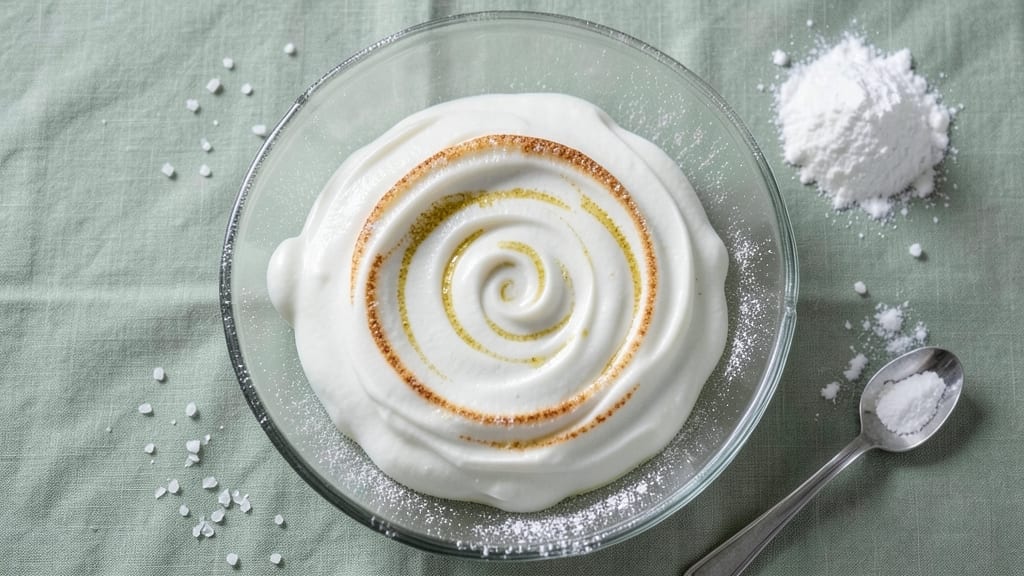
First, measure out the 1 cup aquafaba from a can of chickpeas into a clean, grease-free mixing bowl. Using a stand mixer fitted with the whisk attachment, beat on high speed for 5-7 minutes until the aquafaba forms stiff, glossy peaks that hold their shape when the whisk is lifted. You'll notice the mixture will first become foamy, then gradually thicken into a meringue-like consistency.
This step is non-negotiable—properly whipped aquafaba creates the cake's signature lightness. If you're using a hand mixer, it'll take closer to 8-10 minutes to achieve the same result. The aquafaba should be able to hold its shape when you turn the bowl upside down for a second. If it doesn't, whip for another minute or two.
Combine Wet Ingredients for a Smooth Batter
In a separate bowl, whisk together the 0.5 cup vegetable oil, 0.5 cup almond milk, 1.5 cups granulated sugar, 2 tsp pure vanilla extract, 1 tbsp apple cider vinegar, and 0.5 tsp salt until the sugar is completely dissolved and the mixture is smooth. The vinegar helps stabilize the aquafaba, while the salt balances the sweetness and enhances all the flavors.
I like to mix this by hand first to break up the sugar crystals, then use a whisk to fully incorporate everything. The batter should be completely homogeneous with no graininess remaining. This mixture will be slightly thicker than traditional cake batter due to the aquafaba's properties, but it should still be pourable.
Gently Fold in Dry Ingredients
Sift the 2 cups all-purpose flour and 1 tsp baking soda together into a medium bowl to aerate them. Then, using a large spatula, gently fold one-third of the flour mixture into the whipped aquafaba until just combined. This prevents deflating the air you've worked so hard to incorporate. After the first fold, add half of the remaining wet ingredients mixture and fold again until just combined.
Finally, add the remaining flour mixture and fold everything together with a gentle, scooping motion until the batter is smooth and no dry spots remain. Be careful not to overmix—just until the flour is fully incorporated. The batter should be thick but still able to be spooned into the prepared pan. If you see any curdling or separation, don't worry—it'll come together as you mix.
Prepare and Bake the Cake
Preheat your oven to 350°F and grease an 8-inch round cake pan or 9x13-inch baking dish with vegetable oil, then dust lightly with flour. Pour the batter into the prepared pan and smooth the top with a spatula. For extra fluffiness, I like to tap the pan gently on the counter a few times to release any air bubbles that might have formed during mixing.
Bake for 30-35 minutes (for the 8-inch pan) or 35-40 minutes (for the 9x13-inch pan) until a toothpick inserted into the center comes out clean or with just a few moist crumbs clinging to it. The edges should be golden brown, and the top should spring back when gently pressed. If you're using the 9x13-inch pan, check for doneness at the 35-minute mark as ovens can vary.
Cool and Finish with Blueberries
Remove the cake from the oven and let it cool in the pan for 10 minutes, then transfer to a wire rack to cool completely. While the cake cools, toss the 1 cup fresh blueberries in a small bowl with 0.25 cup powdered sugar if you're using them as a topping. This creates a beautiful contrast of colors and adds a touch of sweet-tart flavor.
Once the cake is completely cool, you can slice it and serve it plain, or arrange the blueberry mixture on top for a stunning presentation. The cake will be moist and tender with a slightly crisp exterior, thanks to the aquafaba's unique properties. Store any leftovers in an airtight container at room temperature for up to 3 days, or refrigerate for up to 5 days. This cake also freezes beautifully—just wrap it tightly and thaw at room temperature before serving.
Pro Tips For Making Cake Recipe With No Milk
- Whisk Aquafaba Like Egg Whites: Beat that chickpea water for a solid 4-5 minutes until it forms stiff peaks—like meringue, but with less drama. I learned this the hard way: under-whipped aquafaba makes a dense, sad cake. If you’re impatient (yes, even if you’re impatient like me), use a stand mixer and let it run until the bowl is ice cold to the touch.
- Sift the Flour First: Skip the lumps by sifting the flour before mixing it with sugar and aquafaba. I used to just dump it in, and the cake always turned out uneven. A quick sift also aerates the batter, giving you a lighter crumb—no fancy tools needed, just a bowl and your hands.
- Don’t Overmix the Batter: Fold the dry ingredients into the aquafaba in two additions, using a spatula to gently cut through. Overmixing activates the gluten and turns your cake into a tough, chewy brick. Think "just until combined," not "until it looks like pancake batter."
- Use Room-Temp Ingredients: Let your aquafaba and vanilla sit out for 20 minutes before mixing—they’ll blend smoother and the cake will rise better. Cold aquafaba won’t whip properly, and cold vanilla can leave odd pockets in the batter. Trust me, your future self will notice the difference.
Dietary considerations for this dish
Vegan-Friendly Adaptations
This recipe naturally fits into a vegan diet by replacing milk with aquafaba and almond milk, both plant-based staples. The apple cider vinegar and vegetable oil further ensure no animal products are used.
For extra protein, consider adding 1 tbsp ground flaxseed to the batter—it mimics egg binding while adding nutrients. 🌱
Gluten-Free Swaps
Substitute the all-purpose flour with a 1:1 gluten-free baking flour blend like Bob’s Red Mill or King Arthur. For best results, add ½ tsp xanthan gum to the mix to improve texture.
The aquafaba’s binding properties help compensate for gluten’s absence, but expect a slightly denser crumb. Test with a small batch first to adjust liquid ratios.
Nut-Free Options
Replace almond milk with oat milk or soy milk to avoid nuts entirely. Both work well in this recipe—just ensure they’re unsweetened to prevent excess moisture.
For binding, add 1 tbsp cornstarch to the dry ingredients to mimic the structure lost without almond flour. The cake’s fluffiness remains intact with these swaps.
Dairy-Free Frosting
Pair your cake with a vegan vanilla frosting made from ½ cup vegan butter, 2 cups powdered sugar, 1 tbsp almond milk, and 1 tsp vanilla extract.
Whip until smooth and pipe onto cooled layers. For extra richness, add 1 tbsp coconut cream. This frosting mirrors classic buttercream without dairy—perfect for celebrations! 🎂
Allergen-Free Tips
For egg-free needs, the aquafaba already handles this, but if avoiding soy (common in some almond milks), opt for coconut milk or rice milk. Always check labels for hidden allergens—Silk and Blue Diamond brands are typically safe. Cross-contamination risks? Use separate utensils and pans to avoid trace exposure.
Low-Sugar Versions
Reduce the granulated sugar by ¼ cup and replace with ¼ cup coconut sugar or monk fruit sweetener for a lower-glycemic option. The aquafaba’s natural sweetness helps balance the flavor.
For extra moisture, add 1 tbsp maple syrup to the wet ingredients. Test with a small batch to adjust sweetness to your taste.
Nutrition facts
Frequently asked questions
What exactly is aquafaba, and where can I find it?
Aquafaba is the liquid from canned chickpeas—it’s free if you already have chickpeas! Drain a can, save the liquid, and use 1 cup for this recipe. You’ll find canned chickpeas in any grocery store’s baking or canned goods aisle. For best results, use low-sodium brands like Whole Foods or Trader Joe’s to avoid extra saltiness.
Can I make this cake without aquafaba?
Yes! Substitute with 3 tbsp ground flaxseed + 9 tbsp water (let it sit for 5 minutes to thicken) or ½ cup unsweetened applesauce. However, the texture won’t be as light—aquafaba mimics egg whites perfectly. For a closer match, try 1 cup unsweetened coconut milk (whipped until frothy) as a backup.
Why did my cake turn out dense instead of fluffy?
Overmixing the batter or under-whipping the aquafaba are the top culprits. Whip the aquafaba until stiff peaks form (like meringue) and fold dry ingredients gently—don’t stir vigorously. Also, ensure your baking soda is fresh (test: sprinkle in water—it should fizz). If your oven runs hot, reduce temperature to 340°F to prevent over-browning.
How do I store or freeze this cake?
Keep it wrapped at room temperature for 3 days, or refrigerate for 5 days. For freezing, slice the cake, wrap each piece tightly in plastic, and store for up to 3 months. Thaw at room temperature—no microwave needed! The aquafaba keeps it moist even after freezing, so it reheats beautifully.
Can I use this recipe for cupcakes?
Divide the batter evenly into 12 lined cupcake molds (fill ⅔ full) and bake at 350°F for 18-20 minutes. Use a toothpick test to check doneness. For extra fluffiness, add ½ tsp extra baking soda to the batter. Top with dairy-free frosting or fresh berries for a festive touch!