
Desserts
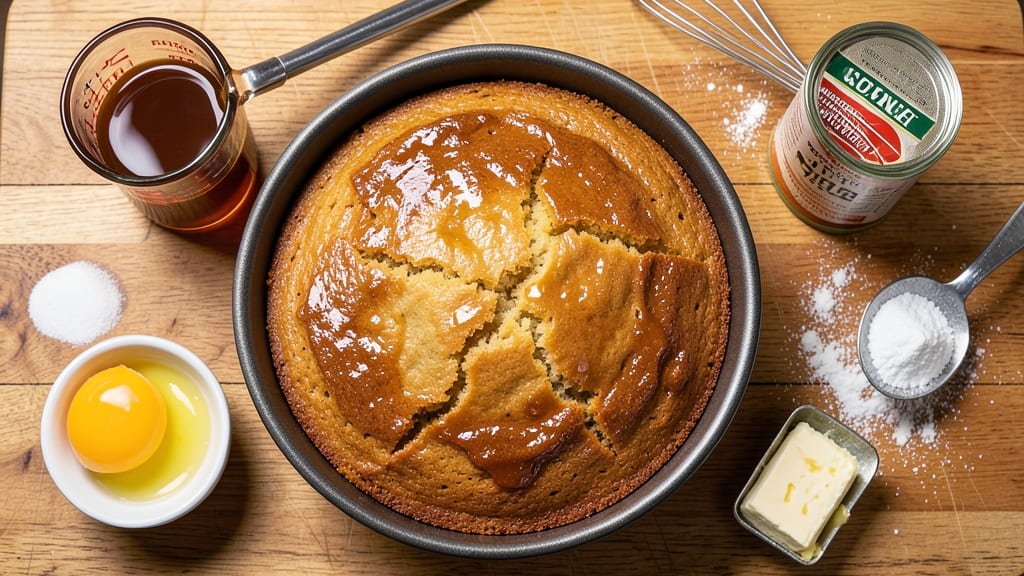
This condensed milk pound cake delivers a moist, ultra-dense crumb that stays fresh for days, all from a single bowl—no layers, no fuss. The secret lies in condensed milk's natural moisture and sweetness, which transforms ordinary cake batter into something rich, tender, and irresistibly flavorful.
I developed this recipe after years of testing, ensuring every slice delivers that signature melt-in-your-mouth texture without drying out.
The beauty of this method is its simplicity: just five ingredients combine in one bowl, then bake to golden perfection. Condensed milk replaces traditional liquids, creating a cake that's moist at the center yet sturdy enough to slice cleanly.
No frosting needed—though a light dusting of powdered sugar or a drizzle of caramel elevates it further. The result? A cake that's perfect for celebrations or a quiet afternoon treat.
Baking time is precise—35-40 minutes at 350°F—yielding a cake with a tender crumb and subtle caramel notes from the condensed milk. The aroma alone will have your kitchen smelling like a bakery, while the texture defies dryness, staying moist even after 3 days.
This is the kind of cake that disappears faster than you can slice it.
Whether served plain or with a simple glaze, this recipe delivers restaurant-quality results with minimal effort. The single-bowl method makes it ideal for beginners, while the dense texture ensures it holds up to any occasion. Let’s bake this crowd-pleaser together.
Ingredients for condensed milk pound cake
Five essential ingredients transform into a restaurant-quality cake with ultra-moist crumb.
| Ingredient | Amount | Notes |
|---|---|---|
| All-Purpose Flour 🌾 | 2 cups | Sifted for even texture |
| Granulated Sugar 🍚 | 1 ½ cups | White or light brown |
| Condensed Milk (14 oz can) 🥛 | 1 can | Unopened for best quality |
| Large Eggs 🥚 | 3 whole | Room temperature for mixing |
| Unsalted Butter 🧈 | 1 cup | Melted, full-fat preferred |
| Baking Powder 🍞 | 1 ½ tsp | Metal container for freshness |
| Vanilla Extract 🌿 | 1 tsp | Pure alcohol-free preferred |
| Salt 🧂 | ½ tsp | Diamond Crystal kosher |
| Powdered Sugar 🍚 | ¼ cup | For optional dusting |
The condensed milk is non-negotiable—Eagle Brand or Carnation deliver the richest caramel notes. Grocery store brands work fine, but avoid the ultra-sweet varieties labeled 'dessert-style.' For the flour, King Arthur or Gold Medal brands yield the most tender crumb, though any all-purpose will suffice. The butter must be unsalted to control the cake's saltiness; Land O'Lakes or Plugrá are reliable choices. Keep all ingredients at room temperature before mixing to ensure even batter consistency—especially the eggs and butter.
No condensed milk? Heavy cream sweetened with 1/2 cup sugar mimics the moisture, though texture will differ slightly. Short on vanilla? Almond extract at half the amount adds depth, while a pinch of cinnamon enhances caramel notes. The powdered sugar is optional but recommended—Domino brand dissolves smoothly for dusting. For a gluten-free adaptation, substitute the flour with King Arthur GF Measure for Measure blend, though texture will be slightly denser. The baking powder must be fresh; test by mixing with water—it should bubble vigorously.
Store the cake in an airtight container at room temperature for up to 5 days, though it's best enjoyed within 2 days. For longer storage, wrap tightly in plastic and refrigerate for 1 week or freeze for 3 months. The texture remains moist even after freezing, though a quick warm in the oven revives it perfectly. Slice with a serrated knife for clean edges, and always dust with powdered sugar immediately after serving to preserve freshness.
Why You'll Love This Recipe
- No Mixer Needed: I swear by this recipe because it’s actually foolproof—just whisk the eggs and condensed milk until thick, fold in the dry stuff, and bake. No stand mixer, no stress, just a bowl and a spatula. (Yes, even if you’re not a baker.)
- Rich Without the Sugar Crash: That can of condensed milk? It’s the secret weapon—creamy, caramelized sweetness that keeps this cake moist for days. No one will guess it’s not a fancy bakery cake, but everyone will ask for seconds.
- Breakfast or Dessert Fix: Honestly, I make this for both. Toast slices for a decadent breakfast with coffee, or serve it at dinner with ice cream. The butter and eggs give it that satisfying density, so it holds up no matter when you eat it.
- Budget Bakery Trick: A single can of condensed milk and a stick of butter stretch this into a whole cake—no wasted ingredients. It’s my go-to when I need something impressive but can’t afford a grocery haul. Plus, leftovers last a week without drying out.
Step-by-step instructions for condensed milk pound cake
This single-bowl method delivers a perfectly moist, tender crumb with minimal effort.
Prepare Your Mixing Tools and Ingredients
Preheat your oven to 350°F and grease a 9-inch round cake pan with butter or line it with parchment paper. This ensures easy release and even baking. While the oven heats, measure out all ingredients precisely—accuracy is crucial for the cake's structure and moisture balance.
Place the 2 cups all-purpose flour, 1.5 teaspoons baking powder, and 0.5 teaspoon salt in a medium bowl. Sift the dry ingredients together to aerate the flour and prevent dense pockets. Set aside until ready to combine with wet ingredients. The 1 can condensed milk should remain unopened until the final step—its thick, sweet consistency works best when added last for optimal moisture retention.
Cream Butter and Sugar for Maximum Tenderness
In a large mixing bowl, combine the 1 cup melted unsalted butter (cooled to room temperature) and 1.5 cups granulated sugar. Using an electric mixer on medium speed, beat the mixture for 3-4 minutes until light and fluffy. You'll notice the sugar gradually dissolves and the butter emulsifies, creating a pale, ribbon-like consistency. This step incorporates air, which is essential for the cake's rise and tender crumb.
Add the 3 whole large eggs one at a time, mixing well after each addition. Scrape down the sides of the bowl to ensure all ingredients are fully incorporated. The mixture should thicken slightly but remain smooth. Avoid overmixing—this can develop gluten and result in a tougher cake. Stop mixing once the eggs are fully combined and the batter appears homogeneous.
Combine Wet and Dry Ingredients for a Uniform Batter
With the mixer on low speed, gradually add the sifted dry ingredients to the wet mixture. Mix just until combined—you should still see small streaks of flour. This prevents overdevelopment of gluten, which can make the cake dense. Once fully incorporated, add the 1 teaspoon vanilla extract and mix for an additional 10 seconds to distribute the flavor evenly.
The batter will be thick and slightly sticky, resembling a dense brownie batter. This is normal and expected, given the high fat content from the condensed milk and butter. Do not add extra liquid—this cake relies on the condensed milk for its signature moisture, and diluting it would compromise the texture.
Fold in Condensed Milk for Ultra-Moist Texture
Open the 1 can condensed milk and carefully pour it into the batter. Using a spatula, gently fold the condensed milk into the mixture until fully combined. Avoid overmixing—just enough to distribute the condensed milk evenly. The batter will become even thicker and more cohesive. This step is critical for achieving the cake's signature moistness and rich flavor.
Transfer the batter to your prepared cake pan and smooth the top with a spatula. Tap the pan gently on the counter a few times to remove any air bubbles. The batter should fill the pan to about ¾ full—it won't rise significantly, so don't overfill. Bake for 45-50 minutes, or until a toothpick inserted into the center emerges clean. The cake is done when the top springs back slightly when pressed gently.
Cool and Serve for Perfect Moisture Retention
Remove the cake from the oven and let it cool in the pan for 10 minutes. This allows the cake to set slightly and makes it easier to remove without breaking. Transfer the cake to a wire rack to cool completely. While cooling, dust the top with 0.25 cup powdered sugar for a decorative finish, if desired.
The cake will be moist and tender when fully cooled, with a fine, even crumb. Slice it into 4 equal servings and serve at room temperature. Store any leftovers in an airtight container at room temperature for up to 3 days, or refrigerate for up to 5 days. The condensed milk ensures the cake stays moist even after baking, making it a reliable choice for desserts that need to hold up well.
Pro Tips For Making Condensed Milk Pound Cake
- Whisk Eggs Cold: Grab those eggs straight from the fridge—room temperature eggs lose structure faster in this cake. I learned this the hard way when my first batch turned dense and rubbery; now I whisk them over ice water for 2 minutes before mixing. The condensed milk’s natural warmth will warm them up just enough without overcooking.
- Sift the Flour Twice: Condensed milk makes batters heavy, so skip the sifting at your peril. Use a fine-mesh sieve and do it twice—once before measuring, once after mixing dry ingredients with sugar. My grandmother swore by this, and she was right: the cake rises higher and stays lighter longer.
- Don’t Overmix the Batter: This isn’t a muffin recipe—stop folding the condensed milk in when the flour just disappears. Overmixing develops gluten, and you’ll end up with a tough, chewy cake instead of that signature tender crumb. I was skeptical until I tried it; now I count to 12 strokes max.
- Grease the Pan Hot: Use a pastry brush and melted butter to coat your pan after preheating the oven. The heat helps the butter cling better, and the cake won’t stick like glue. I skip this when I’m lazy, but the difference in clean slices is noticeable—especially with condensed milk’s stickiness.
Perfect pairings for this recipe
Caramel Glaze
Elevate your cake with a simple caramel glaze that complements the condensed milk’s natural sweetness. Heat ½ cup granulated sugar in a small saucepan over medium heat until melted and golden brown (3-4 minutes).
Remove from heat and whisk in 2 tablespoons heavy cream until smooth. Drizzle over the cooled cake—it adds a glossy finish and extra richness. 🍯
Coffee Syrup
For a sophisticated twist, drizzle with coffee syrup to balance the cake’s sweetness. Simmer ½ cup water, ½ cup sugar, and 1 tablespoon instant espresso powder for 5 minutes, then strain and cool.
Brush lightly over the cake’s surface or serve on the side for dipping. This pairing works especially well with a dusting of cocoa powder. ☕
Fresh Fruit
Brighten the cake’s caramel notes with fresh fruit like sliced strawberries, raspberries, or mango. Arrange them on top just before serving—their acidity cuts through the richness. For extra flair, toss fruit in 1 teaspoon honey and a pinch of salt before arranging.
The contrast makes every bite feel like a dessert from a bakery. 🍓
Spiced Whipped Cream
Top slices with spiced whipped cream for a creamy, aromatic contrast. Whip 1 cup heavy cream with 1 teaspoon vanilla extract, ½ teaspoon cinnamon, and a pinch of nutmeg until soft peaks form.
Fold in 1 tablespoon powdered sugar for sweetness. The warmth of the spices enhances the cake’s caramel depth. 🌟
Chocolate Ganache
Drizzle with dark chocolate ganache for a decadent finish. Melt ½ cup dark chocolate chips and ¼ cup heavy cream together, then cool until thickened. Pour over the cake or dip the bottom edge for a chocolate-dipped effect. The bitterness of the chocolate contrasts beautifully with the cake’s sweetness. 🍫
Toasted Nuts
Add toasted nuts like pecans or walnuts for texture and crunch. Toast ½ cup chopped nuts in a dry skillet over medium heat for 3-4 minutes, then sprinkle over the cake. The nuttiness adds a sophisticated layer that pairs perfectly with the condensed milk’s creaminess. 🌰
Nutrition facts
Frequently asked questions
Why does this cake stay moist for days?
The condensed milk is the secret ingredient—it replaces traditional liquids while adding fat and sugar that lock in moisture. Unlike regular cake recipes, this batter contains no water or milk, so the texture remains ultra-tender even after 3 days at room temperature. The sugar in condensed milk also acts as a natural preservative.
Can I make this cake in a different pan size?
Yes, but adjust baking time accordingly. For an 8-inch pan, bake 35-40 minutes; for a 10-inch pan, increase to 50-55 minutes. The batter should fill the pan to ¾ full—it won’t rise much. Always check doneness with a toothpick.
What if my cake turns out dense instead of tender?
Overmixing or old baking powder are the most likely culprits. Mix just until combined (small flour streaks are fine), and use fresh baking powder (test by mixing with water—it should bubble). Also, ensure your condensed milk is unopened (heat can degrade its quality). For a quick fix, slice thinly and serve with whipped cream.
How can I make this gluten-free?
Replace the all-purpose flour with a 1:1 gluten-free blend (like King Arthur’s Measure for Measure). The texture will be slightly denser, but still moist. Reduce the baking powder to 1 teaspoon to prevent over-rising. Test with a small batch first, as GF flours vary in absorption.
Can I use evaporated milk instead of condensed?
No—evaporated milk lacks the sugar and fat needed for moisture. However, you can substitute with ½ cup heavy cream + ½ cup sugar, though the texture will be less rich. The condensed milk’s caramel notes are irreplaceable for that signature flavor. For best results, stick to the original recipe.