
Sauces & Condiments
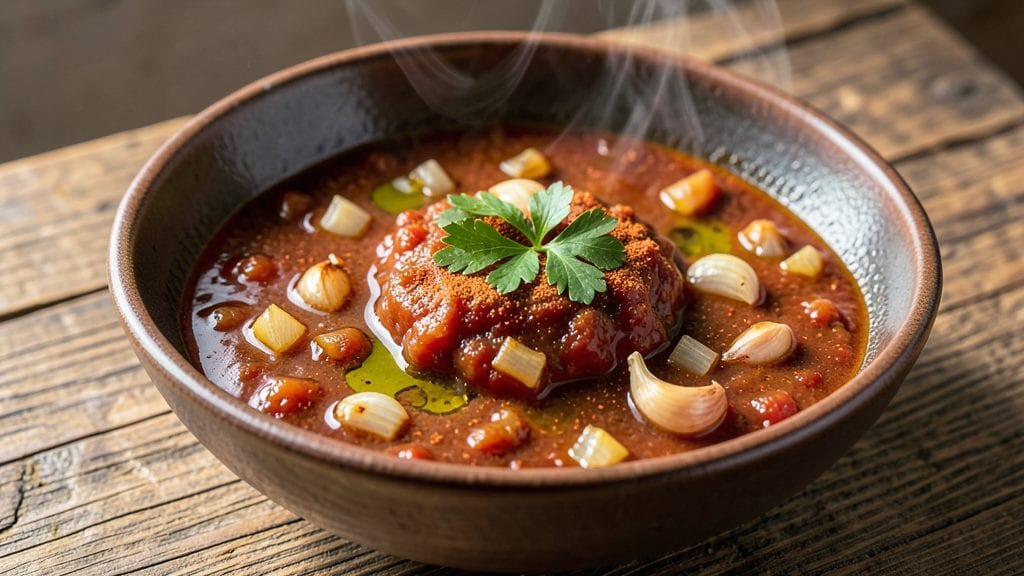
This goulash sauce recipe delivers the deep, smoky richness of paprika and slow-simmered aromatics that transforms simple meals into hearty classics. The secret lies in blooming spices in oil and letting the flavors meld over 30 minutes of gentle simmering—no shortcuts, just layers of warmth.
I developed this version after years of testing, ensuring every spoonful carries that signature balance of sweetness, acidity, and earthy paprika depth.
The foundation starts with onions and garlic cooked until translucent, then deepened with tomato paste and a blend of sweet and hot paprika—this is where the sauce's signature flavor begins. A splash of vinegar brightens the richness, while beef broth builds body without overpowering the spices.
The sauce thickens naturally as it simmers, creating a velvety consistency perfect for tossing with pasta, spooning over dumplings, or enriching stews.
What you'll end up with is a paprika-rich simmer that's versatile enough for weeknight dinners or holiday feasts. The aroma alone will have your kitchen smelling like a Hungarian home kitchen, while the taste delivers that perfect harmony of smoky, sweet, and tangy notes.
This isn't just a sauce—it's the heart of the meal, ready to elevate whatever you serve it with.
Store leftovers in the refrigerator for up to 5 days or freeze for 3 months, making it ideal for meal prep. The flavors actually improve with time, deepening as the spices continue to meld.
Whether you're making goulash, serving over noodles, or using it as a base for other dishes, this sauce delivers restaurant-quality results with minimal effort.
Ingredients for goulash sauce
Nine pantry staples transform into this aromatic, paprika-rich sauce perfect for weeknight meals or holiday feasts.
| Ingredient | Amount | Notes |
|---|---|---|
| Extra-Virgin Olive Oil 🫒 | ½ cup | High-quality, fruity variety preferred |
| Yellow Onions 🧅 | 1 ½ lb | Yellow or red, finely diced |
| Garlic Cloves 🧄 | 6 cloves | Peeled, minced for even distribution |
| Sweet Paprika 🌶️ | 3 tbsp | Hungarian or Spanish preferred |
| Hot Paprika 🌶️ | 1 tbsp | For depth, adjust to taste |
| Tomato Paste 🍅 | ½ cup | Smooth, no-sugar-added preferred |
| Beef Broth 🥫 | 4 cups | Low-sodium preferred, homemade best |
| Red Wine Vinegar 🍷 | 2 tbsp | Brightens the sauce naturally |
| Bay Leaves 🌿 | 2 whole | Fresh, removed before serving |
| Black Peppercorns 🌶️ | 1 tsp | Freshly cracked for best flavor |
The paprika is non-negotiable here—Hungarian or Spanish delivers that authentic smoky depth. Penzeys Spices or the bulk bins at Whole Foods carry the best quality, but any reputable brand works if it's labeled 'smoked' or 'hot'. For onions, yellow or red work best—their natural sweetness caramelizes beautifully. The tomato paste? San Marzano is ideal, but any good-quality no-sugar-added paste will do. Fresh bay leaves add complexity, but dried works in a pinch (use half the amount). The beef broth should be rich but not salty—homemade is best, but store-bought low-sodium works too.
No sweet paprika? Substitute with 1 tbsp tomato paste plus 1 tsp smoked paprika for a similar effect. Hot paprika too spicy? Reduce to 1/2 tbsp and add 1/2 tbsp sweet paprika instead. Short on red wine vinegar? White wine vinegar or apple cider vinegar works, though the flavor shifts slightly. The tomato paste can be thinned with a splash of broth if needed—just don’t skip it entirely. For a deeper flavor, toast the paprika in the olive oil for 1-2 minutes before adding the onions. It’s worth the extra minute for that nutty aroma.
This sauce tastes even better the next day as the flavors meld. Store in an airtight container in the fridge for up to 5 days, or freeze in 1-cup portions for 3 months. I like to freeze it in ice cube trays first—perfect for single servings later. When reheating, add a splash of broth or water to loosen it up. The sauce thickens as it cools, so it’ll be perfect for tossing with pasta or spooning over dumplings.
Why You'll Love This Recipe
- One-Pot Magic: I swear by this sauce—just onions, garlic, and a whisper of paprika in olive oil, simmered until the house smells like home. No extra pans, no fuss, and honestly? That’s my kind of cooking.
- Smoky-Sweet Depth: The paprika blend—equal parts sweet and hot—builds layers of flavor that feel earned, even if it’s ready in 20 minutes. That first spoonful? Rich, warm, and just spicy enough to linger.
- Weeknight Workhorse: I use it over pasta, dump it on roasted potatoes, or stretch it into a full meal with bread and cheese. Between us, it’s the reason I stopped ordering takeout on Tuesdays.
- Budget Banger: A jar of paprika and a bulb of garlic last me months, and this sauce turns cheap cuts of meat into something special. Leftovers? Even better the next day—if they last that long.
Step-by-step instructions for goulash sauce recipe
This rich, paprika-infused sauce builds flavor through slow simmering—here's how to develop depth without burning.
Sweat the Onions Until Translucent
Heat the 0.5 cup extra-virgin olive oil in a heavy Dutch oven over medium-low heat. Add the 1.5 lb finely diced yellow onions and cook for 15-20 minutes, stirring occasionally. You're looking for onions that soften and turn translucent at the edges—this removes their sharpness and forms the sauce's base.
Resist the urge to crank the heat higher. If the onions start to brown too quickly, reduce to low heat and continue cooking. The goal is to develop sweetness, not color. When the onions are completely tender with no bite remaining, you're ready for the next step. This foundational work ensures your sauce won't taste raw or unbalanced later.
Bloom the Paprika and Add Aromatics
Increase heat to medium and add both the 3 tbsp sweet paprika and 1 tbsp hot paprika. Stir constantly for 1-2 minutes until the paprika releases its aromatic oils and the mixture smells deeply earthy. This is called blooming, and it's where the sauce gets its signature color and complexity.
Add the 6 cloves minced garlic and cook for 30 seconds until fragrant—don't let it brown. Immediately stir in the 0.5 cup tomato paste, coating all the onions evenly. The tomato paste will thicken the sauce and add a subtle sweetness that balances the paprika's heat. Let it cook for 2 minutes while you prepare the remaining ingredients.
Deglaze and Simmer with Broth
Pour in the 2 tbsp red wine vinegar and scrape up any browned bits from the bottom of the pot with a wooden spoon. This deglazing step captures all the flavor that would otherwise stick to your pan. Add the 4 cups beef broth and bring the mixture to a gentle simmer over medium-low heat. Stir in the 2 whole bay leaves and 1 tsp cracked black peppercorns.
Partially cover the pot and let it simmer for 45-60 minutes, stirring occasionally. You're looking for a sauce that thickens naturally as the liquid reduces. The onions should be completely tender, and the sauce should coat the back of a spoon. If it gets too thick before the time is up, add 2-3 tablespoons of water to maintain the proper consistency.
Adjust Seasoning and Finish
Taste the sauce and adjust the seasoning if needed. If it needs more acidity, add another 1 teaspoon of red wine vinegar. For more depth, you could add a pinch of sugar to balance any bitterness, though the tomato paste should have already handled this. Remove the bay leaves before serving, as they can be quite bitter when chewed.
For the richest texture, let the sauce sit off the heat for 10-15 minutes before using. This resting period allows the flavors to meld completely. The final sauce should be thick enough to coat the back of a spoon but still flow smoothly. Serve immediately over your choice of protein—this sauce pairs beautifully with braised beef, chicken, or even hearty vegetables for a satisfying meal.
Pro Tips For Making Goulash Sauce
- Bloom the Onions First: Chop the onions into even ¼-inch slices—thin enough to render fast but not so fine they burn. Let them sit in the olive oil on medium-low for 8–10 minutes until soft and translucent, not browned. I used to rush this and ended up with a bitter, ashy base. Patience here means the whole sauce tastes deeper.
- Toast the Paprika Slow: Stir in the sweet and hot paprika after the onions are fully bloomed, and let it cook for 2–3 minutes at the lowest heat setting you can tolerate. This draws out the smoky complexity without burning it. Skip this, and your sauce will taste flat—like someone forgot to season it properly.
- Sweat the Garlic: Add minced garlic after the paprika has toasted, then immediately turn the heat down to the lowest possible. Let it cook for 30 seconds—just until fragrant, not golden. Burnt garlic turns your sauce bitter, and nobody wants that. Think "whisper-quiet simmer," not "sizzle."
- Deglaze with a Splash: After browning meat (if using), scrape up every last bit of fond from the pot with a wooden spoon, then hit it with ¼ cup of water or broth. Let it bubble for 30 seconds before adding the onions. This trick pulls flavor into the sauce that would otherwise stick to the bottom. Yes, even if you’re in a hurry.
Make-ahead tips for leftovers
Freezer Prep Strategy
Freeze this sauce in 1-cup portions using silicone ice cube trays—perfect for single servings later. Once frozen solid, transfer cubes to a ziplock freezer bag, squeezing out excess air to prevent freezer burn.
Label with the date and store for up to 3 months. When ready to use, thaw overnight in the fridge or microwave for 1-2 minutes on defrost setting. 🥶
Fridge Storage Secrets
Store leftovers in an airtight glass container with a lid, like Pyrex with a snap-on seal. The sauce thickens as it cools, so add 1-2 tablespoons of water or broth when reheating to restore its velvety consistency.
I like to reheat portions in a small saucepan over medium-low heat for 5-7 minutes, stirring occasionally. This gentle heat preserves the paprika’s depth without burning it. ⏳
Meal Prep Multiplier
Double the recipe and freeze half immediately—this sauce is the ultimate flavor multiplier for busy weeks. Use it to toss with egg noodles, spoon over potatoes, or enrich beef stews.
The frozen cubes also work perfectly in soup bases or as a quick pasta sauce when you’re short on time. I keep a stash in my freezer for those nights when I need a Hungarian-inspired meal in 15 minutes. 💡
Thawing Hacks
Need sauce fast? Place the frozen 1-cup portion in a heatproof bowl and submerge it in hot tap water for 5-7 minutes. Stir occasionally until thawed—this method preserves texture better than microwave defrosting.
Alternatively, reheat frozen sauce directly in a saucepan over low heat, adding 1-2 tablespoons of broth to prevent scorching. Never microwave frozen sauce—it creates a gummy texture that’s hard to fix. ⚡
Flavor Boost After Thaw
After reheating, taste and adjust with a pinch of salt or a splash of red wine vinegar—the flavors can mellow slightly during freezing. If the sauce seems too thick, thin it with 1-2 tablespoons of warm broth.
For extra richness, stir in 1 teaspoon of butter or a dollop of sour cream at the end. This step ensures your reheated sauce tastes as vibrant as the day you made it. ✨
Long-Term Freezing Tips
For best results beyond 3 months, divide the sauce into smaller portions (like ½-cup servings) to minimize freezer burn. Use vacuum-sealed bags if available—they extend shelf life to 6 months while keeping flavors intact.
When storing, leave ½ inch of headspace in containers to account for expansion. Always reheat gently to avoid breaking down the paprika’s delicate oils. 🌟
Nutrition facts
Frequently asked questions
Can I make this sauce without wine vinegar?
The vinegar brightens the sauce and balances the richness, but you can substitute with 2 tbsp apple cider vinegar or lemon juice if needed. Just know the flavor profile will shift slightly—vinegar adds that signature tang. For a non-acid option, omit it entirely and add an extra pinch of salt to compensate for the lost depth.
How do I adjust the spice level?
Start by reducing the hot paprika to ½ tbsp if you prefer mild heat, then add more sweet paprika to maintain depth. For extra kick, add a pinch of cayenne or a dash of chili flakes at the end. Always taste as you go—the spices bloom differently depending on your pan and heat source.
Can I use this sauce in non-Hungarian dishes?
This versatile sauce elevates pasta, roasted potatoes, or even grilled chicken. Toss it with fettuccine for a hearty meal, spoon it over mashed potatoes for extra richness, or use it as a base for stuffed peppers. The paprika depth works beautifully in global cuisines beyond Hungarian.
Why does my sauce taste bitter?
Bitter flavors often come from overcooked onions or under-simmered spices. Ensure your onions are fully translucent (not browned) and simmer the sauce for the full 45-60 minutes. If it’s still bitter, balance it with a pinch of sugar or an extra splash of vinegar. Fresh ingredients also matter—old spices or low-quality tomato paste can contribute bitterness.
What’s the best way to reheat leftovers?
Gently reheat in a saucepan over low heat for 5-7 minutes, stirring occasionally. Add 1-2 tbsp broth or water to restore consistency. Avoid microwaving—it can make the sauce unevenly hot and break down the paprika’s delicate oils. For frozen portions, thaw in the fridge overnight for the best texture.