
Main Courses
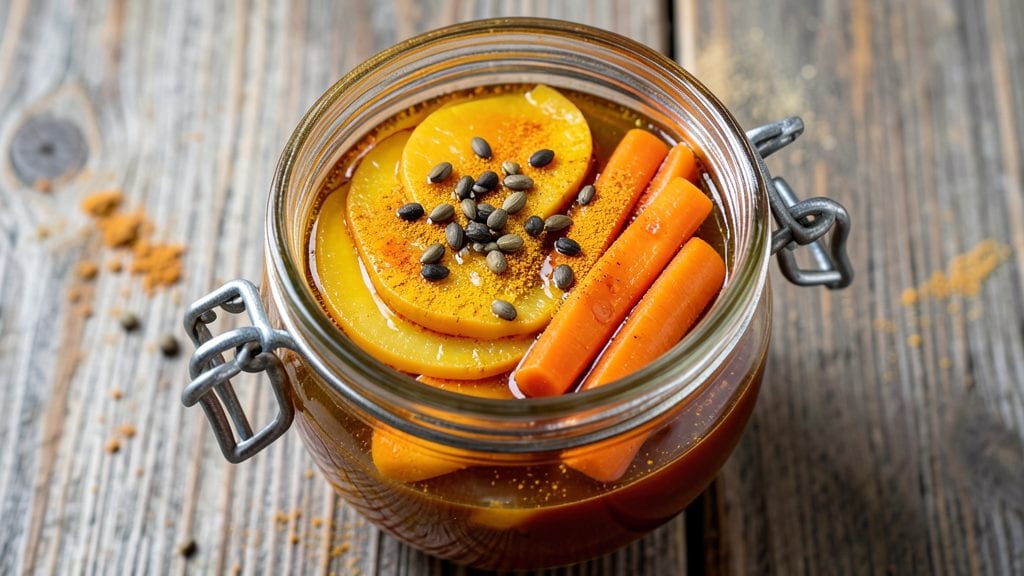
This Indian pickles recipe transforms humble fruits and vegetables into vibrant, tangy bites that bring bold flavors to any meal. The process requires patience—weeks of fermentation develop that signature crunch and complex spice profile—but the result is worth every minute.
I developed this method after discovering how a simple jar of homemade mango pickle could elevate an entire spread from ordinary to extraordinary.
The secret lies in precise spice ratios and proper sterilization to prevent mold while enhancing flavor. Mustard seeds, turmeric, and red chili powder create the signature heat, while salt and oil preserve the vegetables through fermentation.
This recipe delivers restaurant-quality pickles with a fraction of the effort, using only 10 minutes of active prep time before the magic happens over weeks.
What you'll end up with is a jar of golden, spiced pickles that add tangy crunch to sandwiches, curries, or snack platters. The flavors deepen with time, rewarding your patience with layers of complexity.
Perfect for gifting or keeping on hand for quick flavor boosts, these pickles are a staple in Indian households for good reason.
Ready to make your own? Here's everything you need to create vibrant, flavorful pickles that will impress everyone at the table. Let's get started with the full method and tips for perfect results every time.
Ingredients for indian pickles
Ten simple ingredients transform into restaurant-quality pickles with weeks of flavor development.
| Ingredient | Amount | Notes |
|---|---|---|
| Mangoes 🍈 | 2 lbs | Ripe but firm, peeled and sliced |
| Carrots 🥕 | 1 lb | Whole, scrubbed and sliced into sticks |
| Mustard Seeds 🌿 | 1 tbsp | Whole, for tempering |
| Ground Turmeric 🌶️ | 1 tbsp | Bright yellow, freshly ground preferred |
| Red Chili Powder 🔥 | 2 tbsp | Adjust for heat preference |
| Asafoetida Powder 🌿 | ½ tsp | Optional, for depth of flavor |
| Salt 🧂 | ½ cup | Coarse sea salt, non-iodized |
| Mustard Oil 🫒 | 1 cup | Or vegetable oil for milder flavor |
| Lemon Juice 🍋 | ¼ cup | Freshly squeezed |
| Fresh Fenugreek Leaves 🌿 | ½ cup | Optional, for aromatic touch |
| Garlic Cloves 🧄 | 4 cloves | Peeled and crushed |
| Cumin Seeds 🌶️ | 1 tbsp | Toasted lightly for aroma |
| Bay Leaves 🍃 | 2 whole | For subtle earthy flavor |
The mangoes and carrots are your stars—look for ripe but firm fruit at Indian grocery stores like Patel Brothers or Apna Bazaar for the best selection. If you can't find mustard oil, vegetable or coconut oil works fine, though it'll be milder. For the spices, Penzeys or Spicewalla are great for quality, but the bulk bins at regular grocery stores work too. Just make sure your turmeric is vibrant yellow—no grayish powder here. The fenugreek leaves are optional but add a lovely aroma; skip them if you can't find fresh ones.
No mustard seeds? Skip them entirely—the recipe still works. Want less heat? Halve the red chili powder or swap it for yellow mustard seeds. Asafoetida is the funky one—if you've never used it, start with half the amount or leave it out. The garlic and cumin seeds can be toasted in a dry pan for 30 seconds before adding to the mix—worth the extra minute for deeper flavor. For the salt, Diamond Crystal kosher salt is ideal, but any coarse salt works. And if you're short on lemon juice, lime or vinegar will do in a pinch.
These pickles improve with time—3-4 weeks is ideal, but they'll keep for up to 6 months in the fridge. I like to use sterilized mason jars with airtight lids to prevent mold. Store in a cool, dark place, and give them a shake every few days. The first few weeks, the flavors are bright and tangy; after a month, they develop a deeper, complex taste. Perfect for gifting—just tie a ribbon around the jar and you've got an instant party favor.
Why You'll Love This Recipe
- Fridge Staple Ready: I swear by these pickles because they’re made with what’s already in my pantry—no last-minute grocery runs. A few carrots, a couple of mangoes (even slightly overripe ones work), and a pinch of spices transform into something magical in under an hour. Honestly, the turmeric and chili powder do most of the heavy lifting while I sip chai.
- Tangy Heat Magic: That first bite? Chef’s kiss. The mango’s natural sweetness balances the fiery kick from the red chili powder, while the mustard seeds sizzle into a smoky aroma that sticks with you. Between us, I’ve seen grown adults reach for seconds—it’s that addictive.
- Party in a Jar: These pickles are my secret weapon for gatherings. Serve them with dosas, pair them with biryani, or just snack straight from the jar—no one judges. (Yes, even on a Tuesday night.) They keep for weeks in the fridge, so I make a big batch and hand them out like edible gifts.
- Zero Waste, All Win: Carrots turning soft? Mangoes past their prime? Toss them in here. The spices draw out the flavors, turning "waste" into something delicious. Plus, a single jar costs pennies to make—my wallet and the planet thank me every time.
Step-by-step instructions for Indian pickles
Here's how to make authentic, tangy Indian pickles that pack serious flavor in just minutes.
Prep and Sterilize Your Vegetables
Start by washing the 2 lbs of mangoes and 1 lb of carrots thoroughly under cold water. Peel the mangoes and slice them into even ½-inch thick pieces. Cut the carrots into 2-inch long sticks for even pickling. Place both vegetables in a large bowl and sprinkle with 0.5 cup of salt.
Mix gently to distribute the salt evenly. Let the vegetables sit for 10 minutes—this draws out excess moisture and helps the spices penetrate better. After 10 minutes, drain any liquid that's collected in the bowl and rinse the vegetables once with cold water. This step ensures your pickles stay crisp rather than soggy.
Create the Spice Paste
In a small bowl, combine 1 tbsp of ground turmeric, 2 tbsp of red chili powder, and 0.5 tsp of asafoetida powder. Add 4 crushed garlic cloves and mix everything into a smooth paste using 0.25 cup of lemon juice. The paste should be thick but spreadable—add a splash more lemon juice if needed.
This spice blend is the heart of your pickles' flavor. The turmeric gives that signature golden color, the chili powder delivers heat, and the asafoetida adds that unmistakable umami depth. If you're sensitive to heat, reduce the chili powder to 1 tbsp instead of 2 tbsp—but don't skip it entirely.
Coat the Vegetables with Spice Mixture
Transfer the drained vegetables to a clean, dry bowl. Add the spice paste and toss everything together until every piece of mango and carrot is thoroughly coated. The vegetables should look vibrant yellow from the turmeric and slightly sticky from the lemon juice.
Now comes the fun part—add 0.5 cup of fresh fenugreek leaves (roughly chopped) and 2 whole bay leaves. These leaves add a subtle bitterness and earthy aroma that balances the sweetness of the mango and carrots. Mix one last time to distribute everything evenly.
Temper the Mustard Oil
In a small saucepan, heat 1 cup of mustard oil over low heat until it's just warm to the touch—about 110°F. Don't let it get hotter than this or the oil will lose its flavor. Remove from heat and add 1 tbsp of cumin seeds and 1 tbsp of mustard seeds.
Let the seeds sizzle for 30 seconds—you'll hear them pop and smell their nutty aroma. Immediately pour this tempered oil over the spice-coated vegetables, mixing well to ensure everything gets coated. The oil will carry all those warm spices right into your pickles, making every bite burst with flavor.
Pack and Store for Maximum Flavor
Transfer the pickled vegetables to a clean, airtight glass jar. Press down gently to compact them—this helps the flavors meld faster. Seal the jar tightly and let the pickles sit at room temperature for 1 hour before refrigerating.
For best results, let them develop flavor in the fridge for at least 24 hours before eating. The longer they sit, the more complex the flavors become—think tangy, spicy, and slightly sweet with that unmistakable mustard oil punch. Your pickles will keep in the fridge for up to 2 weeks, though they'll likely disappear much sooner!
Pro Tips For Making Indian Pickles
- SLICE MANGOS THIN: Cut them ¼-inch thick—any thicker, and they’ll stay raw inside while the outside burns. I learned this the hard way when my first batch had a chewy center that ruined the texture.
- COOK MUSTARD SEEDS LOW: Start them in dry oil on medium-low heat—if you crank it up, they’ll splatter everywhere and taste bitter. Let them sizzle gently until they pop, then add the spices.
- SALT THE CARROTS: Toss them with ½ teaspoon salt before frying—it draws out moisture so they crisp up faster. Skip this, and you’ll end up with soggy, unevenly cooked pieces.
- USE GINGER-GARLIC PASTE: Swap half the oil for 2 tablespoons of paste—it adds depth without extra effort. I was skeptical until I tried it; now it’s non-negotiable for flavor.
Dietary considerations for this recipe
Gluten-Free Safety
Great news—this recipe is naturally gluten-free! The ingredients focus on fresh produce, spices, and oil without any wheat-based components. Just double-check your spices (like chili powder or turmeric) for hidden gluten additives, especially if you're using store-bought blends.
Brands like Penzeys or Spicewalla label their products clearly, so you can trust their gluten-free options. 🌱
Low-Sodium Adaptations
If you're watching your sodium intake, reduce the 0.5 cup of salt by half or use a low-sodium alternative like Diamond Crystal kosher salt. The salt draws out moisture and helps preserve the pickles, but you can compensate by increasing the lemon juice to 0.35 cup for tanginess.
Just be aware that the texture might be slightly less crisp without the full salt amount.
Vegan-Friendly Swaps
This recipe is already vegan, but if you're using mustard oil, ensure it's plant-based (some brands may contain animal-derived additives). For a milder flavor, swap mustard oil for vegetable or coconut oil.
The fenugreek leaves and bay leaves are naturally vegan, and all other spices are plant-derived. The result? A vibrant, tangy pickle that’s completely cruelty-free. 🌿
Spice Sensitivity Adjustments
For those with spice sensitivities, reduce the red chili powder to 1 tbsp or replace it with yellow mustard seeds for a milder kick. If you're avoiding asafoetida (a common allergen), omit it entirely—the recipe will still shine.
The turmeric and garlic provide plenty of flavor without the heat. Always taste as you go to balance the flavors to your preference. 🌶️
Diabetic-Friendly Tips
To make these pickles more diabetes-friendly, focus on lower-glycemic vegetables like carrots and reduce the amount of mango (or swap it for cucumber or radish). The spices and oil won’t spike blood sugar, but the natural sugars in fruit can add up.
Portion control is key—stick to 1-2 tbsp per serving to enjoy the tangy crunch without overdoing it. 💡
Allergen Awareness
Mustard oil and asafoetida are potential allergens, so check with anyone consuming these pickles. If allergies are a concern, use vegetable oil instead of mustard oil and skip the asafoetida.
The recipe remains flavorful and safe for most dietary restrictions. Always label your jars clearly if sharing with others who have specific needs. 🚨
Nutrition facts
Frequently asked questions
How long do homemade Indian pickles last?
Properly stored in a sterilized, airtight jar in the fridge, these pickles stay fresh for 4-6 weeks. For longer storage, transfer to a cool pantry (below 70°F) where they'll keep for 3-4 months. The flavors deepen over time, becoming richer after 4-6 weeks of storage.
Can I make Indian pickles without mustard oil?
Use vegetable, coconut, or sesame oil instead. For authentic flavor, temper the oil with cumin and mustard seeds before adding to the vegetables. The oil's job is to preserve and carry the spices—any neutral oil works well.
Why do my pickles turn moldy?
Mold usually appears when jars aren't properly sterilized or vegetables aren't fully submerged in oil. Always sterilize jars by boiling them for 10 minutes in hot water. Press vegetables down firmly to ensure they're fully coated with oil, leaving no air pockets. Discard any moldy batches immediately.
What vegetables work best for Indian pickles?
Classic choices are mango, lime, or carrot, but you can also use radish, cucumber, or green chili. For best texture, pick firm, ripe vegetables. Softer veggies like tomatoes or zucchini won't hold up well during fermentation.
How do I know when the pickles are ready to eat?
After 4-6 weeks of storage, your pickles will be fully infused with flavor. Taste one piece—it should be tangy, slightly sweet, and packed with spice. The longer they sit, the deeper the flavor, but they're safe to eat anytime after 2 weeks of storage.