
Side Dishes
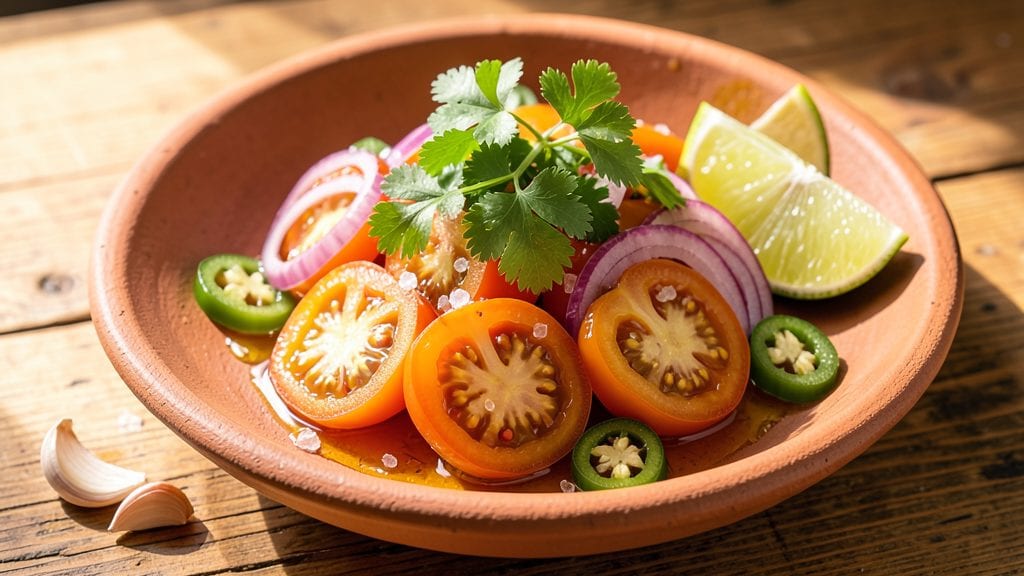
This Peruvian roasted pepper salsa with tomate amarillo delivers a bright, citrusy explosion that transforms any meal from ordinary to extraordinary. 🌟 The secret lies in roasting the yellow tomatoes until caramelized, then balancing their natural sweetness with zesty lime and fresh cilantro—a technique I perfected after years of exploring Peruvian coastal flavors in my kitchen.
The beauty of this dish is its versatility—it works as a vibrant side for grilled fish, a topping for avocado toast, or even a dip for crispy plantains.
What makes it special is the tomate amarillo, a Peruvian heirloom variety with a sweeter, less acidic profile than red tomatoes, which roasts into a velvety, jammy texture that’s impossible to resist.
By the time you finish this recipe, you’ll have a creamy, aromatic salsa that’s tangy, slightly sweet, and packed with fresh herbs. The roasting deepens the tomatoes’ natural sugars, while the lime juice cuts through the richness, creating a perfect harmony of flavors that’s both refreshing and satisfying.
Pair it with grilled shrimp, ceviche, or even as a topping for your favorite tacos. Here’s how to make it—simple steps for restaurant-quality results at home.
Ingredients for tomate amarillo
Bright yellow tomatoes meet zesty lime and fresh cilantro for a salsa that’s bold, creamy, and impossible to resist.
| Ingredient | Amount | Notes |
|---|---|---|
| Tomate Amarillo 🍅 | 1 ½ lb | Heirloom variety, halved lengthwise |
| Fresh Cilantro 🌿 | ½ cup | Stems removed, loosely packed |
| Lime Juice 🍋 | ½ cup | Freshly squeezed, seeds removed |
| Red Onion 🧅 | 1 whole | Thinly sliced, white part only |
| Jalapeño Pepper 🌶️ | 1 whole | Seeds removed, finely diced |
| Garlic Cloves 🧄 | 4 cloves | Peeled, minced |
| Extra-Virgin Olive Oil 🫒 | ¼ cup | Light, fruity variety |
| Salt 🧂 | 1 tsp | Diamond Crystal kosher |
| Ground Black Pepper 🌶️ | ½ tsp | Freshly ground |
| Fresh Cilantro Stems 🌿 | 2 tbsp | Finely chopped, for garnish |
| Avocado Oil 🫒 | 1 tbsp | For roasting, high smoke point |
| Red Wine Vinegar 🍷 | 1 tbsp | For brightness |
| Honey 🍯 | 1 tsp | Light, for balance |
The tomate amarillo is non-negotiable here—its sweet, jammy texture when roasted is what makes this salsa sing. Latin markets or specialty grocers are your best bet for fresh ones, though some high-end grocery stores carry them too. Look for tomatoes that are firm but slightly soft when gently squeezed—they should yield to pressure like a ripe avocado. If you can’t find them, yellow heirloom tomatoes are a decent substitute, but the flavor won’t be quite the same. Roast them skin-side down until blistered and caramelized—this step is what transforms them into something extraordinary.
No fresh cilantro? Dried cilantro at half the amount works in a pinch, but it lacks that bright, citrusy punch. The jalapeño can be swapped for serrano peppers if you want more heat, or skipped entirely for a milder salsa. Red wine vinegar adds depth, but if you’re out, a splash of lemon juice works too. For the honey, any light variety will do—avoid dark honey, which can overpower the delicate tomato flavor. And if you’re feeling fancy, Peruvian ají amarillo paste (available at Latin markets) adds an extra layer of authenticity, but it’s not required.
This salsa tastes even better the next day as the flavors meld. Store it in an airtight container in the fridge for up to 5 days, though I usually eat it within 2 days because it disappears so fast. For a quick prep, roast the tomatoes ahead and store them in the fridge—reheat them gently before blending. If you’re serving it with fish or shrimp, make it just before serving so the lime stays bright and zesty. Freezing isn’t recommended, as the texture changes dramatically.
Why You'll Love This Recipe
- No Chopping Chaos: I swear by this one—just halve the tomatoes, squeeze some lime, and toss. The red onion and jalapeño barely need dicing; I usually just slice them thin and let the knife do the work. Five minutes, tops.
- Bright Tang Alert: That lime juice and cilantro? They wake up the sweet, jammy tomato amarillo like a morning coffee. The heat from the jalapeño lingers just enough to make it dangerously good with chips—or straight from the bowl.
- Taco Night’s Secret Weapon: I keep a jar in the fridge for everything: scrambled eggs, grilled fish, or even as a quick salsa for store-bought chips. Honestly, it’s my lazy-day hero—no cooking required, just assemble.
- Budget-Friendly Staple: A single bag of tomate amarillo lasts me weeks, and the rest of the ingredients? Pantry basics. I make a big batch on Sundays, and it stretches across lunches, snacks, and impromptu gatherings without breaking the bank.
Step-by-step instructions for tomate amarillo salsa
Here's how to transform roasted tomate amarillo into a vibrant, smoky salsa with bright lime notes.
🔥 Step 1: Roast the Tomate Amarillo for Deep Flavor
Preheat your oven to 425°F and line a baking sheet with parchment paper. Arrange the halved tomate amarillo cut-side down on the sheet, leaving space between each half. Drizzle generously with 1 tablespoon avocado oil and sprinkle with ½ teaspoon salt and ¼ teaspoon ground black pepper.
Roast for 25-30 minutes until the edges are charred and wrinkled, and the flesh is tender enough to mash with a fork. The aroma should be intense—smoky with sweet undertones. If the oven runs hot, check at the 20-minute mark to prevent burning. Real talk: this step makes all the difference in flavor depth.
👨🍳 Step 2: Char the Aromatics for Complex Layers
While the tomate amarillo roasts, heat 1 tablespoon avocado oil in a large skillet over medium-high heat. Add the thinly sliced red onion and cook for 3-4 minutes until golden and caramelized at the edges. Remove and set aside.
In the same skillet, add the finely diced jalapeño pepper and minced garlic cloves. Cook for 1 minute until fragrant—you'll smell that perfect balance of heat and sweetness. Be careful not to burn the garlic; it should just sizzle and turn golden. This quick char adds another layer of complexity to the salsa.
🥘 Step 3: Blend the Roasted Components
Transfer the roasted tomate amarillo to a food processor along with the caramelized onion, jalapeño-garlic mixture, ½ cup lime juice, and 1 tablespoon red wine vinegar. Pulse until smooth but still slightly textured—you want visible flecks of roasted pepper and onion for visual appeal and texture contrast.
With the processor running, slowly drizzle in the ¼ cup extra-virgin olive oil to emulsify the mixture. Taste and adjust seasoning with additional salt or lime juice as needed. The salsa should balance smoky sweetness with bright acidity and a touch of heat. I like to add 1 teaspoon honey here for subtle sweetness that rounds out the flavors.
🍽️ Step 4: Finish and Garnish for Freshness
Transfer the salsa to a serving bowl and let it sit at room temperature for 15 minutes to allow the flavors to meld. This resting period lets the acidity mellow slightly and the heat from the roasted peppers penetrate deeper. The texture should be velvety with just enough body to cling to tortilla chips or coat proteins.
Just before serving, stir in the finely chopped fresh cilantro stems and top with 2 tablespoons chopped fresh cilantro for a pop of color and fresh herbaceousness. The contrast between the smoky roasted base and bright cilantro is what makes this salsa truly special. Serve immediately with warm tortilla chips or grilled meats for the ultimate Peruvian-inspired experience.
Pro Tips For Making Tomate Amarillo
- CHAR THE ONIONS: Cook them slow and low—about 8-10 minutes—until they’re translucent and just starting to caramelize. Rushing this step means your salsa will taste raw and sharp instead of sweet and mellow, and nobody wants that.
- USE A MOLCajete OR CAST-IRON: If you don’t have one, a heavy skillet works. The goal is to build heat and let those tomatoes blister slightly before mashing—this deepens the flavor way more than a nonstick pan ever will.
- SALT THE TOMATOES FIRST: Toss the halved tomate amarillos with a pinch of salt and let them sit for 10 minutes before cooking. This draws out moisture, so they caramelize better and don’t turn to mush when you mash them later.
- STRAIN THE SEEDS (IF YOU WANT): After blending, pour the salsa through a fine-mesh sieve to remove skins and seeds—it’s extra work, but the result is silky smooth instead of pulpy. Save the seeds for pickling or compost; they’re not trash.
Essential equipment for perfect results
Roasting Equipment
For perfect tomate amarillo roasting, I swear by a heavy-duty baking sheet lined with parchment paper—it prevents sticking and makes cleanup a breeze. A wire cooling rack on top of the sheet elevates the tomatoes for even charring on all sides.
I use Pyrex baking sheets because they distribute heat evenly and can go straight from oven to table. 🔥
Blending Tools
A high-powered food processor is non-negotiable for this recipe—it emulsifies the roasted tomatoes and oil into a velvety texture. My go-to is the Ninja BN601 because it handles hot ingredients without overheating.
For smaller batches, a mini food processor like the Cuisinart Mini-Prep Plus works perfectly. Avoid blenders—they can turn your salsa into a watery mess.
Skillet Essentials
Use a 10-inch cast-iron skillet for charring the onions and garlic—its dense material holds heat beautifully and develops a natural nonstick patina over time. I prefer Lodge cast iron for its durability and even heat distribution.
If you don’t have cast iron, a stainless steel skillet with a heavy base works too. Just make sure it’s well-seasoned to prevent sticking.
Measuring & Prep
Precision matters here, so invest in a stainless steel measuring cup set (I love the OXO Good Grips line) for accurate measurements of lime juice, vinegar, and oil. A microplane is ideal for zesting lime and garlic—it creates fine, fragrant particles that dissolve seamlessly into the salsa.
For chopping cilantro stems, a sharp chef’s knife (like the Wüsthof Classic) makes quick work of the task.
Storage Containers
For leftovers, use glass airtight containers with wide mouths—like Le Parfait or Weck jars—to preserve freshness. The wide opening makes it easy to stir in fresh cilantro before serving. Avoid plastic containers, as they can absorb odors and flavors over time.
If you’re prepping ahead, store the roasted tomatoes separately in the fridge and blend just before serving for maximum freshness. ❄️
Nutrition facts
Frequently asked questions about tomate amarillo salsa
Can I substitute regular yellow tomatoes for tomate amarillo?
While you can use yellow heirloom tomatoes in a pinch, they won't match the authentic flavor. Tomate amarillo has a sweeter, less acidic profile that develops a jammy texture when roasted. For the closest substitute, look for Peruvian yellow tomatoes at Latin markets or specialty stores. If you must use regular tomatoes, roast them longer to intensify their sweetness.
How do I adjust the heat level in this salsa?
For milder heat, remove all seeds and membranes from the jalapeño before dicing. If you want more spice, keep the seeds in or add a pinch of cayenne pepper. For a smoky kick, char the jalapeño in a dry skillet for 30 seconds before adding it to the skillet with onions. Always taste as you go—Peruvian salsas should balance heat with bright acidity.
What's the best way to store leftovers?
Store in an airtight glass container in the fridge for up to 5 days. The flavors actually improve overnight as the acidity mellows. To maintain freshness, keep the cilantro separate and add it just before serving. For longer storage, roast the tomatoes ahead and blend fresh when ready—this preserves the vibrant color and texture.
Can I make this salsa without a food processor?
Use a sturdy mortar and pestle for a rustic texture. Roast the tomatoes thoroughly, then mash them with a fork before adding other ingredients. For a smoother version, blend with an immersion blender directly in the bowl. The key is to balance the textures—some chunkiness adds visual appeal and texture contrast.
What are the best pairing options for this salsa?
This salsa shines with grilled Peruvian sea bass, shrimp ceviche, or crispy plantains. It also works as a dip for warm tortilla chips or as a topping for avocado toast. For a complete meal, pair it with quinoa or rice and a simple green salad. The bright lime notes cut through rich proteins beautifully.