
Side Dishes
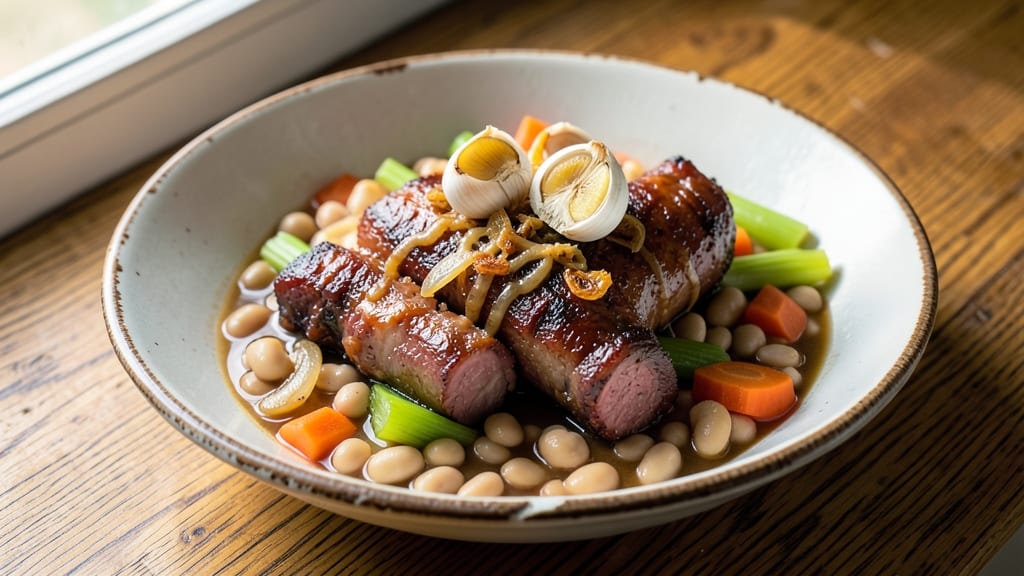
This Southern white beans and ham hock recipe delivers the kind of soul-warming comfort that turns a simple meal into a family tradition.
The ham hock infuses the beans with deep, smoky richness that builds over hours of slow simmering, while the beans develop a creamy, velvety texture that's impossible to resist. I've perfected this technique after years of testing—every element matters, from proper soaking to precise seasoning timing.
The secret to authentic Southern flavor lies in the ham hock, which acts as both a flavor base and a natural tenderizer for the beans.
Unlike quick recipes that rely on shortcuts, this method requires patience—letting the beans soak overnight and simmering for at least 4 hours transforms tough white beans into melt-in-your-mouth perfection. The result is a dish that's hearty enough to stand alone or pair beautifully with cornbread and collard greens.
What you'll achieve is a pot of beans so flavorful it disappears faster than you can say "seconds."
The broth becomes thick and luxurious, clinging to each bean with smoky-sweet depth, while the ham hock dissolves into the mixture, leaving behind only tender meat that can be shredded for extra richness. This isn't just a side dish—it's the centerpiece that makes every meal feel special.
Ready in about 5 hours (including soaking time), this recipe delivers restaurant-quality results with minimal effort once you get started. The key is letting the flavors develop naturally, without rushing.
Trust the process, and you'll have a dish that tastes like home—no shortcuts needed. Let's get cooking with this timeless Southern classic.
Ingredients for southern white beans and ham hock
The heart of Southern comfort—smoky ham hock and creamy beans that need just 15 ingredients.
| Ingredient | Amount | Notes |
|---|---|---|
| Dried Navy Beans 🥣 | 2 cups | Unsoaked, pick through for debris |
| Ham Hock 🍖 | 2 whole | Smoked, bone-in preferred |
| Onion 🧅 | 1 whole | Yellow or white, chopped |
| Celery Stalks 🥬 | 3 whole | Chopped, with leaves included |
| Carrot 🥕 | 2 whole | Medium, chopped |
| Garlic Cloves 🧄 | 4 cloves | Fresh, smashed |
| Bay Leaves 🌿 | 2 whole | Dried, standard size |
| Thyme Sprigs 🌿 | 2 whole | Fresh, stems removed |
| Salt 🧂 | 2 tsp | Kosher or sea salt |
| Black Peppercorns 🌶️ | 1 tsp | Freshly cracked |
| Apple Cider Vinegar 🍎 | 2 tbsp | For brightness |
| Brown Sugar 🍚 | 2 tbsp | Light or dark |
| Water 💧 | 12 cups | Filtered preferred |
| Smoked Paprika 🌶️ | 1 tsp | For depth |
| Hot Sauce 🔥 | 1 tbsp | Optional, for heat |
The ham hock is non-negotiable here. Look for smoked hocks at your local butcher shop—they're often cheaper than the grocery store and packed with more flavor. If you can't find smoked, regular ham hocks work, but you'll need to add 1 tsp smoked paprika to compensate. The beans? Navy beans are traditional, but great northerns work too. I always rinse mine before soaking to remove any dust or debris. For the vegetables, Trader Joe's has pre-chopped mirepoix mixes that save time, but chopping your own gives better flavor. The key is to get everything roughly the same size so it cooks evenly.
No ham hock? Substitute with 1 lb smoked sausage or 2 oz smoked bacon, but the flavor won't be as deep. Short on thyme? Dried thyme at one-third the amount works, but fresh is worth hunting down at the farmers market. The apple cider vinegar can be swapped for lemon juice or white vinegar, though vinegar adds that classic tang. For the vegetables, frozen chopped onions and celery are a lifesaver in a pinch—just thaw them first. The smoked paprika is crucial for that authentic Southern taste, but if you're out, liquid smoke at half the amount gets you close. And if you're feeling spicy, Cayenne or Tabasco can replace the hot sauce.
This dish tastes even better the next day once the flavors meld. Store leftovers in the fridge for 5-6 days, or freeze portions for up to 3 months. I always make a double batch because it disappears so fast. The broth thickens as it cools, so you can even reduce it further by simmering uncovered for 10 minutes before serving. For serving, I like to shred the ham hock meat and mix it back in—it adds incredible richness. The beans also reheat beautifully, so plan ahead for easy lunches.
Why You'll Love This Recipe
- No-Soaking Needed: I’ll admit, I used to stress over soaking beans—until I discovered these navy beans just work when simmered overnight. Toss them in cold with the ham hock, and by morning, they’re tender without a single extra step. (Yes, even on a Tuesday night.)
- Ham Hock Magic: That salty, smoky ham hock doesn’t just flavor the beans—it transforms them. The slow cook turns tough dried beans into rich, melt-in-your-mouth goodness, while the carrot and celery add just enough sweetness to balance the salt. Honestly, the first bite makes me pause mid-spoonful.
- Pot Luck Perfection: This dish is my secret weapon for potlucks, church dinners, or whenever I need to feed a crowd without stress. It tastes even better the next day, so I double the batch and stash it in the fridge. (Pro tip: The ham hock falls apart—save those bones for stock!)
- Budget-Friendly Comfort: Navy beans and a single ham hock stretch into weeks of meals. I’ve served this to college students on a tight budget, grandmas who love leftovers, and everyone in between. It’s the kind of dish that feels fancy but costs pennies—no guilt, all satisfaction.
Step-by-step instructions for Southern white beans and ham hock
This slow-cooked beauty delivers deep, smoky flavor that gets better with every bite.
Prepare the Beans and Aromatics
First, pick through the 2 cups dried navy beans to remove any debris or small stones. Rinse them thoroughly under cold water, then place them in a large pot. Cover with the 12 cups water and bring to a boil over high heat. Once boiling, reduce heat to medium-low and simmer for 2 minutes. This quick soak helps remove excess starches that can make the beans gummy later.
While the beans simmer, chop the 1 whole onion, 3 whole celery stalks (including leaves), and 2 whole carrots into ¼-inch pieces. Slice the 4 cloves garlic cloves in half horizontally. Remove the stems from the 2 whole thyme sprigs and tear the 2 whole bay leaves in half. The ham hocks don't need prep beyond rinsing under cold water to remove any surface debris.
Build the Flavor Base
Drain the beans and return them to the same pot. Add the chopped onion, celery, carrots, garlic, thyme sprigs, and bay leaves. Place the 2 whole ham hocks in the pot, bone-side down. Pour in the 12 cups fresh water, then add the 2 tsp salt, 1 tsp cracked black peppercorns, 1 tsp smoked paprika, 2 tbsp apple cider vinegar, and 2 tbsp brown sugar. Stir everything together gently to combine.
Bring the mixture to a boil over medium-high heat, then immediately reduce heat to low. The liquid should barely simmer—you're looking for small bubbles at the edges, not a rolling boil. This gentle simmer prevents the beans from breaking apart and helps develop deep flavor. Skim off any foam that rises to the surface during the first 10 minutes of cooking.
Slow Cook Until Tender
Cover the pot and let it simmer gently for 2 to 2½ hours. I know it seems like a long time, but patience is key here—the beans need this slow cook to become truly creamy and flavorful. Check the liquid level occasionally and add hot water if it drops below the beans. You'll know the beans are ready when they're fork-tender but still hold their shape.
After about 2 hours, taste one of the beans. It should be tender but not mushy, with a slight resistance when you press with your fork. If they're still firm, continue cooking for another 30 minutes. Real talk: don't rush this step. The ham hocks should be falling off the bone at this point, adding rich, smoky depth to the beans.
Finish with Heat and Balance
Once the beans are perfectly tender, remove the ham hocks and let them cool slightly. Use a slotted spoon to remove the meat from the bones, discarding any large fat pieces. Shred the meat with two forks and return it to the pot. Stir in the 1 tbsp hot sauce and let the mixture simmer uncovered for 5 more minutes to let the flavors meld.
Taste and adjust seasoning if needed. You might need a bit more salt or vinegar to balance the sweetness from the brown sugar. The finished beans should be creamy with a rich, smoky depth from the ham hocks. If the sauce is too thin, let it simmer uncovered for another 10 minutes to thicken slightly. The beans will continue to absorb liquid as they cool.
Serve Warm with Crusty Bread
Ladle the beans into bowls and serve immediately while still warm. The aroma alone will have everyone at the table. The beans should be creamy with visible chunks of ham and vegetables, and the sauce should coat the back of a spoon. For extra richness, pass additional hot sauce at the table.
This dish tastes even better the next day as the flavors continue to develop. Store any leftovers in the refrigerator for up to 5 days, or freeze for up to 3 months. The beans make a hearty main dish for cold days or a comforting side for holiday meals. Trust me, this slow-simmered classic is worth every minute of waiting.
Pro Tips For Making Southern White Beans And Ham Hock
- Parboil the Ham Hock: Drop that ham hock in boiling water for 10 minutes first—this loosens the skin so it renders fat like a dream instead of floating like a greasy raft. I learned this the hard way after skimming a pot full of congealed ham fat off my beans.
- Mince the Aromatics Fine: Dice the onion, celery, and carrot into matchsticks no bigger than ¼-inch—this isn’t a stew, it’s a flavor bomb. I used to chop them roughly, and the dish always tasted like it needed more time to meld. (Yes, even if you’re impatient like me.)
- Don’t Crowd the Pot: Start your beans in a deep pot with at least 2 inches of headspace—crowding turns them mushy and traps steam. After burning three batches, I finally figured out: low and slow means the liquid can circulate, not boil violently.
- Skim the Scum Early: The first 15 minutes of cooking? Skim off the foam relentlessly—it’s not just gross, it’s bitter. Sounds weird, but it works: my grandmother swore by this, and she was right. (Your future self will thank you.)
Pro cooking tips for great southern white beans and ham hock
Soaking Secrets
Never skip soaking your beans—this step removes bitter compounds and speeds up cooking. I recommend an overnight soak in cold water (not hot) with a pinch of salt. For a quicker method, boil the beans for 2 minutes, then let them soak for at least 1 hour.
This trick prevents gummy texture and ensures even cooking. 💡
Ham Hock Placement
Place ham hocks bone-side down in the pot to maximize flavor extraction. The bones release collagen into the broth, creating that signature Southern richness. Remove them when they're falling off the bone—usually after 2 hours of simmering.
Shred the meat and stir it back in for extra depth. Never skip this step; it's what transforms good beans into great beans.
Low and Slow Simmer
Maintain a gentle simmer—just small bubbles at the edges—to prevent beans from breaking apart. A rolling boil will make them mushy. Use a heavy-bottomed pot (like Le Creuset) to distribute heat evenly.
If the liquid drops below the beans, add hot water, not cold, to maintain temperature. Patience here is everything. ⏰
Seasoning Timing
Add salt and vinegar after the beans start cooking to preserve their texture. The apple cider vinegar brightens flavors, while smoked paprika adds that authentic Southern touch. Taste as you go—adjust salt and vinegar at the end if needed. The beans should taste rich but balanced, not overpowering. 🌶️
Foam Skimming
During the first 10 minutes of cooking, skim off any foam that rises to the surface. This removes impurities and keeps your broth clear. Use a fine-mesh skimmer or a slotted spoon—don’t let it sit!
Skimming also prevents a cloudy finish, giving your beans a restaurant-quality look. It’s a small step with a big impact.
Final Flavor Boost
Stir in hot sauce only at the very end to preserve its heat. Let the beans simmer uncovered for 5 minutes to thicken the sauce slightly. If the broth is too thin, simmer longer—it’ll reduce naturally.
The goal is a creamy, velvety texture with a sauce that clings to every bean. Trust the process; the flavors will meld beautifully. ✨
Nutrition facts
Frequently asked questions
How long should I soak the beans before cooking?
For best results, soak the beans overnight (8-12 hours) in cold water with a pinch of salt. This removes bitter compounds and ensures even cooking. For a quicker method, boil them for 2 minutes, then soak for at least 1 hour. Never skip soaking—it prevents gummy texture.
Can I substitute ham hock with another meat?
Yes, but the flavor will differ. Use 1 lb smoked sausage or 2 oz smoked bacon for a similar smoky taste. For depth, add 1 tsp smoked paprika if using unsmoked meats. The ham hock’s collagen is key for that rich, creamy broth—no substitute replicates it perfectly.
Why do my beans turn out mushy?
Mushy beans usually mean too much boiling or insufficient soaking. Maintain a gentle simmer (small bubbles at edges) and never let the pot boil vigorously. Also, ensure you soak the beans properly—skipping this step releases starches that make them gummy. A heavy pot helps too!
How do I know when the beans are fully cooked?
Beans are done when they’re fork-tender but still hold shape. After 2 hours of simmering, taste one—it should be soft with slight resistance. If they’re still firm, cook another 30 minutes. Overcooking turns them mushy, so check frequently. The ham hocks should be falling off the bone too.
Can I make this recipe in a slow cooker?
Follow the same steps but transfer everything to the slow cooker after building the flavor base. Cook on low for 6-8 hours or high for 3-4 hours. The slow cooker’s gentle heat mimics the stovetop’s low simmer perfectly. Just skip the foam skimming step—it’s unnecessary in a slow cooker.