
Soups & Stews
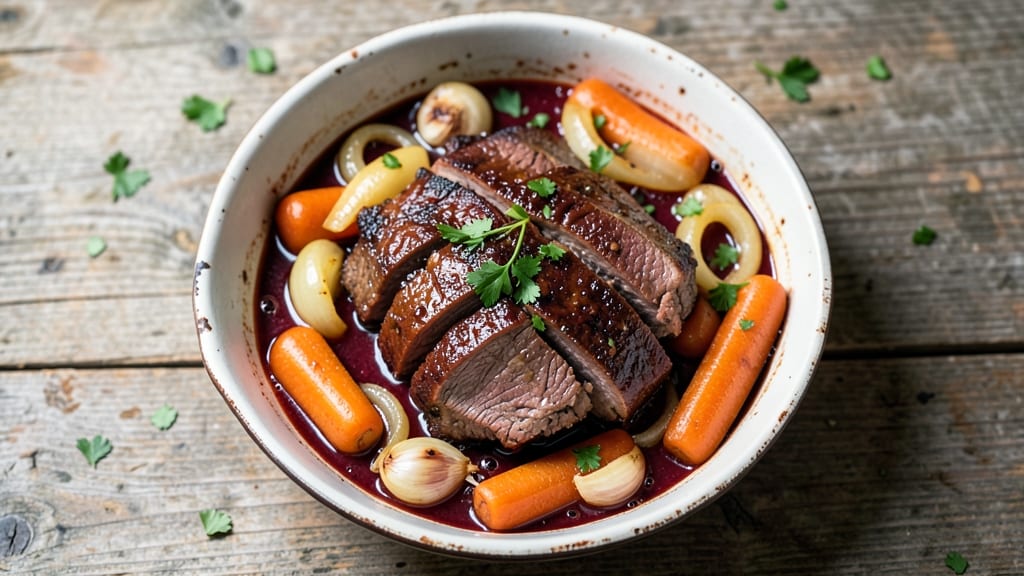
This stewed beef brisket recipe transforms tough cuts into melt-in-your-mouth perfection through slow, deep braising—exactly the kind of dish that turns weeknight dinners into something special. 🌟 I learned the technique from my Nonna, who swore by letting the meat work its magic in its own juices for hours, creating that unmistakable rich, umami depth that separates home cooking from restaurant-quality results.
The secret lies in patience and precision: a well-seared brisket develops flavor through the Maillard reaction before it spends hours submerged in aromatic vegetables and red wine. Unlike quick-cooked cuts, this method breaks down the connective tissue, yielding meat so tender it practically falls apart at the touch.
The result is a deeply flavorful, velvety sauce that clings to every bite, making it a centerpiece for any table.
What you’ll end up with is a pot of rich, aromatic stew where the beef is so tender it shreds easily, and the sauce has reduced to a perfect consistency—thick enough to coat but still silky smooth.
This isn’t just comfort food; it’s a celebration of slow cooking done right, with layers of flavor that develop over time. The best part? Leftovers taste even better the next day, making it a meal worth the effort.
Pair it with crusty bread to soak up every drop of that deep, savory sauce, or serve alongside mashed potatoes for the full experience. Let’s get started on a dish that’s worth the wait.
Ingredients for stewed beef brisket
These 14 ingredients create melt-in-your-mouth brisket that practically falls apart with every bite.
| Ingredient | Amount | Notes |
|---|---|---|
| Beef Brisket 🥩 | 3 lb | Flat cut preferred, trimmed of excess fat |
| Yellow Onion 🧅 | 1 whole | Medium size, sliced into half-moons |
| Carrots 🥕 | 4 medium | Whole, peeled and cut into chunks |
| Garlic Cloves 🧄 | 6 cloves | Peeled and lightly crushed |
| Red Wine 🍷 | 1 ½ cups | Bold, dry variety like Cabernet Sauvignon |
| Beef Broth 💧 | 3 cups | Low-sodium preferred |
| Tomato Paste 🍅 | ¼ cup | Smooth, not chunky |
| Fresh Thyme 🌿 | ½ ounce | Or 1 tbsp dried thyme |
| Fresh Rosemary 🌿 | ¼ ounce | Sprig, not ground |
| Bay Leaves 🌿 | 2 whole | Dried, removed before serving |
| Olive Oil 🫒 | 2 tbsp | Extra-virgin for searing |
| Salt 🧂 | 1 ½ tsp | Kosher or sea salt |
| Black Pepper 🌶️ | 1 tsp | Freshly ground preferred |
| All-Purpose Flour 🌾 | 1 tbsp | For dusting brisket |
The brisket is non-negotiable here. Look for flat cut at your local butcher—they’ll know exactly what you need. If the grocery store has pre-cut brisket, grab that to save time. Trim any thick fat layers, but leave a thin layer for flavor. Costco and Whole Foods often carry high-quality brisket, but check the price per pound—sometimes the regular supermarket has better deals. For the wine, anything bold like Cabernet Sauvignon or Merlot works, but don’t use cooking wine—it’s not worth it. If you’re short on time, Trader Joe’s has a great affordable red blend that’s perfect for this.
No red wine? Beef broth with 1 tbsp balsamic vinegar gets you close. Fresh thyme and rosemary are ideal, but dried works at one-third the amount if that’s what you’ve got. The tomato paste can be the squeeze tube kind—no need for fancy cans. For the carrots, baby carrots work fine, but whole carrots make the stew look more impressive. If you’re out of flour, a light dusting of cornstarch works in a pinch. The bay leaves? Grab a few sprigs from the bulk section—they’re cheap and last forever. Want more depth? Add a 1 tsp smoked paprika to the flour dusting.
This stew tastes even better the next day—honestly, that’s when all the magic happens. Store in an airtight container in the fridge for up to 5 days. For freezing, portion into containers with sauce and freeze for up to 3 months. I always make a double batch because it’s worth the leftovers. The sauce thickens as it cools, so you might want to add a splash of broth when reheating. Serve with crusty bread or mashed potatoes to soak up every last drop of that rich, umami sauce.
Why You'll Love This Recipe
- One-Pot Magic: I swear by this recipe because it’s literally dump-and-simmer. The brisket goes in raw, the onions and carrots get tossed in whole (no fancy dicing), and the red wine—yes, the whole bottle—just deepens the flavor as it works its way into the meat. Honestly, the only real effort is stirring once in a while. That’s it.
- Wine-Infused Richness: Between us, that red wine isn’t just for drinking—it’s the secret weapon. It cuts through the beef’s richness while leaving behind this velvety depth that makes every bite feel like a hug. The garlic cloves? They soften into little flavor bombs, and the carrots actually caramelize without you having to babysit them. Ridiculously good.
- Leftovers That Beg for More: This stew tastes better the next day—like, dangerously so. I make a double batch on Sundays because it’s my go-to for lazy nights, potlucks, or when friends drop by unannounced. (Yes, even on a Tuesday night.) The brisket shreds effortlessly, and the sauce thickens just enough to coat everything. No sad, watery leftovers here.
- Budget-Friendly Crowd-Pleaser: Brisket is cheaper than steak but feels just as special, and this recipe stretches it across multiple meals without breaking the bank. The onions and carrots bulk it up, so you’re not just feeding one person—this feeds four, five, or however many people you love. Plus, the wine? That’s the one splurge that makes it feel fancy, not frivolous.
Step-by-step instructions for stewed beef brisket
Here's how we turn tough brisket into melt-in-your-mouth perfection.
🍳 Step 1: Sear the Brisket Until Deeply Browned
Heat a large Dutch oven over medium-high heat until it's smoking hot. Add 2 tablespoons olive oil and let it shimmer for 30 seconds. Pat the 3 lb beef brisket completely dry with paper towels—this ensures maximum browning. Place it fat-side down in the pan and let it sear undisturbed for 5 minutes until a deep golden crust forms.
Flip the brisket and sprinkle with 1 tablespoon all-purpose flour, rubbing it gently into the meat. This creates a light crust that helps thicken our sauce later. Sear the other side for another 4-5 minutes until beautifully browned. Remove the brisket and set it aside—we'll come back to it later.
👨🍳 Step 2: Build the Flavor Base with Vegetables and Aromatics
In the same Dutch oven, add 1 whole yellow onion sliced into half-moons and 4 medium carrots cut into chunks. Cook for 5-6 minutes until the onions soften and the carrots begin to caramelize slightly. Add the 6 peeled garlic cloves and cook for another 30 seconds until fragrant—this is where all the magic starts.
Stir in 0.25 cup tomato paste and cook for 1 minute to remove the raw taste. Pour in the 1.5 cups red wine and scrape up all those browned bits from the bottom of the pan—this is called deglazing, and it's how we capture all that meaty flavor. Let the wine reduce by half, about 3-4 minutes, until it's syrupy and concentrated.
🥘 Step 3: Simmer the Brisket Until Fork-Tender
Return the brisket to the Dutch oven along with the 3 cups beef broth. Add 1.5 teaspoons salt, 1 teaspoon black pepper, 0.5 ounce fresh thyme (or 1 tablespoon dried), 0.25 ounce fresh rosemary, and 2 whole bay leaves. Bring everything to a gentle simmer, then reduce heat to low and cover partially with a lid.
Here's where patience pays off—simmer for 2.5-3 hours until the brisket is fork-tender. You'll know it's done when a knife slides in easily and the meat pulls apart with minimal resistance. If the liquid reduces too much before then, add a splash of water or broth to keep it moist. The brisket should be swimming in flavorful sauce by the end.
⏰ Step 4: Rest and Serve with Perfect Sauce
Remove the brisket from the pot and let it rest on a cutting board for 10-15 minutes. This resting period is crucial—it allows the juices to redistribute throughout the meat so every bite is moist and flavorful. Skim off any excess fat from the sauce if desired, then return the brisket to the pot to warm through for 2-3 minutes.
Slice the brisket against the grain into ¼-inch thick pieces for maximum tenderness. Spoon the rich, umami-packed sauce over the top and serve immediately with crusty bread or mashed potatoes. The sauce should coat the brisket beautifully, clinging to each tender bite with layers of wine, herb, and caramelized vegetable flavors.
Pro Tips For Making Stewed Beef Brisket
- SEAR THE BRISKET FIRST: I learned this the hard way—skipping the sear means flavor just dissolves into the wine. Pat the brisket dry, then hit it with high heat in a heavy pot until deep brown on all sides. That crust locks in juices and builds the foundation for everything else.
- SWEAT ONIONS LOW AND SLOW: No one likes mushy onions. Chop them into even ½-inch pieces, then cook them over medium-low heat with a splash of water until fully softened—about 10 minutes. This keeps them tender without turning to paste, and they’ll hold up better during the long simmer.
- DEGLAZE WITH WINE IMMEDIATELY: As soon as you remove the brisket, pour in that red wine right away while the pot is still hot. Scrape up every browned bit—this is where all the flavor hides. Let it reduce by half before adding broth or tomatoes, or you’ll end up with a watery stew.
- CHUNK THE CARROTS LARGE: Thinly sliced carrots turn to mush in stews. Cut them into 1-inch chunks instead—they’ll stay intact and add satisfying texture. If you’re impatient, parboil them for 3 minutes first, but don’t skip the final simmer or they’ll turn to mush anyway.
Troubleshooting perfect results
Undercooked Brisket
If your brisket isn't tender enough after 3 hours, don't panic—it just needs more time. The key is maintaining a gentle simmer at 300°F internal temperature. I've had brisket take 4 hours in my Dutch oven, especially with larger cuts.
Check for doneness by inserting a fork—it should slide in easily with minimal resistance. If it's still tough, add ½ cup more beef broth and continue simmering for another 30-45 minutes. 🌡️
Overly Tough Meat
This usually happens when the meat isn't sliced against the grain or when it's cooked too quickly. Always cut perpendicular to the muscle fibers using a sharp knife.
If you're in a hurry, try the "reverse sear" method: Braise the brisket for 2 hours, then sear it in a hot pan for 2-3 minutes per side before serving. The high heat on the outside creates a crust while keeping the inside tender.
Sauce Too Thin
A watery sauce often means the brisket released too much liquid. After simmering, remove the brisket and place it in a warm spot. Reduce the sauce uncovered over medium-high heat for 10-15 minutes, stirring occasionally.
For extra thickness, mix 1 tablespoon cornstarch with 2 tablespoons cold water, stir into the sauce, and simmer for 2 minutes until it thickens. 🍲
Sauce Too Thick
If your sauce is too thick, it's likely because the liquid reduced too much. Simply add ¼ cup beef broth or water and stir gently. For a richer sauce, you can also add 1 tablespoon red wine or a splash of balsamic vinegar.
If the sauce is still too thick after adding liquid, simmer it uncovered for 5 minutes to allow some of the moisture to evaporate naturally.
Meat Too Dry
Dry brisket usually means it was overcooked or not rested properly. To fix this, shred the meat and mix it back into the sauce, letting it soak up the flavors for 5-10 minutes off the heat.
If you're reheating leftovers, add 2-3 tablespoons of broth or water to the pan and cover with a lid to steam the meat gently. Always let the brisket rest for 10-15 minutes before slicing to retain moisture.
Weak Flavor
If your stew lacks depth, it's likely because the brisket wasn't seared properly or the aromatics weren't cooked long enough. Next time, sear the brisket until it's deeply browned on both sides, and make sure to deglaze the pan thoroughly with wine or broth.
For extra flavor, add 1 teaspoon smoked paprika or ½ teaspoon chili flakes to the sauce during the last 10 minutes of cooking. A pinch of MSG (just ¼ teaspoon) can also boost umami without altering the taste significantly. 💡
Nutrition facts
Frequently asked questions about stewed beef brisket
How do I know when my brisket is done?
The brisket is ready when it reaches 203°F internal temperature and a fork slides in easily with minimal resistance. For extra tenderness, check for paper-thin slices that pull apart effortlessly. If it's still tough after 3 hours, add more broth and simmer another 30-45 minutes—patience is key!
Can I use a slow cooker for this recipe?
Sear the brisket first, then transfer it to your slow cooker with all the vegetables and liquids. Cook on low for 8 hours or high for 5-6 hours until fork-tender. The slow cooker method is perfect for hands-off preparation while you're busy.
What's the best way to store leftovers?
Store in an airtight container in the fridge for up to 5 days. The flavors actually deepen overnight! For freezing, portion into containers with sauce and freeze for up to 3 months. Reheat gently with a splash of broth to maintain moisture.
How do I make the sauce thicker?
If your sauce is too thin, remove the brisket and reduce the sauce uncovered over medium-high heat for 10-15 minutes. For instant thickening, mix 1 tablespoon cornstarch with 2 tablespoons cold water, stir into the sauce, and simmer for 2 minutes. The brisket will soak up any extra liquid as it rests.
Can I substitute beef broth with something else?
Yes! Use water + bouillon cubes (low-sodium preferred) or even tomato juice for extra depth. For a richer flavor, add 1 tbsp balsamic vinegar or ½ cup red wine to compensate. The key is maintaining the right liquid balance for tender meat.